 listicle
Benefits of Assisted Living for Social Well-Being
Table of Contents
- How Assisted Living Reduces Loneliness in Older Adults
- Assisted Living Activities for Seniors That Build Real Friendships
- Life Enrichment Programs for Seniors: More Than Keeping Busy
- Intergenerational Activities in Assisted Living
- Emotional and Cognitive Benefits of Social Connection
- How to Assess Social Fit Before Moving
- Conclusion
- Frequently Asked Questions
Last Updated: October 8, 2026
How Assisted Living Reduces Loneliness in Older Adults
Loneliness among older adults is not a minor inconvenience; it is a serious health risk. The benefits of assisted living for social well-being start with one simple change: consistent, daily human contact. At Emory Mills, we see this shift firsthand when residents move from isolated homes into a community built around connection.
Why Living Alone Increases Social Isolation
Living alone often means fewer conversations, fewer shared meals, and fewer reasons to leave the house. According to the National Institute on Aging, social isolation and loneliness are linked to higher risks of depression, cognitive decline, and heart disease.
A common mistake families make is assuming that phone calls and weekend visits are enough. In practice, isolation builds in the small gaps: no one to share breakfast with, no one to notice a bad day, no one to prompt a walk outside.
How Daily Social Contact Changes the Picture
Daily contact turns occasional interaction into a routine. Assisted living replaces the unpredictability of living alone with a steady rhythm of shared meals, group activities, and casual conversations in the hallway. That consistency matters more than any single event.
Assisted Living Activities for Seniors That Build Real Friendships
Assisted living activities for seniors work best when they reflect who residents actually are. A retired teacher may thrive leading a book discussion; a former gardener may prefer a raised-bed garden.
Group Activities That Go Beyond Bingo
Bingo has its place, but it rarely builds deep connection. Activities requiring conversation, teamwork, or shared memory do more. Examples include:
- Cooking or baking groups that divide tasks and share the results
- Choir, music, and sing-along sessions
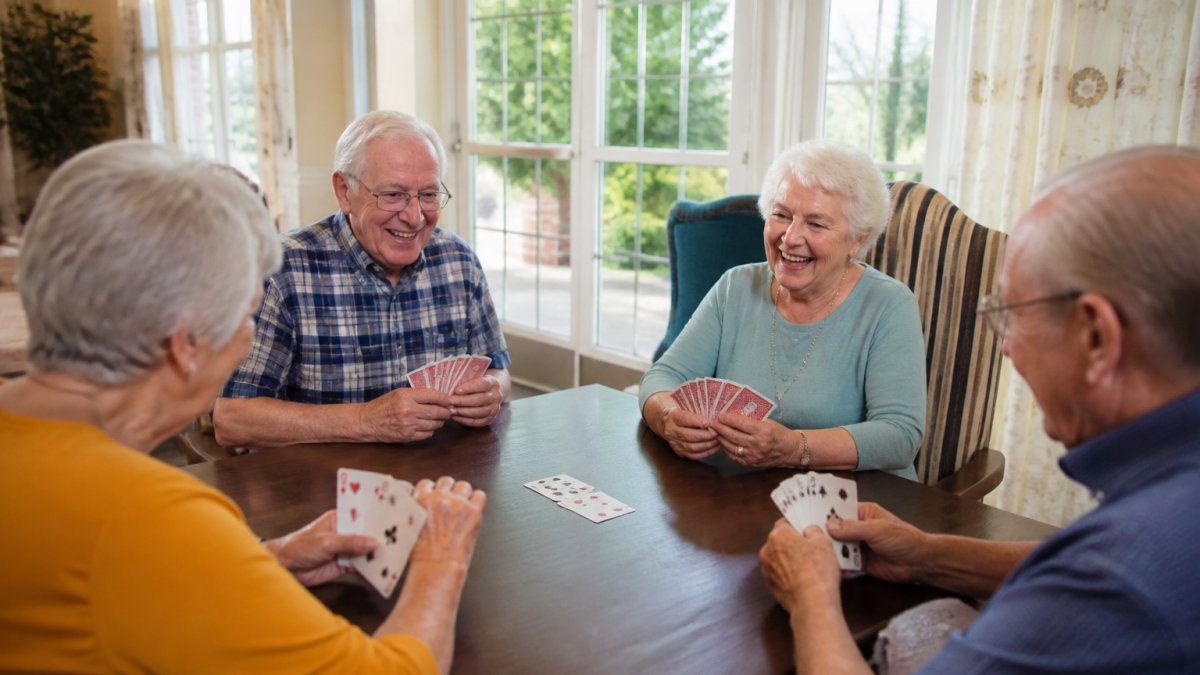
- Card and board game clubs with regular members
The common thread is repetition. Seeing the same faces week after week is what turns acquaintances into friends.
Shared Meals and Everyday Social Moments
Shared meals may be the most underrated social activity in senior living. Three meals a day at a table with others create natural opportunities to talk, laugh, and check in on one another.
What most guides miss is that the hallway, the lobby, and the dining room matter as much as the activity calendar. Everyday moments often build more connection than scheduled events.
Life Enrichment Programs for Seniors: More Than Keeping Busy
Life enrichment programs for seniors support purpose, engagement, and meaning, not just fill time. A well-designed program asks what a resident still enjoys and can still do, then builds activities around those abilities.
This is where the I'm Still Here® philosophy, which Emory Mills uses in partnership with the Hearthstone Institute, differs from a generic activity schedule.
Intergenerational Activities in Assisted Living
Intergenerational activities in assisted living connect residents with children, teens, and young adults through visits, projects, and shared events. They bring energy, new topics, and a sense of being part of a wider world, but work best when structured around real relationships rather than one-off photo opportunities.
Formats That Actually Build Connection
Common formats include school and scout visits, reading buddies programs, art projects with local students, and family days that welcome grandchildren. The ones that tend to stick share a few traits:
- They repeat. A monthly reading buddy pairing builds more than a single holiday concert.
- They give residents a role. Being the listener, the mentor, or the person who shares a skill is more engaging than being an audience.
- They match abilities. A resident with hearing loss may do better in a small-group setting than a loud auditorium.
Keeping Outside Relationships Alive
A common worry is that a move into assisted living will replace existing relationships rather than add to them. In practice, the opposite is often true, if the community makes it easy. Ways to maintain outside ties:
- Scheduled visits. Pick a regular day and time so the resident has something to look forward to and staff can plan around it.
- Calls and video chats. A short daily or every-other-day call can matter more than a long weekly one. Staff can help set up devices and reminders.
- Community outings. Many communities run trips to churches, museums, restaurants, and family events. Ask how often they happen and whether residents can suggest destinations.
Balancing New Friendships With Family
New friendships inside the community and old relationships outside reinforce each other. A resident who feels socially settled is usually more available for family visits, not less. The risk is the opposite: a resident who leans entirely on one adult child for social contact, straining the relationship and becoming isolated when that child is unavailable.
Barriers to Participation, and How to Address Them
Not every resident can or wants to join every activity. Practical barriers include:
- Mobility limitations. Ask about wheelchair access, transportation within the building, and whether activities are held in reachable rooms.
- Hearing or vision loss. Smaller groups, good lighting, and assistive listening devices make a real difference.
- Cognitive changes. A resident with dementia may do better in a short, familiar activity than a large, unpredictable one.
- Language and cultural needs. Residents who speak a language other than English, or who observe specific cultural or religious practices, need programming that reflects those needs.
Research summarized by the Centers for Disease Control and Prevention points to social connection as a protective factor for both mental and physical health, and intergenerational contact supports that connection for residents and young people alike. Family involvement matters here too. When adult children and grandchildren visit regularly, residents keep the outside relationships that give life continuity.
Emotional and Cognitive Benefits of Social Connection
Social connection supports both emotional and cognitive health in older adults, but it helps to understand how those benefits arise. The benefits of assisted living for social well-being show up in mood, self-esteem, mental sharpness, and quality of life, each through a specific mechanism.
Mood, Self-Esteem, and Emotional Resilience
Regular social contact lifts mood and reduces the stress of isolation. Conversation and shared activity give residents a reason to get up, a sense of being expected somewhere, and a steady stream of small positive interactions.
Daily support with activities of daily living also removes small frustrations, managing medications, preparing meals, laundry, freeing energy for relationships. Residents who feel known and valued show more emotional resilience when facing setbacks, because people around them notice when something is wrong.
Mental Stimulation and Cognitive Health
Conversation, games, music, and new experiences provide mental stimulation that supports cognitive health. The Alzheimer's Association notes that staying socially and mentally engaged is part of a brain-healthy lifestyle. While no activity guarantees against cognitive decline, meaningful engagement supports overall well-being and helps residents maintain function longer.
What the Evidence Actually Shows, and What It Doesn't
A common mistake is treating social connection as a guaranteed cure. The honest picture is more nuanced:
- Correlation vs. causation. Observational studies consistently link social engagement with better mood and slower cognitive decline, but researchers caution that the relationship runs both ways. People who are already healthier and more cognitively intact tend to socialize more, so some of the association reflects that baseline rather than a pure cause-and-effect effect of activity.
- What is well-supported. The Centers for Disease Control and Prevention and the National Institute on Aging both treat social isolation and loneliness as established risk factors for depression, cognitive decline, and heart disease. Reducing isolation is therefore a reasonable goal on its own merits, even where the precise size of the benefit is hard to pin down.
- What is not guaranteed. Moving into a community creates opportunities for connection; it does not automatically produce them. A resident who stays in their room, declines activities, or has hearing or mobility barriers can remain just as isolated inside a community as they were at home. The environment matters, but so does the fit between the resident and the program.
Practical Ways to Gauge Whether It's Working
Families and residents can watch for concrete signals rather than relying on a general impression:
- Does the resident mention specific people by name?
- Are they attending at least a few activities per week by choice, not by prompting?
- Has their appetite, sleep, or willingness to leave their room changed?
- Do staff check in on them beyond care tasks?
| Benefit Area | What Changes | Why It Matters |
|---|---|---|
| Mood | More daily interaction | Lower risk of depression |
| Self-esteem | Feeling known and needed | Greater sense of purpose |
| Cognition | Ongoing mental stimulation | Supports brain health |
| Physical health | More movement and activity | Better overall wellness |
| Resilience | A steady support network | Better coping with loss and setbacks |
How to Assess Social Fit Before Moving
Assessing social fit means checking whether a community's culture, activities, and staff actually support connection, not just whether the building looks nice. Visit in person at different times of day and watch how residents and staff interact.
Use this checklist when you tour:
- Do residents greet each other by name?
- Are activities built around resident interests, or a fixed list?
- How are new residents introduced and included?
- Is there a mix of group and quiet, individual options?
Ask how the community personalizes care and activities for different personalities and abilities. An introverted resident may prefer small groups; an outgoing one may want larger events. Good communities plan for both.
Conclusion
Choosing the right community is one of the hardest decisions a family makes, and the social side deserves as much attention as the medical one. Emory Mills is a family-owned senior living community in Knoxville offering personalized daily support, chef-prepared meals, and meaningful engagement built on the evidence-based I'm Still Here® philosophy. With 24/7 support and a focus on each resident's remaining abilities and life story, we help older adults stay connected, purposeful, and engaged.
Frequently Asked Questions
How does assisted living help seniors stay socially active?
Assisted living communities build social contact into the daily routine. Residents share meals, join group activities, and cross paths with neighbors throughout the day. Staff also plan events and outings that give people a reason to leave their rooms and connect. For seniors who lived alone and rarely saw others, this constant low-pressure exposure to peers can rebuild social habits that isolation had worn down.
Can assisted living help reduce loneliness?
It can, largely because loneliness comes from a lack of meaningful contact, not just the number of people nearby. Assisted living activities for seniors, shared meals, and life enrichment programs create regular opportunities for conversation and friendship. The key is whether the community designs those moments intentionally. Communities that personalize activities to residents' interests and abilities tend to see stronger social participation and a greater sense of belonging.
What social activities are common in assisted living?
Most communities offer group activities like card games, exercise classes, arts and crafts, music sessions, and book clubs. Shared meals are another daily anchor. Many also schedule celebrations, guest speakers, and outings. The best programs go further by matching activities to each resident's life story and remaining abilities, so participation feels meaningful rather than like filling time.
How can families help a loved one adjust socially to assisted living?
Visit during the first few weeks and join an activity or meal if the community allows it. Ask staff which groups match your parent's interests and encourage one or two regular commitments rather than a full schedule. Keep outside relationships alive with phone calls and family visits. If your parent is hesitant, acknowledge the transition is hard and give it time. Most residents settle into friendships once they find the right activity.