 Listicle
The Benefits of Professional Home Health Assistance
Last Updated: November 7, 2026
Quick Summary
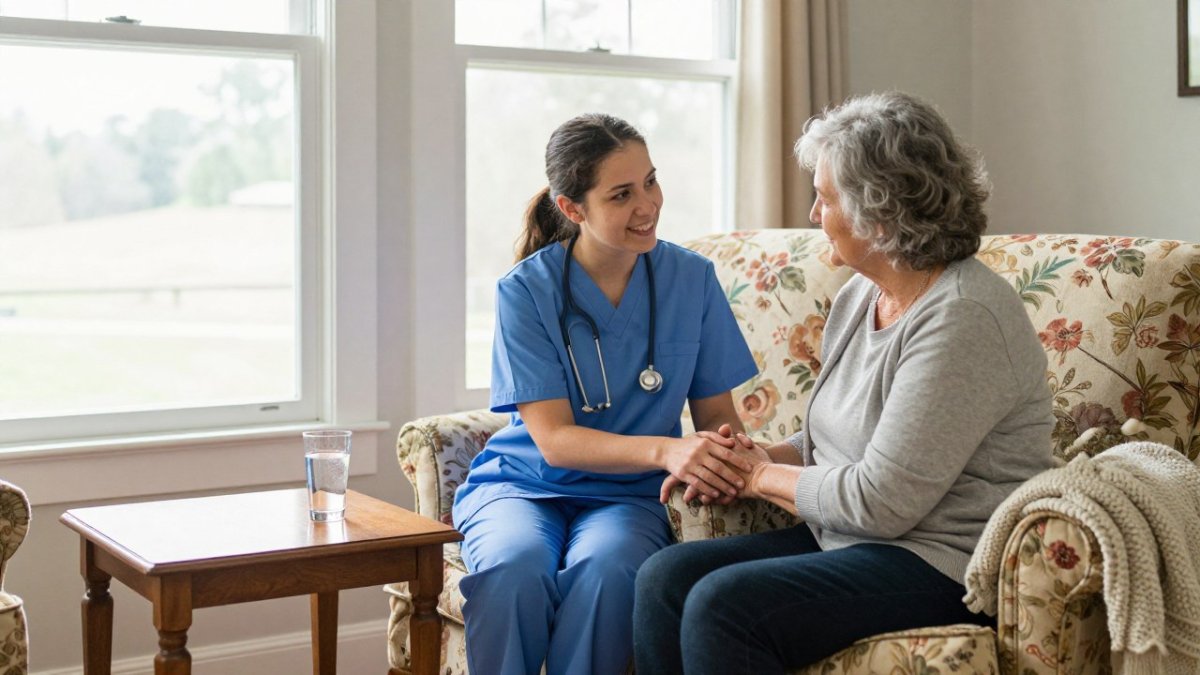
Professional home health assistance delivers skilled medical care and personal support in a person's own residence, covering tasks such as wound care, medication management, bathing, dressing, and mobility assistance. Because the help fits the person's existing routines rather than replacing them, it often preserves more independence than moving to a facility. Support falls into three groups: help with daily living, skilled medical oversight, and emotional support.
- The U.S. Bureau of Labor Statistics projects home health and personal care aide employment will grow 18% from 2025 to 2035.
- Skilled home health care is intermittent clinical care ordered by a physician and delivered by licensed clinicians.
- Nonmedical home care is generally paid privately, through long-term care insurance, or Medicaid waiver programs.
- Medicare generally does not pay for nonmedical custodial care such as help with bathing and dressing.
- Ask providers how aides are trained on safe transfers, since training quality varies between agencies.
Table of Contents
- Why Professional Home Health Assistance Supports Independence at Home
- The Practical Benefits of Professional Home Health Assistance
- Who Qualifies for Home Health Care Services
- What Does a Home Health Nurse Do on Their Visits
- What Does a Home Health Aide Do
- The Advantages of Home Care Nursing for Families
- How to Choose a Home Health Provider and Plan for the Next Step
- Frequently Asked Questions
Why Professional Home Health Assistance Supports Independence at Home
The U.S. Bureau of Labor Statistics projects that employment of home health and personal care aides will grow 18% from 2025 to 2035, far faster than the average for all occupations (Occupational Outlook Handbook, home health and personal care aides(https://www.bls.gov/ooh/healthcare/home-health-aides-and-personal-care-aides.htm)). That growth reflects something families discover quickly: professional home health assistance is often the difference between staying in your own home and leaving it.
Home health assistance is skilled and personal support delivered in a person's residence, covering both medical care and help with daily tasks. Support that respects a person's routines often preserves more independence than support that replaces them.
Aging in place works best when the help fits the person, not the other way around. The sections below explain what that help looks like, who qualifies, and how to choose a provider.
The Practical Benefits of Professional Home Health Assistance
The clearest benefits of professional home health care fall into three groups: help with daily living, skilled medical oversight, and emotional support. Each one addresses a different part of what keeps someone safely at home.
Help With Activities of Daily Living
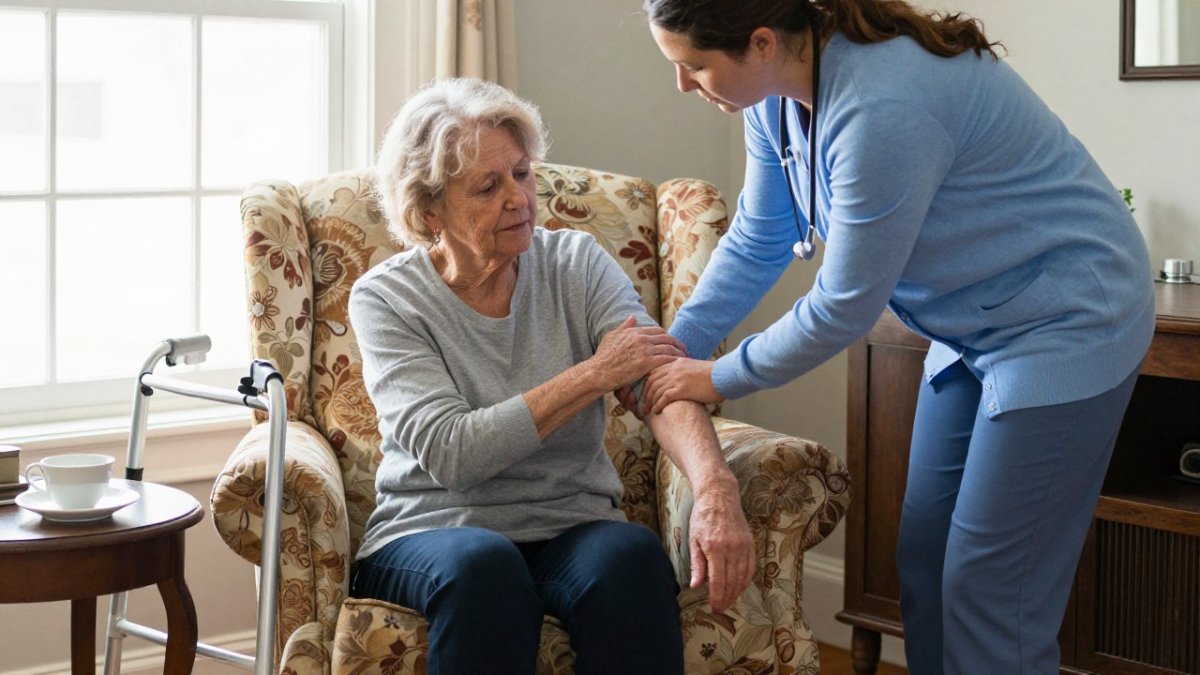
Activities of daily living include bathing, dressing, grooming, meal preparation, and mobility assistance such as walking and transferring. A home health aide handles these tasks so a senior keeps a steady routine without risking a fall in the shower or skipping meals.
Personal care aides also help with light housekeeping and medication reminders. The goal is not to take over. It is to remove the tasks that create the most danger and fatigue.
Skilled Medical Support and Condition Monitoring
Skilled nursing brings clinical care into the home: wound care, medication management, blood pressure and diabetes monitoring, and post-hospital recovery support. A registered nurse or licensed practical nurse typically makes scheduled visits and coordinates with the person's physician.
This matters for chronic illness and disability. Monitoring at home can help catch small problems before they become hospital visits.
Comfort, Companionship, and Emotional Well-Being
Familiar surroundings do real work. A 2026 article from South University on the future of home care(https://www.southuniversity.edu/news-and-blogs/2026/02/future-of-home-healthcare) notes that home-based care can lower the risk of hospital-acquired infections and may be more cost-effective, though the source does not quantify the effect.
Companionship belongs in that same conversation. Isolation worsens health outcomes, and a regular caregiver visit gives family caregivers relief while giving the senior consistent company. The emotional benefits of in-home care explain how personalized support enhances well-being.
Who Qualifies for Home Health Care Services
Eligibility is where most families get stuck, because "home health care" is used loosely to describe two different service models with different rules and payers. Getting the distinction right determines who qualifies, who pays, and what kind of caregiver shows up at the door.
Skilled home health care is clinical care ordered by a physician and delivered by licensed clinicians, registered nurses, licensed practical nurses, physical and occupational therapists, speech-language pathologists, and medical social workers. It is intermittent, not continuous: visits are scheduled for a defined purpose and a defined period, such as wound care after surgery, medication management for heart failure, or therapy after a fall.
Nonmedical home care is personal and companion support, bathing, dressing, grooming, toileting, meal preparation, mobility assistance, medication reminders, light housekeeping, and transportation. It is delivered by home health aides or personal care aides and is generally paid privately, through long-term care insurance, or through Medicaid waiver programs where available.
For Medicare-covered home health care, the traditional conditions are commonly summarized as: the person must be confined to the home ("homebound") except for infrequent absences; a physician must certify a plan of care; and the person must need skilled nursing care or skilled therapy on an intermittent basis. Medicare Advantage plans must cover the same home health services as Original Medicare, but prior authorization and network rules can differ, so confirm with the plan. Medicaid coverage for nonmedical personal care varies by state and usually requires an eligibility determination based on income, assets, and functional need.
Cost is the other half of the qualification question. Medicare covers qualifying home health services under its home health benefit, but it generally does not pay for nonmedical custodial care, the help with bathing and dressing that many families actually need. That is why the private-pay median matters: a 2026 guide from A Place for Mom's home care cost data(https://www.aplaceformom.com/caregiver-resources/articles/in-home-care-costs) reports that private-pay home care costs vary by state and by hours of care needed. Ask local providers for current rates.
Watch out: families often assume a physician's order alone unlocks Medicare coverage. The homebound status and the skilled-need requirement are separate tests, and a denial on either one is common. Ask the agency to walk you through how they document both before care starts.
If you are unsure whether your loved one needs round-the-clock support, our guide to the signs a loved one needs 24 hour care can help you assess the situation.
The two service models differ in who delivers care, what it covers, and who pays.
| Service model | Delivered by | Typically covers | How it is generally paid |
|---|---|---|---|
| Skilled home health care | Registered nurses, licensed practical nurses, therapists, medical social workers | Wound care, medication management, monitoring, post-hospital recovery | Medicare home health benefit for qualifying services |
| Nonmedical home care | Home health aides or personal care aides | Bathing, dressing, grooming, meal preparation, mobility assistance, medication reminders | Private pay, long-term care insurance, Medicaid waiver programs |
What Does a Home Health Nurse Do on Their Visits
A home health nurse delivers skilled medical support and teaches the family to manage care between visits. Typical duties include:
- Assessing vital signs and overall condition
- Managing medications and checking for interactions
- Treating wounds and changing dressings
- Monitoring chronic conditions such as heart failure or diabetes
- Coordinating with physicians and a medical social worker
- Teaching family caregivers safe techniques
Visits are usually scheduled rather than continuous. The nurse builds an individualized care plan, then adjusts it as the person's needs change.
What Does a Home Health Aide Do
A home health aide provides personal care and daily living support under a care plan. That means bathing, dressing, grooming, toileting, meal preparation, mobility assistance, and medication reminders.
Training quality varies, and it shows. Participants in a study by Eastern Kentucky University occupational therapy researchers (2019) believed new aides would benefit from training in client positioning, adaptive-equipment use, and proper lifting (The Home Health Aide Experience study(https://encompass.eku.edu/cgi/viewcontent.cgi?article=1046&context=otdcapstones)). Ask any provider how their aides are trained on safe transfers.
The Advantages of Home Care Nursing for Families
Family caregivers carry most of the load, and it wears them down. Home care nursing shifts the clinical weight, medication management, and monitoring to trained professionals while keeping family members involved in decisions.
The financial picture is mixed. Coverage disputes can happen, so families should keep records.
A qualitative study indexed by PubMed Central (2024) reports that post-discharge home care can improve service delivery, reduce costs, and help achieve health goals (Challenges of home care qualitative study(https://pmc.ncbi.nlm.nih.gov/articles/PMC10976792/)). The same study is candid about workforce and coordination challenges.
If the difference between home care and home health care still feels blurry, our guide on home care versus home health care breaks down which service fits which need.
How to Choose a Home Health Provider and Plan for the Next Step
Choosing a provider comes down to verification, fit, and a clear plan, and the questions you ask before signing matter more than the brochure. Work through this checklist in order, and get the answers in writing where possible.
Verify credentials and coverage. Confirm the agency's state license and, for skilled care, its Medicare certification status. Ask whether it holds any accreditation from a recognized body, and request the most recent inspection or survey results. For skilled care, ask whether the agency is in-network with the person's Medicare Advantage plan, because out-of-network home health can trigger prior authorization delays.
Screen the caregiver, not just the agency. Ask how aides are recruited, what background checks are run, and how the agency handles turnover. A common pattern is that agencies with high turnover send a different aide each visit, which erodes routine and safety.
Demand a written care plan. The plan should specify visit frequency, tasks, who performs each task, the goals being tracked, and the review schedule. For skilled care, ask how the nurse coordinates with the physician and whether the agency uses a shared electronic record.
Ask about after-hours and backup coverage. Find out who answers the phone at night and on weekends, what the response time is, and what the agency's backup plan is if a scheduled caregiver calls out. Ask how emergencies are handled and whether the agency has a nurse on call.
Review the contract and billing terms. Get the rate structure, visit length, cancellation policy, and any fees in writing. Confirm what is included versus billed separately, transportation, supplies, and specialized care often are not. Ask how the agency handles coverage disputes and whether it bills Medicare, Medicaid, or insurance directly or expects private payment upfront.
Track outcomes, not just hours. A strong provider sets measurable goals, daily-function ability, medication adherence, safety incidents such as falls, and avoidable hospital visits, and reviews them on a schedule. Ask how progress is reported to the family and what triggers a reassessment. Avoid any provider that promises specific clinical outcomes; legitimate agencies track and adjust rather than guarantee.
Watch out: the most common mistake is choosing on hourly rate alone. A cheaper agency with weak training and high turnover costs more in the end, through missed visits, preventable hospital trips, and the disruption of constantly training new caregivers.
Our guide to the signs it is time for professional nursing care helps families recognize when needs have outgrown what they can manage. And if you are weighing a residential setting, how at-home care helps seniors to live independently explains what that support looks like day to day.
Frequently Asked Questions
How many hours a day will Medicare pay for home health care?
Medicare does not pay for a set number of hours per day. It covers reasonable and necessary part-time or intermittent skilled nursing care, therapy, and aide visits when you meet eligibility rules. The exact amount depends on your plan of care and doctor's orders. Check your Medicare plan documents or ask the provider for details before starting services.
Who qualifies for home health care services?
You may qualify if a doctor certifies that you need skilled care, you are homebound, and a plan of care is established. Coverage varies by payer, so review your insurance or Medicare plan. A provider can help assess your needs and explain the paperwork.
What does a home health aide do?
A home health aide helps with activities of daily living such as bathing, dressing, grooming, meal preparation, and mobility assistance. They also provide companionship and report changes to the care team. Aides do not perform skilled medical tasks like wound care or medication adjustments; those are handled by nurses.
How can professional home care help older adults remain independent?
Professional home care brings support into the home, so older adults can stay in familiar surroundings. Aides assist with daily tasks, nurses monitor health, and the care team coordinates with family. This can reduce the need for facility-based care and help maintain routines, but it works best when needs are assessed honestly and the plan is adjusted as things change.