 listicle
7 Benefits of Pet Therapy for Memory Care Residents
Last Updated: October 27, 2026
Quick Summary
Pet therapy for memory care residents is a planned, supervised program that brings trained animals into a dementia care setting to support mood, social connection, and daily engagement. Reported benefits include improved mood, reduced loneliness and depression, better short-term memory and communication, and greater participation in daily activities. Programs should screen animals and handlers and check allergies and fears before the first visit.
- A review reports animal-assisted interventions may improve mood, social interaction, and apathy in nursing home residents.
- Published findings on dog therapy describe reduced loneliness and improved short-term memory and communication.
- Every animal should have a documented temperament evaluation and current vaccination records.
- Ask about resident allergy history and animal-related fears before the first visit, not after.
- A resident can decline at any visit, and staff should end contact without argument.
Table of Contents
- How Pet Therapy for Dementia Supports Memory Care Residents
- 1. Lifts Mood and Emotional Well-Being
- 2. Eases Anxiety and Depression in Dementia
- 3. Rebuilds Social Interaction and Verbal Communication
- 4. Boosts Engagement and Participation in Daily Activities
- 5. Triggers Memory Stimulation and Positive Reminiscence
- 6. Reduces Loneliness and Isolation Through Companionship
- Animal-Assisted Activities in Memory Care: Visits vs. Resident Pets
- What Families Should Ask Before Choosing a Program
- Frequently Asked Questions
How Pet Therapy for Dementia Supports Memory Care Residents
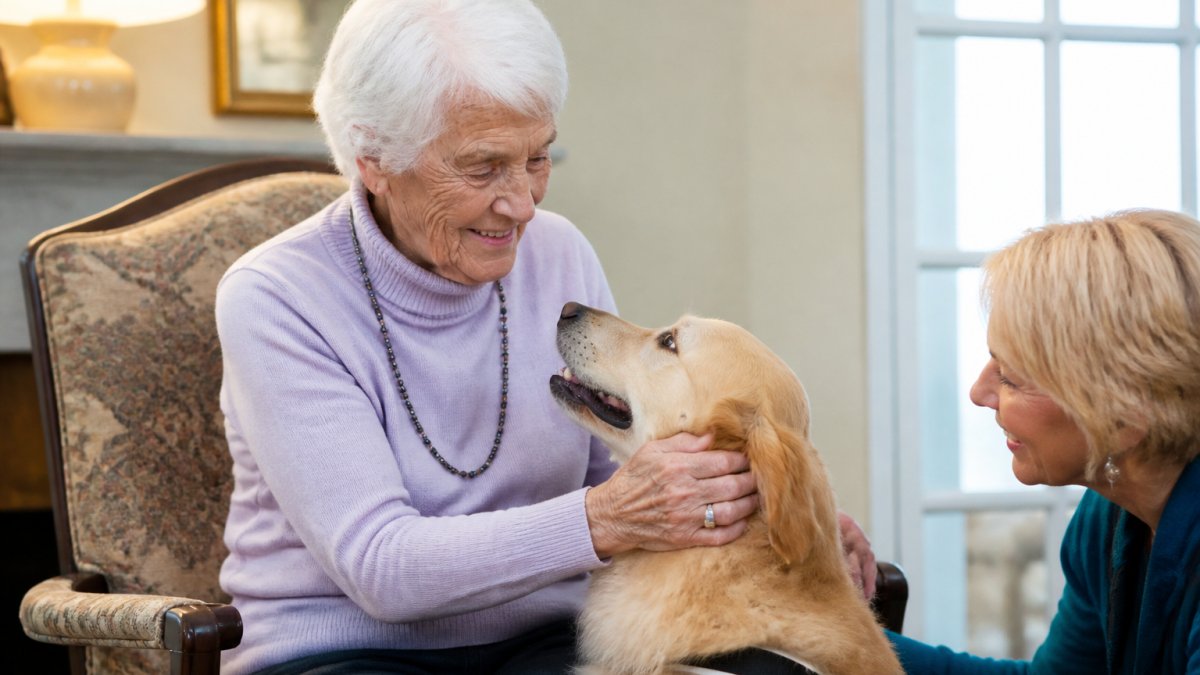
Pet therapy for memory care residents is a planned, supervised program that brings trained animals into a dementia care setting to support mood, social connection, and daily engagement. Below, we walk through seven benefits, the safety questions families should ask, and how to tell whether a program is actually working.
The research base is encouraging but modest. A review of pet therapy for older adults in nursing homes reports that animal-assisted interventions may improve mood, social interaction, and apathy, and it summarizes earlier findings of decreased depression and increased motivation for physical activity. Note the word "may." Anyone promising a cure is selling something.
1. Lifts Mood and Emotional Well-Being
Dementia often flattens emotional range. A resident who once laughed easily can spend whole days with a neutral, distant expression. Animal visits give that flatness something to push against.
The same review noted above describes improved mood as one of the more consistent reported outcomes of animal-assisted interventions in long-term care settings.
2. Eases Anxiety and Depression in Dementia
Anxiety in dementia often shows up as pacing, repeated questions, or refusal to sit down.
Published findings on dog therapy for people with dementia describe reduced loneliness and improved short-term memory and communication among reported benefits. The same synthesis literature points to lower depression scores and, in some settings, reduced use of pain medication.
3. Rebuilds Social Interaction and Verbal Communication
Conversation is one of the first things dementia takes. Word-finding stalls, sentences fragment, and residents start withdrawing from group settings because talking has become exhausting.
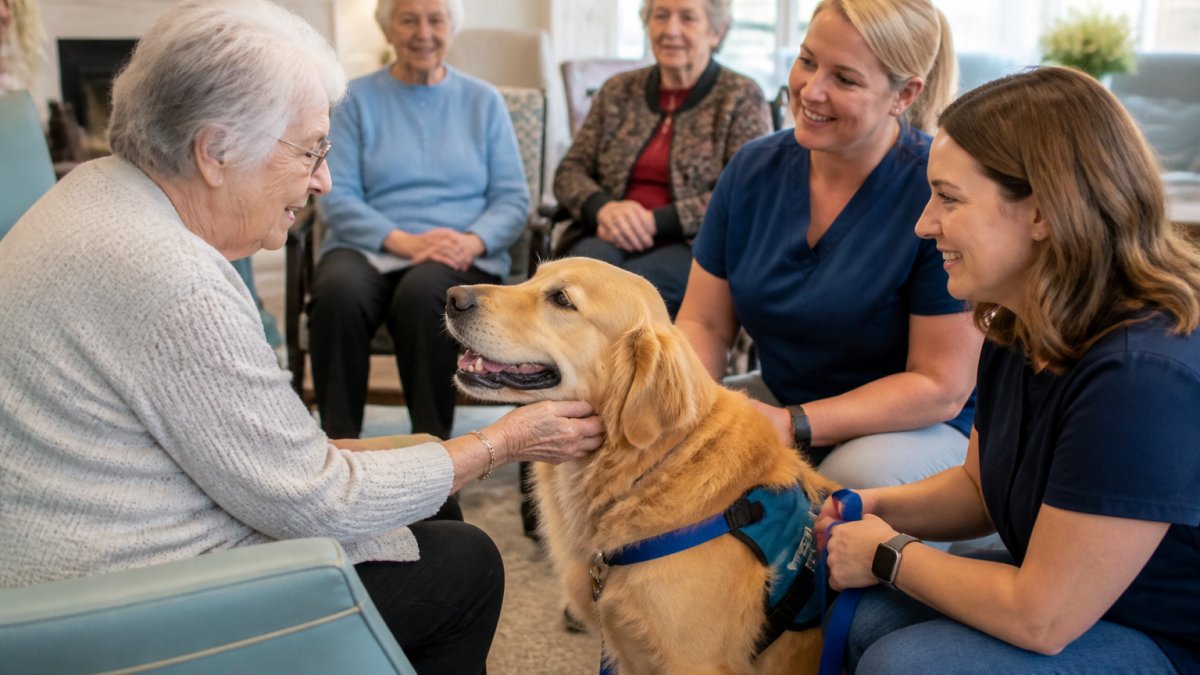
Animals lower the bar. A resident who cannot finish a sentence can still say "good dog." That small success invites another attempt.
For more ideas on building connection through shared activity, see our guide to senior living social activities that build real connection.
4. Boosts Engagement and Participation in Daily Activities
Apathy is one of the harder dementia symptoms for families to witness. Residents stop initiating anything and decline invitations to activities they once enjoyed.
Cognitive stimulation therapy works on a similar principle: structured, engaging activity that pulls residents back into participation. If you are weighing approaches, our review of whether cognitive stimulation therapy is worth it compares it directly with other engagement methods.
5. Triggers Memory Stimulation and Positive Reminiscence
Reminiscence is the deliberate use of familiar, meaningful prompts to bring forward positive memories and the feelings attached to them.
This is where the I'm Still Here® philosophy matters. Our article on memory care programming that helps seniors celebrate traditions shows the same principle applied to holidays and family rituals.
6. Reduces Loneliness and Isolation Through Companionship
Loneliness in long-term care is quiet and easy to miss. A resident can sit in a busy dining room and still feel completely alone.
Animal-Assisted Activities in Memory Care: Visits vs. Resident Pets
Structured therapy visits.
Facility animals.
Personal pets.
| Factor | Therapy Visits | Facility Animal | Personal Pet |
|---|---|---|---|
| Who handles the animal | Trained handler | Assigned staff | Resident, family, or staff |
| Screening | Temperament and vaccination records per animal | Community pet policy and health checks | Community policy plus veterinary records |
| Allergy and phobia management | Scheduled and contained; residents opt out | Harder to separate residents | Hardest; animal is present daily |
| Infection control | Handler manages hygiene between visits | Staff must own cleanup and sanitation | Family and staff share responsibility |
| Staffing demand | Scheduled, time-limited | Ongoing daily | Ongoing daily plus backup coverage |
| Best fit | Most memory care residents | Communities with dedicated pet policies and staffing | Residents with committed family support |
The safety questions that decide the choice.
- Screening. Every animal should have a documented temperament evaluation and current vaccination records. Ask who performed the evaluation and when it was last updated.
- Infection control. Hand hygiene before and after contact, clean bedding, and a plan for waste and accidents are baseline. Residents with compromised immunity or open wounds should be cleared by their care team before contact.
- Allergies. Ask about resident allergy history before the first visit, not after. Scheduling visits in a separate room and keeping the animal off beds and upholstery reduces exposure for residents who react.
- Phobias and trauma. A resident with a history of dog-related trauma can be distressed by a visit meant to comfort. Staff should know which residents have animal-related fears and offer a no-contact alternative.
- Bite and fall risk. Even calm animals can startle. Handlers should keep the animal leashed and positioned so a resident does not have to bend or reach awkwardly, and staff should be ready to steady a resident who stands to greet the animal.
- Consent. A resident can decline at any visit. Staff should read discomfort cues, turning away, tensing, covering the face, and offer to end contact without argument.
If your family is exploring that route, our overview of pet-friendly assisted living options explains what to ask before choosing a community.
What Families Should Ask Before Choosing a Program
Most program descriptions sound identical on a tour.
1. Who plans the session, and what do they plan?
2. How are activities adapted to dementia stage?
3. How is the resident's response recorded and used?
4. What happens when a visit goes badly?
5. How does the program screen animals and handlers?
6. How is consent handled?
7. What alternatives exist for residents who cannot safely participate?
At Emory Mills, our partnership with the Hearthstone Institute. If you want to learn more, explore our evidence-based memory care.
Frequently Asked Questions
What are the benefits of pet therapy for people with dementia?
Research reviews report that pet therapy can improve mood, social interaction, and engagement while reducing depression and apathy among older adults in long-term care. For people with dementia, studies describe better short-term memory, more communication, improved eating habits, and less loneliness. Evidence from five systematic reviews found improvements in mood, response, engagement, and interaction, plus reduced depression and lower use of pain medication. Effects vary by resident, so treat these as typical benefits rather than guarantees.
Is pet therapy safe for seniors with dementia?
Pet therapy safety for seniors depends on screening and supervision. Reputable programs use temperament-tested animals, require current vaccinations, and have handlers who stay with the animal throughout the visit. Staff should check for allergies, fear of animals, and skin conditions before a resident participates, and should get consent from the resident or their family. Hand hygiene before and after contact matters. Ask any memory care community how it screens animals and what happens if a resident becomes agitated during a visit.
Can pet therapy help reduce anxiety in memory care residents?
Reviews of animal-assisted interventions report lower anxiety, stress, and depression among older adults, and calmer responses in people with dementia. A therapy animal can redirect attention during agitation and provide a comforting presence that lowers distress. The evidence is promising but not uniform, and results depend on the animal, the handler, and the resident's history with pets. Pair pet therapy with other person-centered approaches rather than relying on it alone.
How often should memory care residents participate in pet therapy?
There is no single recommended frequency in the research. Many memory care communities schedule animal-assisted activities weekly or several times a month, and some arrange daily contact through resident pets or staff-owned animals. What matters more than the count is consistency and fit: regular, predictable visits help residents build a routine, and shorter sessions work better for residents who tire easily or become overstimulated. Ask the community how visits are scheduled and whether your family member can opt in or out.
The real question is not whether pet therapy sounds nice, it is whether your family member's community can deliver it safely and measure whether it helps. Emory Mills builds animal-assisted activities into individualized memory care plans, backed by the I'm Still Here® philosophy, 24/7 support, and a team that knows each resident's story. Get started with Emory Mills and see what meaningful engagement looks like in person.