 how-to
How Do You Create a Memory Box for Dementia Patients?
Last Updated: October 30, 2026
Quick Summary
To create a memory box for dementia patients, choose an easy-to-open container holding 8 to 12 meaningful items, such as family photos, keepsakes, and sensory objects tied to the person's work, hobbies, and milestones. Label it with their name and photo, place it where they spend time, and check every item for safety.
- Pick a clear container the person can open and reach without help.
- Fill the box with 8 to 12 items connected to their own history.
- Gather life stories from family before choosing objects for the box.
- Keep sessions short, around 10 to 15 minutes, and let the person lead.
- Photograph irreplaceable keepsakes and place the photo in the box instead.
Table of Contents
- What a Memory Box Is and How It Helps Someone With Dementia
- Step 1: Choose the Right Box and Set It Up for Easy Access
- What to Put in a Memory Box for Dementia: Meaningful Objects and Photos
- Dementia Memory Box Ideas for Work, Hobbies, and Life Milestones
- Safety and Accessibility Checks Before You Share the Box
- Memory Box Activities for Dementia: How to Use the Box Together
- Memory Box Conversation Prompts That Get Stories Flowing
- What to Do When an Item Triggers Distress or Confusion
- Frequently Asked Questions
What a Memory Box Is and How It Helps Someone With Dementia
A memory box is a small, organized container of familiar objects, photos, and keepsakes that helps a person living with dementia reconnect with their life story. You can learn about our evidence-based memory care approach that memory boxes support.
When memory loss makes the present feel uncertain, familiar objects offer a steady anchor. Researchers studying memory box activities in dementia care have looked at whether knowing a person's life, likes, and dislikes changes how staff relate to them and the quality of care they give (C. Reynolds memory box research). A separate study examined memory boxes displayed outside residents' rooms as a way to establish continuity of self (memory boxes in dementia care study).
Memory boxes can help in three ways:
- They give a person a sense of identity and continuity
- They create natural openings for conversation and connection
- They help caregivers respond with warmth instead of guesswork
If you are weighing professional support, our overview of what memory care is explains how a memory box fits into a broader care plan.
Step 1: Choose the Right Box and Set It Up for Easy Access
Pick a box that is easy to open, see into, and reach, one the person can use without help.
Here is how to set one up:
- Choose a size that holds 8 to 12 items. Too many cause confusion; too few feel empty.
- Test the lid. It should open without force, avoid tight latches.
- Label the outside with a name and a photo so the person recognizes the box as theirs.
- Place it where the person spends time, a bedside table or eye-level shelf beats a closet.
- Keep a duplicate set of fragile items elsewhere to protect keepsakes.
Watch out: a heavy lid or a locked box can turn a comfort item into a source of frustration. If the person cannot open it alone, the box loses its purpose.
Here is how to set up the box so the person can use it independently.
| Step | What to do |
|---|---|
| 1 | Choose a size that holds 8 to 12 items |
| 2 | Test the lid; it should open without force |
| 3 | Label the outside with a name and a photo |
| 4 | Place it where the person spends time |
| 5 | Keep a duplicate set of fragile items elsewhere |
What to Put in a Memory Box for Dementia: Meaningful Objects and Photos
Fill the box with items that carry personal meaning, not just general interest. Prioritizing items that evoke a specific narrative helps ground the individual in their own story, a process that becomes much clearer when choosing sentimental keepsakes.
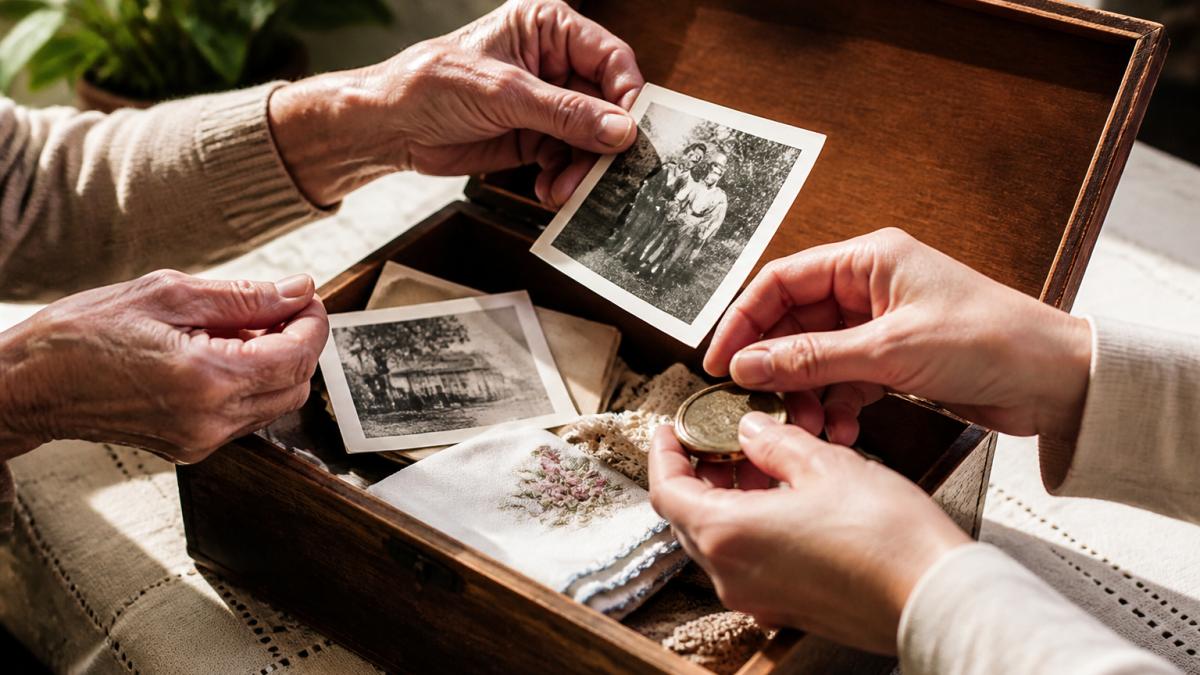
Good choices include:
- A favorite photo of family or a beloved pet
- A small memento from a trip or wedding
- A folded piece of familiar fabric
A Step-by-Step Process That Keeps the Person Involved
A helpful approach is a short sequence that preserves the person's choice and dignity:
- Gather stories before you gather objects. Ask family and the person about work, hometown, hobbies, and relationships. Write down three to five recurring themes.
- Pick one theme to start. A single theme, a career, a garden, a hometown, gives the box focus. Build additional boxes later.
- Invite the person to choose. Lay out candidate items and watch where their eyes and hands go; their reach is more reliable than their verbal answer.
- Assemble together when possible. Even handing you one item builds ownership. Narrate in short, calm sentences.
- Test the box in a low-pressure moment. Set it out on a quiet afternoon and note which items they pick first and which they ignore.
- Refine after a week. Remove items that draw no interest or cause confusion, and add one or two tied to themes that worked.
Photographs, Letters, and Written Memories
Photographs do the heaviest lifting in most memory boxes. Choose clear, large images with one or two people, not crowded group shots, and add a short caption naming who is in it. Written memories work the same way: a few lines in a card or short letter give the person something to read and respond to. A small photo album tucked inside can extend the collection without cluttering it.
Sensory Items: Fabrics, Scents, and Music
Sensory items can engage people who no longer follow conversation well. A square of soft fabric, a familiar scent like lavender or a favorite soap, and a small music player loaded with beloved songs all provide sensory stimulation.
Personalizing Across Dementia Stages and Changing Abilities
The right contents change as the person's abilities change. These adjustments may help as a guide:
- Early stage: Include more written material, letters, captions, a short life-story page, and invite the person to add items themselves.
- Middle stage: Favor large, uncluttered photos and a few tactile objects. Reduce to eight or fewer items and rotate every few weeks.
- Later stage: Focus almost entirely on sensory experience, soft fabrics, familiar scents, a music player with a single favorite playlist. Skip small or fragile items; choose objects easy to grip and safe to mouth.
Refresh the box periodically, a few new items in, a few tired ones out, so it stays interesting without becoming unfamiliar.
Dementia Memory Box Ideas for Work, Hobbies, and Life Milestones
Match the box to the life the person actually lived. A former teacher may light up at a stack of old attendance cards; a gardener may respond to a seed packet or a small trowel. Build around work history, hobbies, and personal milestones:
- Work history: a badge, a uniform patch, a tool, a pay stub
- Hobbies: knitting needles, a fishing lure, a deck of cards, a recipe card
- Milestones: a wedding photo, a birth announcement, a graduation program
Ask family members for one object each, then choose the items that draw the strongest reaction.
Safety and Accessibility Checks Before You Share the Box
Run a safety check before the box goes into anyone's hands. Small parts, sharp edges, and heavy objects pose real risks for a person with dementia. Walk through this list:
- No loose buttons, beads, or pills that could be swallowed
- No sharp tools, blades, or broken glass
- Nothing heavy enough to cause injury if dropped
Choking, Sharp Edges, and Toxic Materials
A person with dementia may put objects in their mouth, grip them tightly, or handle them roughly. Check each item against these common risks:
- Choking hazards: Anything smaller than a golf ball deserves a second look. Coins, buttons, beads, small figurines, and loose hardware should stay out unless mounted or sealed inside a display frame.
- Sharp edges and points: Choose blunt or replica versions, a wooden spoon instead of a knife, a plastic trowel instead of a metal one.
- Toxic materials: Avoid old painted items that may contain lead, peeling finishes, and anything that could flake. Skip scented items not labeled skin-safe, and never include medications, alcohol, or cleaning products even as nostalgic props.
Adapting Items for Vision, Hearing, and Dexterity
Accessibility is not just about safety, it is about whether the person can actually use the box. Adapt items to their senses and hands:
- Low vision: Choose high-contrast photos, large-print captions, and bold shapes. Add a small magnifier on a cord if the person reads.
- Hearing loss: Pair items with written labels and rely on touch and smell. If you include a music player, use over-ear headphones with volume limits rather than earbuds.
- Limited hand strength or arthritis: Select lightweight, textured objects that are easy to grip. Avoid latches, clasps, and tight lids. A shallow tray inside keeps items from sliding out of reach.
Labeling, Portability, and Shared Care
A memory box often moves between family members, caregivers, and a residential setting. Make it easy to use by anyone:
- Label the outside with the person's name and a photo, and add a short note inside the lid listing contents and any items to avoid.
- Keep it portable. A box with a handle or a small tote is easier to bring to a visit than a heavy chest. If the person lives in a care community, ask staff where the box can be stored securely and accessed on request.
- Share the log. A simple contents list, item, owner, and any caution, helps every caregiver use the box consistently and prevents a well-meaning visitor from adding an unsafe item.
Replace worn items regularly, and recheck the box whenever the person's abilities change.
Memory Box Activities for Dementia: How to Use the Box Together
A memory box works well as a shared activity rather than a test. Sit beside the person, open the box together, and let them lead. There is no right order and no quiz. Follow their attention.
- Let the person pick one item and talk about whatever comes up
- Play a song tied to a photo and see where it leads, and explore senior living social activities that build real connection for broader engagement ideas.
- Keep sessions short, around 10 to 15 minutes, and see how to adapt board games for seniors with memory loss for more hands-on activity ideas.
Memory Box Conversation Prompts That Get Stories Flowing
Good prompts are open and gentle. Skip "Do you remember?" because it can highlight memory gaps. Instead, invite storytelling with phrases like these:
- "Tell me about this photo."
- "What was your favorite song back then?"
- "What did a typical day look like at work?"
Keep your tone relaxed and follow the person's lead. If they drift to a different memory, go with it. The connection matters more than accuracy.
What to Do When an Item Triggers Distress or Confusion
Some items can stir sad or frightening memories. Our step-by-step guide to managing sundowning symptoms offers more guidance on agitation and confusion.
Watch out: forcing an item that causes distress can damage trust and make the person avoid the box altogether. Remove the trigger, note it for later, and try again another day.
Building a memory box takes an afternoon, but using it well takes patience and a little practice.
Frequently Asked Questions
What should you avoid putting in a memory box for someone with dementia?
Leave out anything sharp, breakable, or small enough to swallow, along with loose buttons, medications, and cords. Skip items tied to painful memories, such as hospital paperwork or a deceased spouse's belongings, unless the person brings them up calmly. Avoid heavy boxes the person cannot lift and anything valuable enough that losing it would cause stress. Check every item for peeling paint, rust, or loose parts before it goes in the memory box.
How do you use a memory box to start a conversation?
Open the box together and let the person choose what to pick up first. Ask open questions like "Tell me about this photo" rather than quizzing them on names or dates. Follow their lead: if they mention a job or a hobby, ask what a typical day felt like. Keep prompts short, allow silence, and stop when interest fades. A few minutes of calm back-and-forth beats a long session, and the same items can be revisited on another day.
Are memory boxes helpful for people with dementia?
Caregivers and memory care teams use memory boxes to support reminiscence, which means drawing on long-term memories that often stay intact longer than recent ones. Some research on memory boxes in dementia care suggests possible benefits for relationships and person-centered care. Results vary by person and stage, so treat the box as one tool among several rather than a treatment.
How can you make a memory box safe and easy to use?
Choose a shallow box with a lid the person can open without help, and label it with their name and a photo. Test each item by hand: no sharp edges, no loose pieces, nothing heavy. Keep the box on a stable shelf or table at waist height rather than a high closet. If the person mouths objects or has trouble gripping, swap small items for larger textiles, a photo album, or a music player. Review the contents every few months as abilities change.