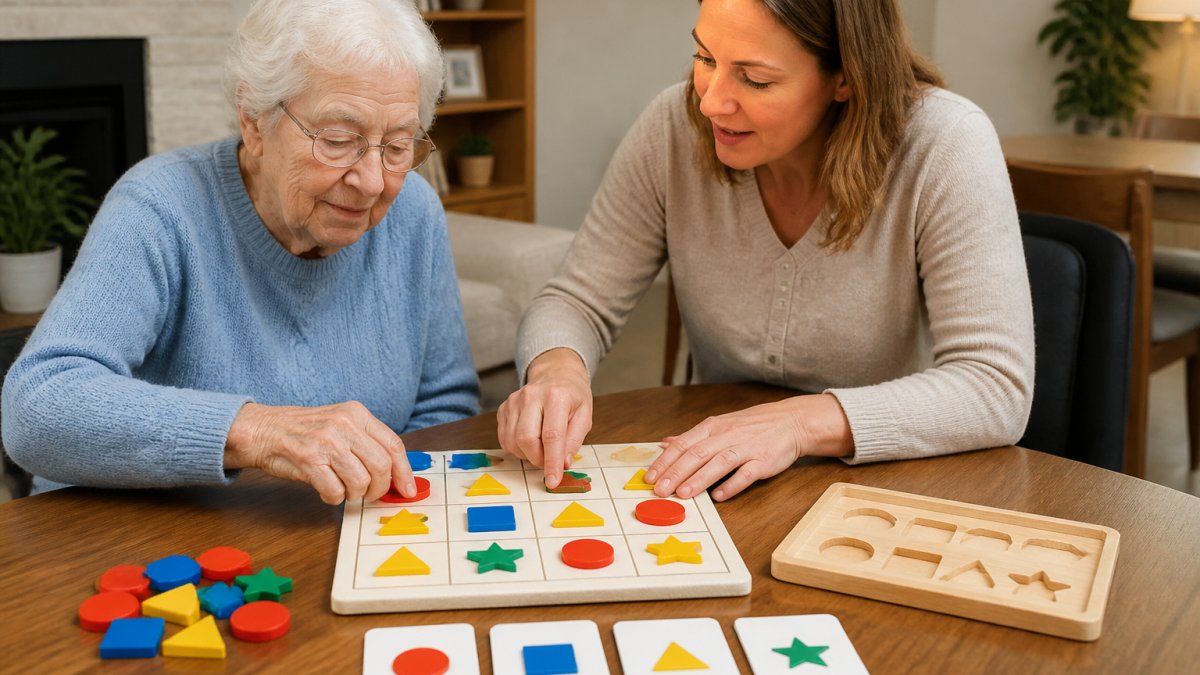
 how-to
How Do You Adapt Board Games for Seniors With Memory Loss?
Last Updated: October 25, 2026
Quick Summary
To adapt board games for seniors with memory loss, choose a familiar game and cut it down to one simple goal, removing scoring, penalties, and side rules. Enlarge cards and pieces, play as a team, narrate each step, and stop while it is still fun.
- Write out the rules in one sentence; if you cannot, the game is too complex for now.
- Ten to fifteen minutes is often plenty for a session with memory loss.
- In the middle stage, cut the game to one goal and use visual cues and prompts.
- Use large, high-contrast cards and thick, easy-grip tokens for accessibility.
- If a player gets frustrated, stop the game and do not correct the mistake.
Table of Contents
- Why Adapting Board Games Matters for Seniors With Memory Loss
- What You'll Need Before You Start
- Step-by-Step: How to Simplify Board Game Rules
- Easy Board Games for Seniors With Dementia
- Sensory, Motor, and Accessibility Modifications
- Short Activities for Seniors With Memory Loss
- Caregiver Tips for Playing Games With Dementia Patients
- How to Tell If Your Adaptations Are Working
- Frequently Asked Questions
Why Adapting Board Games Matters for Seniors With Memory Loss
The game is not the point. The connection is.
That is the first thing we tell families who ask how to adapt board games for seniors with memory loss. A familiar game gives a person with dementia a structured way to spend time with people they love. It also gives them a role, a turn, and a reason to stay engaged.
Research points to real benefits. One review of board-game playing and dementia risk suggests that regular play may help slow cognitive decline and reduce depression. Another study on board-game-based training reported gains in cognitive function and lower fall risk. The same review notes that adapting familiar games with clearer materials can make play more accessible.
At Emory Mills, our memory care team builds activities around each resident's life story and remaining abilities rather than around a diagnosis. Games fit that approach well. A deck of cards, a simple board, and a patient partner can do more for a person's mood than almost anything else on a shelf.
What You'll Need Before You Start
You do not need a closet full of new games. You need a few basics and a little patience.
- A familiar game the person already knows, such as bingo, cards, or checkers
- Large-print materials: bigger cards, boards, and pieces
- Good lighting and a quiet room with few distractions
- A timer if you plan short rounds
- A notebook to track what worked
- Patience, and no scoreboard pressure
Pick a time of day when the person is most alert. For many older adults, that is mid-morning. Keep the first session short and end while it is still fun.
Step-by-Step: How to Simplify Board Game Rules
Learning how to simplify board game rules is the core skill here. The goal is to keep the familiar feel of the game while cutting the steps that cause confusion.
- Choose a game the person already knows. Familiarity does more than novelty. A person may recall the shape of a favorite game even when they cannot recall what day it is.
- Write out the rules in one sentence. If you cannot, the game is too complex for now.
- Cut the game to one goal. Remove scoring, penalties, and side rules. Keep only "match the cards" or "move around the board."
- Reduce the pieces. Use half the deck, fewer spaces, or fewer tokens.
- Enlarge everything. Print cards bigger, add color coding, and use thick, easy-grip pieces.
- Take turns together. Play as a team instead of against each other. Cooperative play removes the pressure to win.
- Narrate each step. Say what you are doing out loud. "I draw a card. Now it's your turn."
- Stop while it is still fun. End on a good round, not a frustrating one.
A Before-and-After Example: Adapting Snakes and Ladders
Here is how one familiar game changes in practice.
Before: A standard Snakes and Ladders board with a dice, numbered squares, and ladders that send players backward.
After: A caregiver prints a large board with clear colors. Numbered cards replace the dice, so the person does not have to count pips. Ladders only move players forward. Turns are short, and the game ends after one trip around the board.
The Alzheimer's Society account of an adapted Snakes and Ladders game describes exactly this approach: a clear design with numbered cards instead of dice. No one reports a dramatic outcome. That is fine. The win is a calm, happy half hour together.
Here is the eight-step process for simplifying a familiar game while keeping its familiar feel.
| Step | What to do |
|---|---|
| 1 | Choose a game the person already knows |
| 2 | Write out the rules in one sentence |
| 3 | Cut the game to one goal |
| 4 | Reduce the pieces |
| 5 | Enlarge everything |
| 6 | Take turns together as a team |
| 7 | Narrate each step out loud |
| 8 | Stop while it is still fun |
Easy Board Games for Seniors With Dementia
Easy board games for seniors with dementia share a few traits: simple rules, big pieces, and short rounds. Match the game to the person's abilities, interests, and preferences, which game selection guidance from Always Home Connected names as the key factors. Beyond the immediate enjoyment of play, incorporating regular neuro fitness exercises helps maintain cognitive agility and supports the mental stamina required for these social interactions.
Good options include:
- Matching cards and memory-matching games
- Bingo with large cards
- Simple card games like Go Fish or Old Maid
- Checkers with a reduced board
- Color or shape sorting games
- Large-piece puzzles
Avoid games with fast timers, heavy reading, or complex scoring. A good rule: if you have to explain the rules twice, simplify the game instead.
Matching the Game to the Stage of Memory Loss
Adaptations should shift as memory loss progresses.
- Early stage: Keep most rules. Add larger print and a quiet setting.
- Middle stage: Cut the game to one goal. Use visual cues and prompts. Play as a team.
- Later stage: Focus on matching, sorting, and sensory play. Skip formal rules entirely.
In practice, this means the same person may move from full checkers to a matching game over time. That is not a loss. It is the right game for the right day.
Sensory, Motor, and Accessibility Modifications
Small physical changes make a big difference for players with limited mobility, vision loss, or arthritis.
- Use large, high-contrast cards with bold numbers and letters
- Swap small pieces for thick, easy-grip tokens
- Place the board on a non-slip mat at a comfortable height
- Add texture to pieces for players with low vision
- Keep the play area uncluttered and well lit
- Offer hand-over-hand help when a player struggles to reach
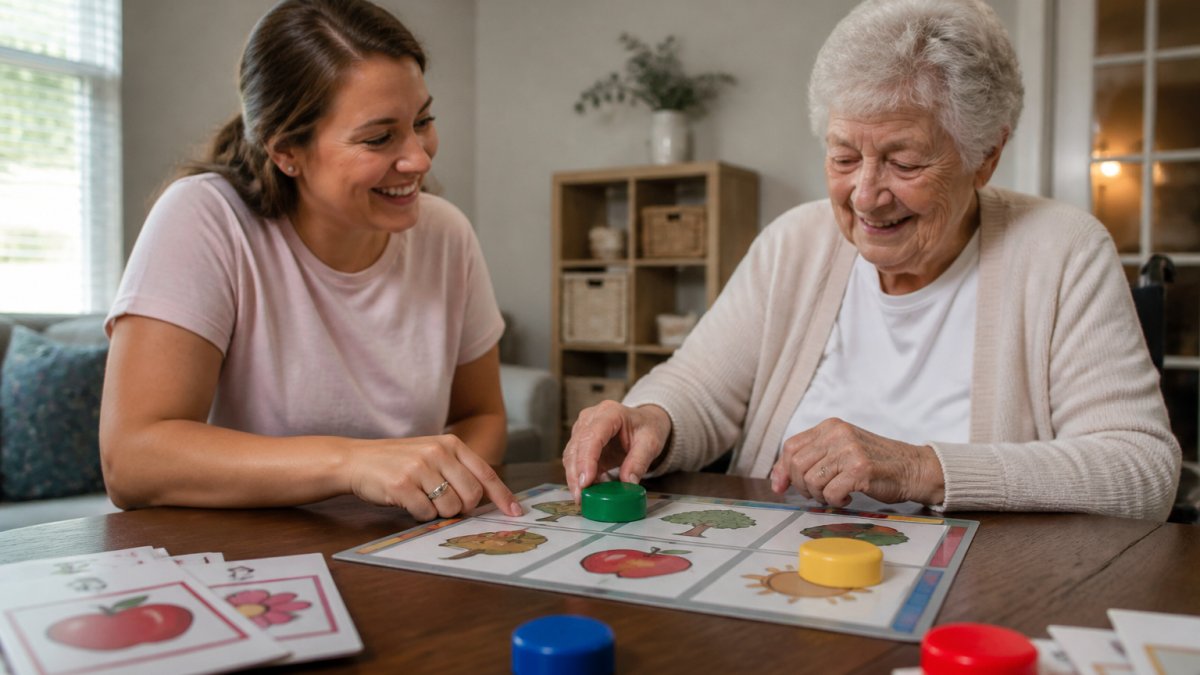
These changes help stroke survivors and players with limited mobility too. The goal is simple: remove barriers so the person can take part without frustration.
Short Activities for Seniors With Memory Loss
Short activities for seniors with memory loss work better than long sessions. Ten to fifteen minutes is often plenty.
Try these:
- A single round of a card game
- Sorting buttons or cards by color
- A five-minute matching game
- Naming objects in a picture
- Rolling a ball back and forth
- Singing a familiar song between turns
Short, frequent sessions beat one long one. They also reduce fatigue and keep the activity feeling like a treat rather than a task.
Caregiver Tips for Playing Games With Dementia Patients
Caregiver tips for playing games with dementia patients come down to one idea: follow the person, not the rulebook.
- Offer choices instead of instructions
- Use a warm, calm voice
- Praise effort, not accuracy
- Let the person lead when they want to
- Keep sessions short and end on a high note
- Skip the scoreboard entirely
For broader guidance, our team points families to these practical tips for caring for a loved one with dementia at home. And if a player gets confused or upset, these actions to avoid with a loved one with dementia can help you respond with less friction.
When a Player Gets Frustrated or Confused
Stop the game. Do not correct the mistake.
Say something like, "Let's take a break," and switch to a simpler task. Offer a glass of water or a short walk. When you return, drop the rule that caused the trouble.
Watch out: arguing about a wrong move can escalate quickly. A person with dementia may not be able to follow the correction, and the frustration can linger for hours. Let it go, and keep the relationship ahead of the rules.
How to Tell If Your Adaptations Are Working
You will know an adaptation is working when the player stays calm, engaged, and willing to play again. That is the real test, not whether the game is played correctly.
Use this simple checklist after each session:
- Did the person stay engaged for most of the session?
- Did they seem calm rather than frustrated?
- Did they ask to play again, or smile during play?
- Did any rule or piece cause confusion?
- What would you change next time?
If the answer to the first three is yes, keep going. If not, simplify further. Track your notes for a few weeks, and patterns will appear.
When a family wants more structured support, our evidence-based memory care approach shows how personalized engagement works day to day. You can also get in touch with our team to ask questions or plan a visit. For a deeper look at why engagement matters, read about specialized activities for seniors in memory care.
Frequently Asked Questions
What board games are easiest for seniors with dementia to play?
Games with few rules and no reading tend to work best: matching card games, simple bingo variants, dominoes, and adapted versions of familiar classics like Snakes and Ladders. The key is matching the game to the person's cognitive abilities, interests, and preferences, as game selection guidance recommends. Familiar games often work better than new ones because long-term memory for the rules can outlast short-term recall. Start with one or two rules and add complexity only if the player stays comfortable.
How do you make game rules easier to remember?
Cut the rules down to one or two actions and repeat them aloud at the start of each turn. Use visual cues such as color-coded cards, numbered spaces, or a simple picture chart showing the turn order. Replace dice with numbered cards if rolling is hard to follow. Research on adapted games, including an Alzheimer's Society account of a modified Snakes and Ladders game using clear design and numbered cards instead of dice, supports keeping materials simple and visually clear.
How long should a game session be for someone with memory loss?
Shorter is usually better. Many caregivers find 10 to 20 minutes works well, ending while the person is still enjoying themselves rather than waiting for fatigue or frustration to set in. Watch for signs like fidgeting, repeated questions, or losing interest, and stop at the first one. A short, successful session you can repeat tomorrow beats a long one that ends badly. You can always play a second round if the person asks for one.
Can board games help people with dementia stay socially engaged?
Yes. Games create a natural reason to sit together, take turns, and talk, which supports social interaction and communication. A 2013 article in Dementia & Neuropsychologia discussed a possible beneficial effect of board-game playing on dementia risk, potentially mediated by less cognitive decline and less depression, though it did not provide a quantified effect. Treat games as meaningful engagement first and cognitive exercise second, and let the conversation carry as much value as the game itself.
The hardest part is not the game. It is believing that a small, simple moment still counts for something. It does. If you are ready to see how purposeful engagement works in a community built around each resident's story, Emory Mills offers personalized memory care guided by the I'm Still Here® philosophy, 24/7 support, and chef-prepared meals. Get started with Emory Mills and schedule a tour to see what a meaningful day looks like.