 how-to
How to Install Grab Bars for Dementia Patients
Table of Contents
- Why Grab Bars Matter for Dementia Patients
- Assessing Your Home and Planning Grab Bar Placement for Elderly
- How to Install Grab Bars in a Bathroom: Tools and Materials
- Shower Grab Bar Placement and Installation Steps
- Grab Bar Safety Tips and Post-Installation Inspection
- Common Installation Mistakes and When to Hire a Professional
- Supporting Safe Use: Caregiver Assistance and Ongoing Checks
- Frequently Asked Questions
Last Updated: October 16, 2026
Why Grab Bars Matter for Dementia Patients
Learning how to install grab bars for dementia patients is one of the most effective ways to prevent falls and maintain independence in the bathroom. Falls are the leading cause of injury-related death among older adults, and the bathroom is where most falls happen.
A grab bar does more than provide physical support. It offers a visual cue that helps people with dementia navigate the space safely. It signals where to hold on, reducing confusion and anxiety.
At Emory Mills, we understand that safety and dignity go hand in hand. The right grab bar setup respects a person's desire to stay independent while protecting them from serious injury. Installing them correctly is not complicated, but it does require planning.
The stakes are high. A bathroom fall can lead to broken bones, hospitalization, and loss of independence. For someone with dementia, the recovery process is often harder because they may not understand why they're in pain or unable to do what they did before.
Assessing Your Home and Planning Grab Bar Placement for Elderly
Before you buy a single grab bar, walk through your bathroom and look for danger zones. The goal is to identify where your loved one is most likely to lose balance or need support. This requires thinking about their specific abilities and limitations.
High-Risk Areas in the Bathroom
The toilet area is the highest-risk zone. People stand up from a toilet many times a day, and that motion is unstable. You're rising from a low seat, often without armrests, and the surface beneath your feet may be wet or slippery.
The shower or tub is the second danger zone. Water makes surfaces slippery. The person is barefoot, often unsteady, and may be confused about the sequence of steps needed to get in and out safely. They may forget to hold on or not realize they need to.
The sink area matters too, especially if your loved one uses it to steady themselves while brushing teeth or washing hands. A grab bar here can prevent a fall forward onto the counter.
The pathway between the door and the toilet is easy to overlook, but it's important. If your loved one is confused or in a hurry, they may stumble in this transition zone.
Dementia-Specific Considerations for Visibility and Recognition
People with dementia often have trouble seeing contrast. A dark grab bar on a dark tile wall may be invisible to them, even if they're looking at it. Choose grab bars in colors that stand out against your walls. Bright white, stainless steel, or chrome works well on most tile.
Texture matters too. A textured or ridged grab bar is easier to grip and gives better feedback to the hand. Smooth metal can be slippery when wet.
The shape of the grab bar sends a message. A horizontal bar says "hold here to move left or right." A vertical bar says "hold here to stand up or sit down." An angled bar works for both. People with dementia may not read instructions, but they can read shapes.
Lighting is critical. A dimly lit bathroom is dangerous for anyone, but especially for someone with dementia. Install bright, even lighting around the grab bar so the person can see it clearly. Avoid shadows and glare.
How to Install Grab Bars in a Bathroom: Tools and Materials
You'll need basic tools and the right hardware. Don't skip this step. A grab bar that's not anchored properly can fail when someone leans on it, causing a dangerous fall.
Tools you'll need:
- Stud finder (electronic, about $15-30)
- Drill with bits (3/16-inch for pilot holes, larger bit for wall anchors if needed)
- Screwdriver (Phillips and flathead)
- Level (to ensure bars are straight)
- Tape measure
- Pencil
- Wrench or socket set (if your grab bar uses bolts)
Materials:
- Grab bars (choose the right type for your space)
- Wood screws (if mounting into studs, usually 2.5 inches long)
- Wall anchors rated for at least 250 pounds (if no studs are available)
- Washers (to prevent screws from pulling through)
The weight capacity of your anchors matters. Look for anchors rated for at least 250 pounds. A person grabbing the bar in an emergency may put their full body weight on it, plus use that multiplies the force. Don't use cheap anchors.
Shower Grab Bar Placement and Installation Steps
The shower is where most bathroom falls happen. Knowing how to install grab bars for dementia patients here correctly can prevent serious injury.
Recommended Height and Positioning
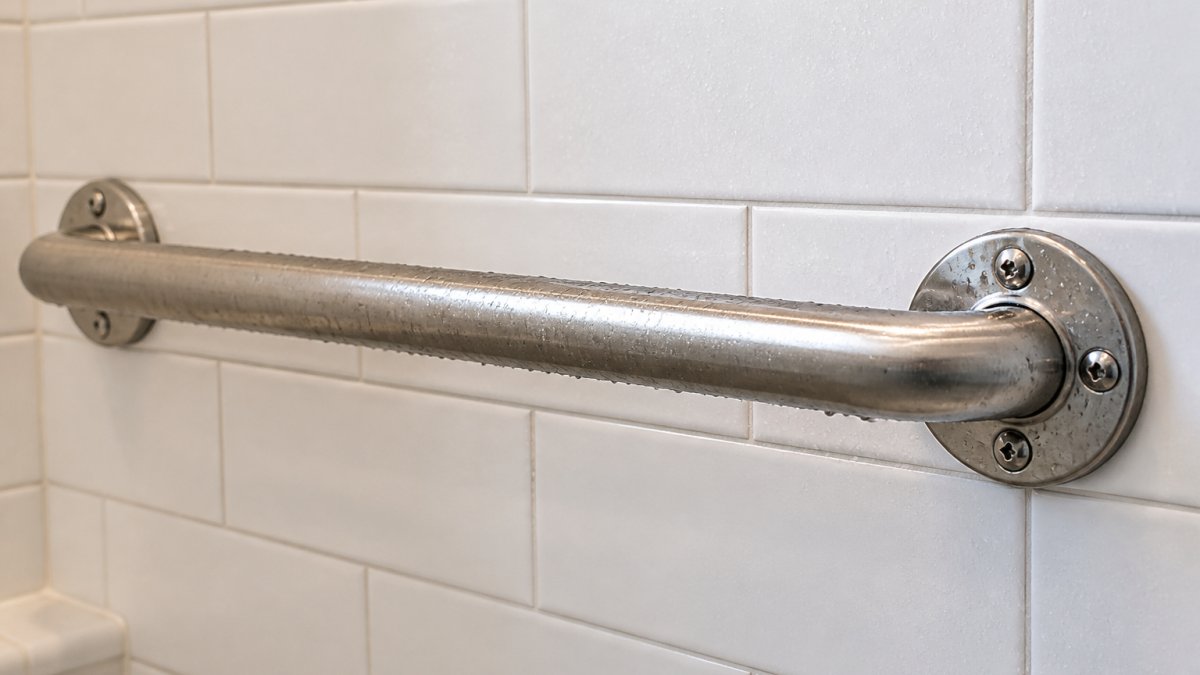
Grab bars in the shower should be installed at a height that feels natural when standing. For most people, this is between 33 and 36 inches from the floor to the center of the bar.
Install one horizontal bar on the wall the person faces when entering the shower. This helps them steady themselves as they step in and out.
If your loved one has advanced dementia and uses a shower seat, add a vertical bar near the seat. This gives them something to hold while lowering themselves down and standing back up.
Measure carefully. Mark the height with a pencil. Use a level to draw a light line where the bar will go. This ensures the bar is straight and won't look crooked, which can confuse someone with dementia.
Anchoring Into Wall Studs and Using Anchors
The strongest installation goes into wall studs. Studs are the wooden framing behind your drywall. An electronic stud finder makes locating them easy. Studs in most homes are 16 inches apart.
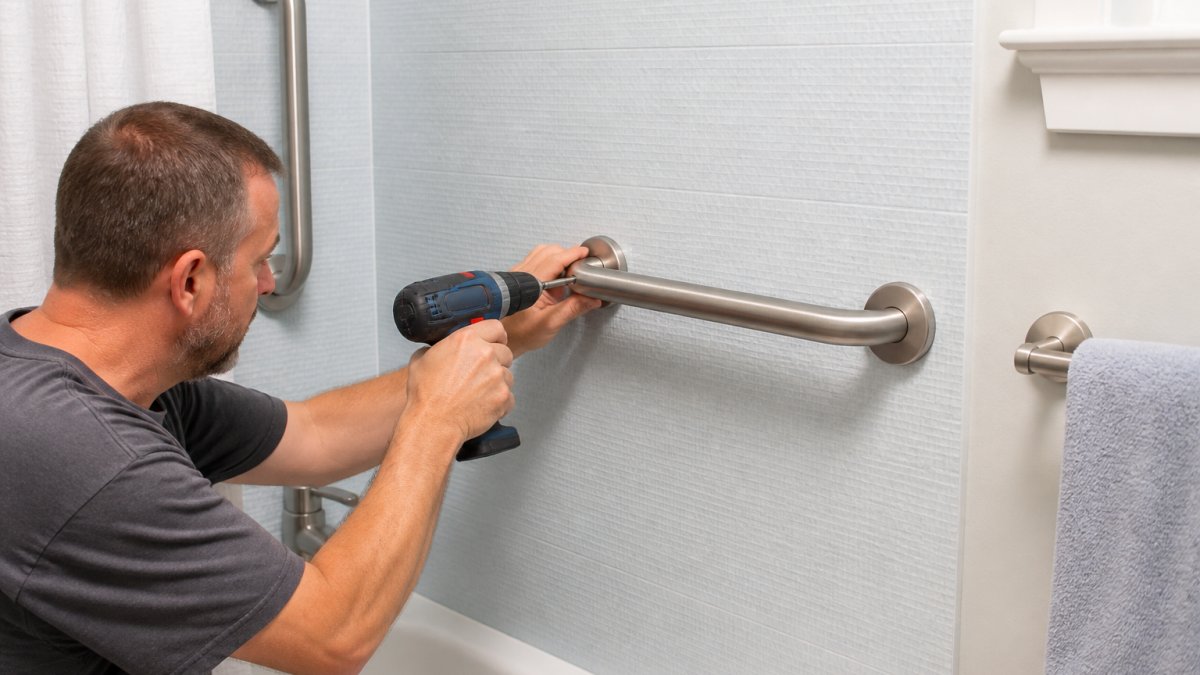
Mark the stud location with a pencil. Drill a pilot hole through the drywall and into the stud. Use a bit slightly smaller than your screw. Pilot holes prevent the wood from splitting and make screwing easier.
Screw the mounting bracket into the stud using 2.5-inch wood screws. Tighten firmly, but don't overtighten and strip the hole. The bracket should be rock solid with no movement.
If no stud is in the right location, use heavy-duty wall anchors. These are plastic or metal sleeves that expand behind the drywall to distribute the load. Drill a hole the size recommended by the anchor manufacturer.
Test the installation. Grab the bar firmly and try to move it. It should not budge. If it moves at all, remove it and reinstall with better anchors or into a stud.
Grab Bar Safety Tips and Post-Installation Inspection
After installation, inspect the work. Tighten all fasteners. Check that the bar is level. Make sure there's nothing blocking the path to the bar.
Test the bar yourself before your loved one uses it. Lean on it hard. Try to move it. Grab it at different angles. If it's solid, you're done. If there's any movement, fix it immediately.
Check the grab bar monthly. Tighten any loose fasteners. Look for signs of damage or corrosion. If you see rust or cracks, replace the bar.
Clean the bar regularly. Soap scum and mold make it slippery. Use a damp cloth and mild soap. Dry it after cleaning.
Make sure the bathroom floor is not slippery. Use a non-slip mat in the tub or shower. Wipe up water on the floor immediately. A wet floor is as dangerous as a missing grab bar.
Common Installation Mistakes and When to Hire a Professional
The most common mistake is installing grab bars too high or too low.
Another mistake is using the wrong type of anchor for your wall material. Drywall anchors don't work in tile. Masonry anchors don't work in drywall. Know your wall material before you buy anchors.
Some people install grab bars too far from where they're actually needed. A grab bar that's 12 inches away from the toilet is useless. It needs to be within arm's reach.
Spacing bars too close together is also a problem. If bars are only a few inches apart, they don't add safety. Space them at least 12 inches apart, ideally 18 to 24 inches.
Hire a professional if you're not comfortable drilling or if your walls are plaster, tile, or masonry. These materials require special bits and techniques.
If your loved one has severe dementia and the bathroom setup is complex, a professional assessment may help.
Supporting Safe Use: Caregiver Assistance and Ongoing Checks
Installing grab bars is the first step. Teaching your loved one to use them safely is the second. This is where caregiver support makes the difference.
Show your loved one where the grab bars are. Point to them. Use simple language: "Hold this bar when you stand up." Repeat this message many times.
Stay nearby when they use the bathroom, especially early on. Watch to see if they reach for the bar or if they forget it exists.
If your loved one is unsteady, consider staying in the bathroom with them. This is not about privacy. It's about preventing a fall.
Check in regularly. Ask yourself: Is my loved one using the bars? Are they steady? Have they fallen? Are there new danger zones I haven't addressed? Bathroom safety is not a one-time fix.
If your loved one is resistant to grab bars or refuses to use them, don't force the issue.
For families managing dementia at home, this kind of environmental support is essential. When families reach a point where home modifications are not enough, or when 24/7 care becomes necessary, specialized memory care communities like ours provide the environment and support that allows people with dementia to thrive safely.
Bathroom safety is one of the most important investments you can make for someone with dementia. If you're looking for comprehensive support that includes professional safety assessments and 24/7 care, Emory Mills offers specialized memory care designed around the I'm Still Here® philosophy, which honors each resident's abilities and life story while providing the safety and support they need. Learn more about fall prevention for older adults and explore occupational therapy resources for home safety.
| Grab Bar Type | Best Location | Recommended Height | Anchoring Method |
|---|---|---|---|
| Horizontal bar | Shower wall, toilet side | 33-36 inches | Wall studs or heavy-duty anchors |
| Vertical bar | Shower entry, toilet area | Full height | Wall studs preferred |
| Angled bar | Bathtub edge, shower corner | 33-36 inches | Wall studs or anchors |
| Towel bar style | Sink area, light support only | 36-48 inches | Not for weight-bearing use |
Frequently Asked Questions
Where should grab bars be placed in a bathroom for someone with dementia?
Install horizontal grab bars 33 to 36 inches above the floor near the toilet, tub, and shower. Add vertical bars at entry points to the shower or tub. Use contrasting colors (dark bar on light tile, or vice versa) so they're easier to spot. Bars should be within arm's reach of where the person typically stands or sits, and positioned to support both standing balance and transfer movements.
What are two requirements when installing grab bars securely?
First, anchor bars directly into wall studs using lag bolts or wood screws rated for at least 250 pounds of load capacity. Second, use heavy-duty anchors (toggle bolts or molly bolts rated for 200+ pounds) if studs are unavailable. Test each bar by pulling firmly in multiple directions before allowing use. Never rely on drywall anchors alone, they will fail under the stress of a fall or transfer.
Can I install grab bars myself, or should I hire a professional?
DIY installation is possible if you have basic tools (drill, stud finder, level, tape measure) and can locate studs accurately. However, hire a professional if walls are tile, masonry, or concrete; if you're uncertain about stud location; or if the person using the bars has advanced dementia or significant mobility challenges. A professional installation ensures proper load capacity and reduces installation risks, providing peace of mind for caregivers.
How can grab bars be made easier for a person with dementia to recognize and use?
Choose bars in high-contrast colors, dark bars on light tile, or light bars on dark walls. Ensure adequate lighting in bathrooms so bars are clearly visible. Mark bars with tactile guides or gentle visual cues if the person responds well to them. Train caregivers to gently guide the person's hand to the bar during transfers. Consistent placement and routine help dementia patients learn where to reach for support over time.