 How-to
How to Set Up Easy Meals for Seniors Living Alone
Last Updated: November 9, 2026
Quick Summary
Easy meal solutions for seniors living alone start with a well-laid-out kitchen, a small pantry of foods you will finish, and no-cook or microwave-only lunches that take about ten minutes. Planning a week of meals and reheating leftovers safely to steaming hot further reduces daily effort.
- Keep everyday items on shelves between waist and shoulder height.
- Buy the smallest package that still gives a reasonable price per ounce.
- Lunches should pair a protein, a vegetable, and a starch.
- Reheat leftovers until steaming hot throughout, using a food thermometer when possible.
- Discard leftovers kept in the refrigerator for more than four days.
Table of Contents
- Start With Your Kitchen Setup and Safety Basics
- Build a Stocked Pantry for Easy Meals
- Simple Lunch Ideas for Elderly Adults Living Alone
- Easy Meals for Elderly People to Reheat Safely
- A 7-Day Meal Plan for Elderly Adults Cooking for One
- Adapting Meals for Chewing, Swallowing and Dietary Needs
- Getting Hot Meals Delivered to Your Home
- Scheduling a Visit to See Daily Support in Person
- Frequently Asked Questions
Start With Your Kitchen Setup and Safety Basics
Setting up easy meal solutions for seniors living alone starts in the kitchen, not the grocery store. A kitchen that is laid out well saves time, energy and effort every single day.
Simple changes often make the biggest difference. Move everyday items to shelves between waist and shoulder height. Keep a sturdy stool nearby. Store a small set of pots and pans that are light enough to lift safely.
Kitchen basics to check:
- Good lighting over the stove and counters
- Non-slip mats near the sink
- Labeled containers for leftovers
- A working smoke detector and fire extinguisher
- Clear space around the stove and microwave
Safety matters just as much as convenience. Keep towels, paper and loose clothing away from burners. Turn pot handles inward so no one bumps them. Use a microwave-safe lid so steam does not burn your hands when you open a container.
Build a Stocked Pantry for Easy Meals
A pantry built for one person looks different from a family pantry. The goal is not a full shelf; it is a small set of items you will actually finish before they turn, arranged so a meal can come together in minutes without a trip to the store. Frozen vegetables, canned fish, eggs, and shelf-stable milk are strong choices because they keep for weeks and need little preparation.
Start by sizing portions to a solo household. Most canned goods, frozen bags, and dry staples are sold in amounts that assume two or more people. Buy the smallest package that still gives you a reasonable price per ounce, then plan two or three meals around it in the same week so nothing sits in the back of the refrigerator.
A small-household pantry checklist:
- Eggs and shelf-stable milk in single-serve or quart sizes
- Canned tuna, salmon, or chicken in 5-ounce cans
- Canned beans and low-sodium soup in 15-ounce cans
- Frozen mixed vegetables and frozen fruit in resealable bags
- Rice, oats, and pasta in the smallest bag that fits your shelf
- Peanut butter and whole-grain bread
- Low-sodium broth and a short list of seasonings
Budget matters, and the levers are simple. Frozen produce can often cost less per serving than fresh produce that spoils before you finish it. Unit pricing on the shelf tag lets you compare cost per ounce across sizes, and the smaller size is often the better buy for one person even when the larger size has a lower unit price, because waste erases the savings.
A workable weekly target is to keep three proteins, three vegetables, and two starches on hand. That combination covers most of the meals in the plan below without a midweek shopping trip. Check dates when you put groceries away and move older items to the front. A simple rule is to use fresh food within the first half of the week and rely on frozen and canned items later.
Watch out: buying in bulk to save money backfires in a one-person kitchen when half the package spoils, so compare the unit price against what you will realistically eat before the date on the label.
Simple Lunch Ideas for Elderly Adults Living Alone
Lunch is the meal most often skipped or replaced with something unbalanced, and easy meal solutions help here because it falls in the middle of the day when energy is lower and cooking feels like too much effort. A good lunch takes about ten minutes and pairs a protein, a vegetable, and a starch. The ideas below are organized by how much heat they require, so you can pick the level that matches your energy and your kitchen access on a given day.
No-cook lunches (no stove, no microwave):
- Tuna salad on whole-grain bread with sliced tomato and baby spinach
- Cottage cheese with canned peaches and a spoon of oats
- Hard-boiled eggs with cherry tomatoes and whole-grain crackers
- Peanut butter and banana on whole-grain toast (toaster only)
- Hummus with soft pita and cucumber slices
Microwave-only lunches (no stove, no oven):
- Microwave baked potato topped with canned beans and shredded cheese
- Bowl of low-sodium canned soup with a slice of whole-grain bread
- Frozen vegetable and bean bowl with a sprinkle of cheese
- Scrambled egg cooked in a mug, stirred once halfway through
- Oatmeal made with shelf-stable milk and topped with frozen berries
Low-cook lunches (one pan or one pot):
- Quesadilla with canned beans and cheese, folded in a skillet
- Egg and vegetable skillet with frozen mixed vegetables
- Soup and a sandwich using low-sodium canned soup and deli turkey
These meals work because nothing needs long cooking. If you use the microwave, cover food loosely so steam can escape and stir halfway through so it heats evenly. Let a microwaved bowl sit for a minute before lifting it, and use a potholder or a folded towel rather than bare hands.
Texture and chewing needs change the list. If chewing or swallowing is difficult, choose soft proteins such as flaked tuna, cottage cheese, scrambled eggs, or well-cooked beans, and swap raw vegetables for soft-cooked or canned ones. Canned fruit in juice, plain yogurt, and smooth nut butter need no stove time and are gentle on the mouth. Cut food into small, bite-sized pieces and eat slowly while sitting upright. Once soft foods are comfortable to eat, a mild sauce can add flavor without changing their texture, and Castaway Sauce Company offers ideas for making simple meals more inviting.
Watch out: leftovers packed for lunch should be dated and eaten within three to four days, and anything that has sat out more than two hours should be discarded rather than reheated.
Easy Meals for Elderly People to Reheat Safely
Reheating is where many home cooks take shortcuts that create real risk. Food safety guidance from the U.S. Food and Drug Administration recommends reheating leftovers until they are steaming hot throughout. Use a food thermometer when you can, especially for soups, casseroles and meat.
Once food has cooled, store it in the refrigerator within two hours. Divide large batches into smaller portions so they cool quickly and reheat evenly. Label each container with the date it was made.
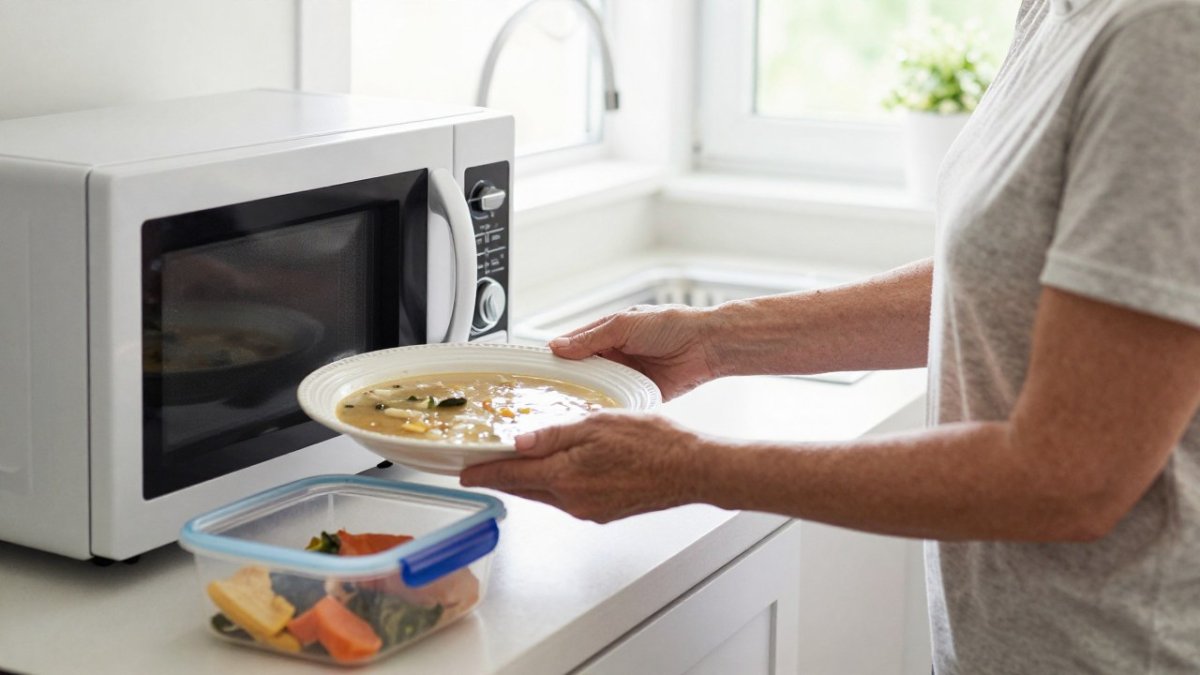
Good reheating candidates include:
- Chili, stews and bean soups
- Baked chicken and rice dishes
- Casseroles made with pasta or potatoes
- Egg dishes, which reheat better when cut into portions
Avoid reheating the same food more than once. Each cycle of cooling and reheating gives bacteria more chances to grow.
A 7-Day Meal Plan for Elderly Adults Cooking for One
Planning a week ahead removes the daily question of what to eat. This plan uses a few core ingredients in different ways, so you buy less and waste less. Each day includes a breakfast, lunch and dinner that take 30 minutes or less.
| Day | Breakfast | Lunch | Dinner |
|---|---|---|---|
| Monday | Oatmeal with berries | Tuna salad sandwich | Sheet-pan chicken and frozen vegetables |
| Tuesday | Scrambled eggs and toast | Cottage cheese and peaches | Baked potato with beans |
| Wednesday | Yogurt and granola | Leftover chicken wrap | Pasta with jarred tomato sauce |
| Thursday | Peanut butter toast | Lentil or bean soup | Egg and vegetable skillet |
| Friday | Oatmeal with banana | Egg salad on whole-grain bread | Canned salmon patties with rice |
| Saturday | Scrambled eggs and fruit | Leftover pasta | One-pot chicken and rice |
| Sunday | Whole-grain toast with avocado | Bean and cheese quesadilla | Roasted root vegetables with eggs |
Cook a larger batch of chicken or soup on Sunday, and use it across two or three days. Store leftovers in single-serving containers. Discard anything that has been in the refrigerator for more than four days.
Adapting Meals for Chewing, Swallowing and Dietary Needs
Many older adults have trouble chewing or swallowing, and some have conditions that limit salt, sugar or certain foods. Small adjustments can make meals safer and more pleasant. Soft foods such as scrambled eggs, flaked fish, mashed sweet potatoes and well-cooked pasta are easier to manage.
Ask a doctor or registered dietitian before making major changes, especially if you have a health condition or a swallowing difficulty. A professional can explain which textures and portions are safe for you.
Practical adaptations include:
- Cutting food into small, bite-sized pieces
- Choosing soft-cooked vegetables over raw ones
- Using blended soups or smooth sauces
- Reading labels for sodium and added sugar
- Eating slowly and sitting upright during meals
No-cook options can also help. Canned fruit in juice, plain yogurt, cottage cheese and nut butter require no stove time and are gentle on the mouth.
Getting Hot Meals Delivered to Your Home
Not everyone can cook every day, and that is okay. Home-delivered meal programs bring prepared food to people who need support.
Meal delivery can also ease loneliness. Each delivery is a regular point of contact. You can read about the benefits of chef-prepared meals for seniors to see how this kind of food supports health and daily routine.
Check with local aging services or your area agency on aging to learn what programs are available and whether you qualify. Pricing and eligibility vary, so confirm details directly with each program.
Scheduling a Visit to See Daily Support in Person
Reading about meal support is one step. Seeing how daily support works in a real setting can help you decide what fits your needs. Emory Mills in Knoxville offers chef-prepared meals and 24/7 support designed to make daily living easier for residents who want independence with a little help.
If you are considering a community for a loved one, schedule a visit to see the dining room, meet staff and ask how meals are planned for different needs. Our team can walk you through the evidence-based memory care approach we use and how it supports each resident's abilities. You can also tour the community and schedule a visit to see daily support in person at a time that works for your family.
Frequently Asked Questions
What are some easy meals for single seniors?
Simple options include scrambled eggs with toast, baked potatoes topped with canned tuna or cottage cheese, and one-pan chicken with frozen mixed vegetables. Each takes about 15 to 20 minutes and needs little cleanup. Keeping eggs, frozen vegetables, canned fish and bread on hand makes these meals easy to pull together on tired days. Many older adults find that cooking one batch of a sheet-pan meal and portioning the leftovers into containers covers two or three days of lunches and dinners.
What are easy meals for seniors to reheat?
Soups, stews, casseroles, pasta bakes and stir-fries reheat well when stored in single-portion containers. Cool food quickly, refrigerate it within two hours, and eat leftovers within three to four days. Reheat until steaming hot throughout, and use a food thermometer if you have one. Freezing portions of soup or casserole in advance gives you meals that only need the microwave.
What are simple lunch ideas for older adults?
Good lunch options include a tuna or egg salad sandwich on soft bread, a bowl of canned soup with a slice of cheese, a small baked potato with cottage cheese, or leftover chicken with rice and frozen green beans. Cold options such as berry chicken salad need no cooking at all. Choose foods that match your chewing and swallowing ability, and cut them into small, soft pieces when needed.
How can seniors living alone eat healthy meals without cooking every day?
Cook one larger batch of a protein, a grain and a vegetable two or three times a week, then portion it for later. Keep frozen vegetables, canned beans, eggs and shelf-stable fruit within reach so you can assemble a balanced plate quickly. No-cook options such as yogurt with fruit, cheese and whole-grain crackers, or a rotisserie chicken salad also provide protein and produce without a stove. If you have trouble preparing food, ask your doctor or a dietitian about meal support options, and check the Eldercare Locator or your local Area Agency on Aging for home-delivered meal programs.