 listicle
7 Benefits of Specialized Memory Care Programs
Table of Contents
- What Specialized Memory Care Programs Offer
- Benefit 1: Individualized Care Plans Tailored to Each Resident
- Benefit 2: Round-the-Clock Supervision and Support
- Benefit 3: Specially Trained Staff in Dementia and Alzheimer's Care
- Benefit 4: Safe, Secure Environment with Wandering Prevention
- Benefit 5: Meaningful Activities and Cognitive Stimulation
- Benefit 6: Structured Routines That Reduce Behavioral Symptoms
- Benefit 7: Nutritional Support and Medication Management
- Why Families Choose Specialized Memory Care
- Emory Mills: Specialized Memory Care in Knoxville
- Key Takeaways
- Schedule a Tour
- Frequently Asked Questions
Last Updated: September 22, 2026
What Specialized Memory Care Programs Offer
Specialized memory care is residential care designed specifically for people with dementia, Alzheimer's disease, and other forms of cognitive impairment. Unlike general assisted living, memory care facilities employ staff trained in dementia-specific approaches, maintain secure environments, and structure daily routines around the unique needs of residents experiencing memory loss and behavioral changes.
When dementia or Alzheimer's requires 24/7 supervision, medication management, and tailored activities, specialized memory care programs address needs that general assisted living cannot.
Specialized memory care combines clinical expertise with person-centered care, providing meaningful engagement, structured routines, and trained staff who respond to behavioral symptoms like sun-downing and wandering, preserving dignity and quality of life at every stage.
Benefit 1: Individualized Care Plans Tailored to Each Resident
Each resident in a quality memory care program receives a personalized care plan developed around their specific cognitive abilities, medical history, and personal preferences. This isn't a one-size-fits-all approach. Staff assess each person's remaining abilities, preferred activities, dietary needs, and behavioral triggers, then build daily routines and interventions accordingly.
Care plans document preferences for activities of daily living, bathing, dressing, toileting, eating, including whether a resident prefers morning or evening showers, gentle verbal cues or visual demonstrations, and what music or activities calm them during difficult moments.
Customized care reduces behavioral symptoms and confusion. As cognitive abilities change, care plans evolve, activities simplify, supervision increases, medication management intensifies, with families receiving regular updates on progress and modifications.
Benefit 2: Round-the-Clock Supervision and Support
Residents with advanced dementia require 24/7 supervision to prevent wandering, dangerous activities, and hazard-related injuries, essential for safety, not just comfort.
Memory care facilities maintain higher staffing ratios with trained caregivers present 24/7, including nights when behavioral symptoms intensify, ensuring immediate response to wandering attempts and health changes.
Round-the-clock supervision ensures reliable medication management on schedule, with staff monitoring for side effects and reporting concerns to the care team.
For families, constant supervision provides peace of mind and relief from caregiver burnout, allowing them to shift from exhausted caregivers to engaged family members maintaining emotional connection.
Benefit 3: Specially Trained Staff in Dementia and Alzheimer's Care
Memory care staff receive specialized training in how dementia and Alzheimer's disease affect behavior, communication, and perception, expertise that standard assisted living staff often lack.
Training covers behavioral symptoms like sun-downing, wandering, and resistance to care. Trained staff recognize these as cognitive symptoms, not willful behavior, and adjust lighting, activity, and staffing proactively while using simpler language and validating emotions.
Many memory care facilities pursue formal certification through organizations like the National Council of Certified Dementia Practitioners, which sets standards for caregiver expertise. Staff training covers activities of daily living assistance, medication management, infection control, and person-centered care philosophy. Ongoing education keeps staff current on best practices in dementia care.
Trained staff produce measurable outcomes: fewer behavioral crises, less behavioral medication, better quality of life, and more effective family communication.
Benefit 4: Safe, Secure Environment with Wandering Prevention
Secure environments prevent wandering-related dangers while preserving dignity and independence within safe boundaries through keypads, alarms, enclosed outdoor areas, and hazard-free design.
Environmental hazards are controlled: medications and cleaning supplies locked away, temperature controls preventing scalding, furniture arranged to reduce falls, adequate lighting, and infection control standards maintained.
Quality facilities design homelike secure spaces with windows, natural light, comfortable furniture, and outdoor access, safety without confinement.
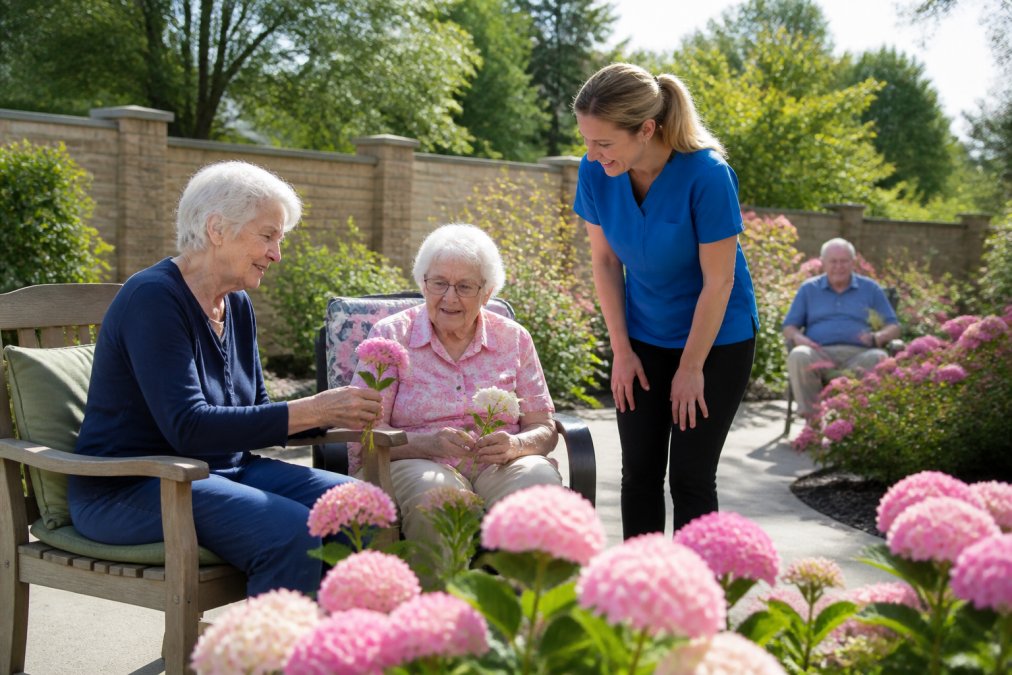
For families, a secure environment eliminates constant worry about wandering, allowing them to sleep, work, and have a life outside caregiving.
Benefit 5: Meaningful Activities and Cognitive Stimulation
Quality memory care programs offer structured activities designed for residents' current cognitive abilities, engaging without being frustrating or demeaning.
Therapeutic activities include art, music, gentle movement, gardening, cooking, reminiscence, and crafts, tailored to each resident's interests and abilities, focused on engagement and enjoyment rather than performance.
Social engagement through group activities provides companionship, reduces isolation, and offers purpose and connection when memory is failing.
Research from PubMed Central's dementia care research documents that residents in programs emphasizing cognitive stimulation and social engagement show better behavioral outcomes and higher quality of life compared to those in settings with minimal activities.
Benefit 6: Structured Routines That Reduce Behavioral Symptoms
Structured daily routines with consistent wake times, meals, activities, and bedtimes reduce confusion, anxiety, and behavioral symptoms by providing predictability.
Structured routines also support better sleep-wake cycles, which reduces behavioral symptoms like sun-downing. Consistent activity during the day, outdoor time, and appropriate lighting help regulate circadian rhythms. Evening routines that are calm and consistent promote better sleep at night, which reduces nighttime agitation and the exhaustion that comes from poor sleep.
Routines also provide natural opportunities for therapeutic activities and social engagement.
Benefit 7: Nutritional Support and Medication Management
Residents with advanced dementia often struggle with eating and nutrition. They may forget to eat, refuse food, have difficulty swallowing, or have dietary restrictions related to medical conditions. Specialized memory care includes nutritional support and monitoring to ensure residents receive adequate nutrition and hydration.
Why Families Choose Specialized Memory Care
The transition to memory care is rarely easy. Many adult children struggle with guilt, fear that their loved one will feel abandoned, and uncertainty about whether they're making the right decision. The reality is that advanced dementia often exceeds what families can safely manage at home, even with in-home support.
How to Evaluate a Memory Care Program
When exploring memory care options, ask about:
- Staffing ratios and training: How many staff per resident, especially at night? What dementia-specific training do staff receive?
- Care plans: How are individualized care plans developed and updated?
- Activity programs: What activities are offered daily? How are they tailored to residents' abilities?
- Safety protocols: How is wandering prevented? What security measures are in place?
- Medication management: Who administers medications? How is effectiveness monitored?
- Family communication: How often will you hear about your loved one's condition and progress?
- Behavioral support: How does the facility respond to behavioral symptoms? What's the approach to medication versus non-medication interventions?
Visit the facility multiple times, including at different times of day. Talk to current residents' families about their experience. Ask for references. A quality memory care program should be transparent about its practices and confident in its outcomes.
Emory Mills: Specialized Memory Care in Knoxville
Emory Mills is a family-owned senior living community offering compassionate specialized memory care guided by the evidence-based I'm Still Here® philosophy. This approach honors each resident's life story and remaining abilities, focusing on meaningful engagement rather than managing decline.
Key Takeaways
- Specialized memory care addresses needs that general assisted living cannot: 24/7 supervision, dementia-specific staff training, secure environments, and activities tailored to cognitive abilities.
- Individualized care plans make a measurable difference: Residents receive care matched to their specific abilities, preferences, and needs, reducing behavioral symptoms and improving quality of life.
- Trained staff prevent crises: Caregivers trained in dementia-specific approaches recognize behavioral symptoms early and respond with strategies that calm rather than escalate.
- Structured routines reduce agitation: Predictable daily routines help residents feel oriented and secure, reducing behavioral symptoms like sun-downing.
- Meaningful engagement preserves quality of life: Activities and social interaction tailored to residents' abilities provide purpose and connection at every stage of cognitive decline.
- Families benefit too: Specialized memory care allows adult children to shift from exhausted caregivers to engaged family members, reducing caregiver burnout and guilt.
Schedule a Tour
If you're exploring memory care options for a loved one with dementia or Alzheimer's disease, Emory Mills welcomes you to visit and experience our approach firsthand. A tour allows you to see our secure environment, meet our trained staff, observe our activity programs, and ask questions about how we support residents and families.
Frequently Asked Questions
At what stage of dementia or Alzheimer's disease is specialized memory care recommended?
Memory care becomes beneficial when cognitive impairment affects a person's ability to manage activities of daily living safely, such as bathing, dressing, or taking medications. This often occurs in the moderate to advanced stages of dementia or Alzheimer's disease, when behavioral symptoms like sun-downing or wandering increase, or when 24/7 supervision becomes necessary. A healthcare provider can help determine if memory care is appropriate for your loved one's specific situation.
Is memory care covered by insurance or Medicare?
Coverage for specialized memory care varies. Medicare typically does not cover residential memory care facility costs, but Medicare Advantage plans may offer some limited benefits. Long-term care insurance, if purchased before diagnosis, may cover memory care expenses. Medicaid coverage depends on your state's specific guidelines and your financial situation. The best approach is to consult with a financial advisor or your insurance provider to understand your coverage options and out-of-pocket costs.
How does memory care differ from standard assisted living?
Memory care is specifically designed for individuals with dementia, Alzheimer's disease, or significant cognitive impairment. It includes specialized staff training in behavioral management, secure environments with wandering prevention, structured routines tailored to cognitive needs, and therapeutic activities focused on cognitive stimulation. Assisted living typically provides support with activities of daily living but may not have the same level of security, specialized training, or dementia-specific programming that memory care units offer.
What safety features should I look for in a memory care facility?
Key safety features include a secure, enclosed environment with wandering prevention systems; adequate resident-to-staff ratios for 24/7 supervision; trained caregivers in dementia care and behavioral management; medication management protocols; fall prevention strategies; and emergency response procedures. Ask prospective facilities about their specific safety protocols, staff training certifications, and how they handle behavioral symptoms and medical emergencies to ensure your loved one receives appropriate care.