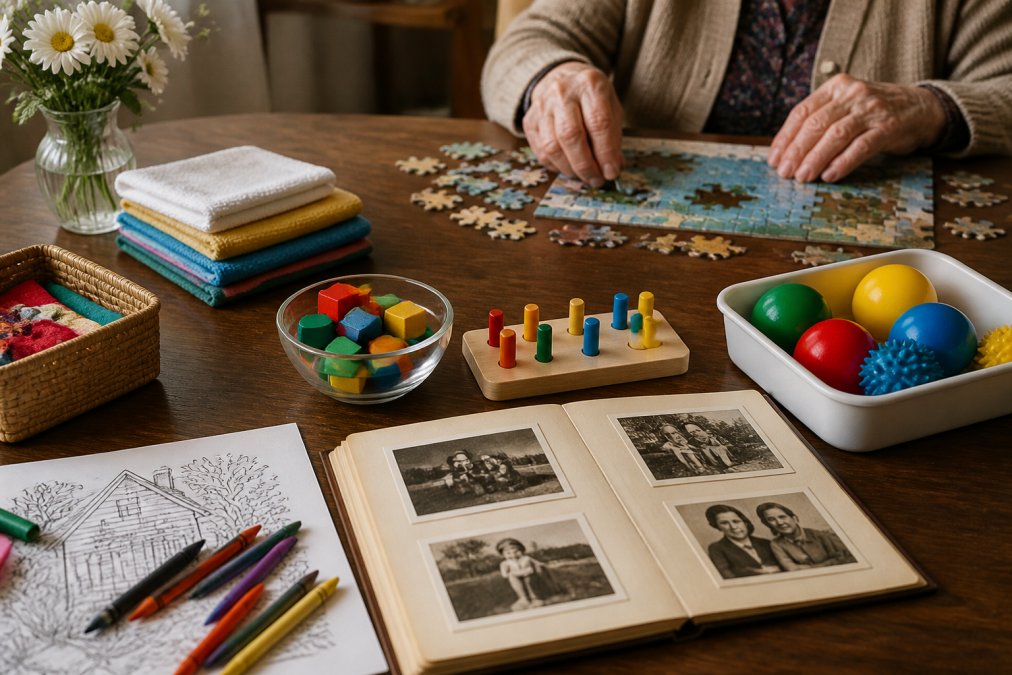
 listicle
Activities for Residents With Dementia: 10 Proven Approaches
Table of Contents
- Why Activities Matter for Residents With Dementia
- 1. Sensory Activities for Dementia: Touch, Sound, and Sight
- 2. Cognitive and Creative Engagement
- 3. Physical Movement and Outdoor Engagement
- 4. Dementia Engagement Strategies: Adapting Activities by Stage
- 5. Therapeutic Activities for Alzheimer's: Reminiscence and Social Connection
- 6. Daily Living Tasks as Meaningful Engagement
- 7. Technology-Assisted Engagement and Companionship
Last Updated: August 28, 2026
Why Activities Matter for Residents With Dementia
Meaningful activities for residents with dementia are essential to quality of life and emotional well-being. Research consistently shows that non-pharmacological interventions like structured activities reduce behavioral symptoms, improve sleep quality, and decrease the need for sedating medications. The challenge isn't finding activities, it's matching them to each stage of cognitive decline. A jigsaw puzzle that delights someone in early-stage dementia becomes frustrating in middle stages. This is where person-centered care becomes critical: activities must be tailored to what remains, not what's been lost.
1. Sensory Activities for Dementia: Touch, Sound, and Sight
Sensory engagement is the foundation of dementia care because it bypasses cognitive decline and speaks directly to the body's ability to feel, respond, and find comfort. When memory fails and language becomes difficult, the senses remain.
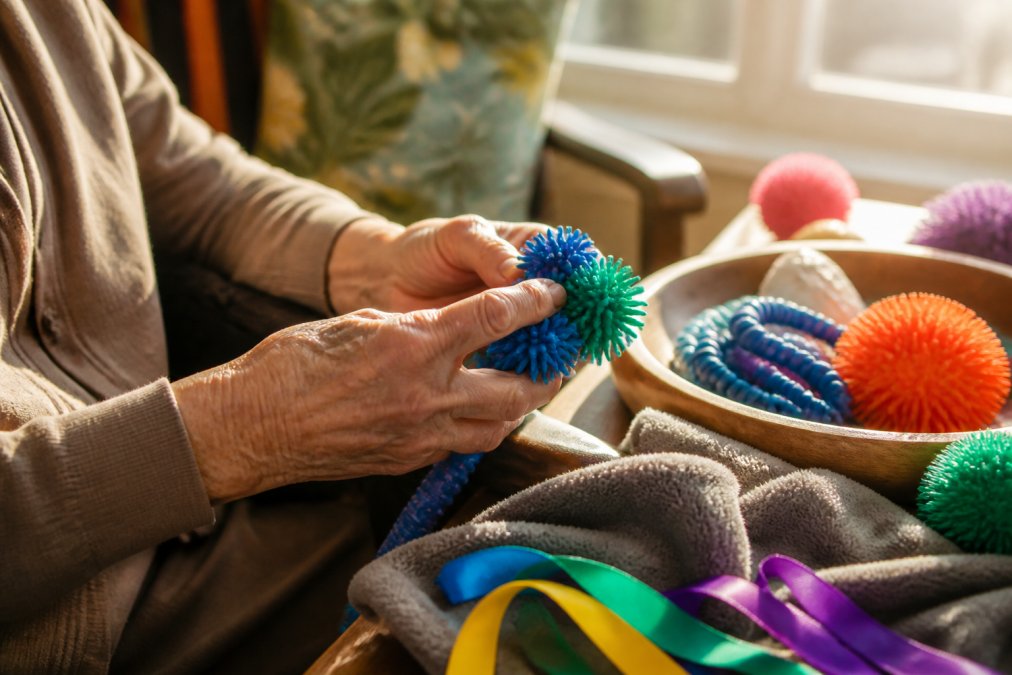
Tactile Fidgets and Comfort Items
Residents with dementia often experience "hand hunger", a need to touch, manipulate, and hold objects. Twiddles feature multiple textures, fleece, satin, corduroy, beads, buttons, integrated into a single item, providing genuine engagement without cognitive effort. HUG™ The Comforting Companion combines weighted limbs with a simulated heartbeat, triggering a physiological calming response. Rotate fidgets every few days to maintain novelty.
Music and Auditory Engagement
Music is perhaps the most powerful non-pharmacological intervention in dementia care. Residents with severe cognitive decline often respond to familiar songs with visible emotion and sometimes singing along. Gather music history from family, favorite artists, songs from important life events, music from their formative years. Relish Music Player simplifies engagement with easy-to-use controls and personalized playlists. Group singing reduces agitation and creates moments of shared joy.
2. Cognitive and Creative Engagement
Cognitive stimulation for residents with dementia means activities that exercise remaining mental abilities without creating frustration. The goal is engagement, not achievement.
Puzzles and Memory Games
Relish Jigsaw Puzzles are specifically designed for dementia-friendly engagement with larger pieces, simple images, and lower piece counts (35 to 63 pieces), making completion achievable in a single sitting. Use puzzles as collaborative activities with a caregiver or family member, transforming solitary tasks into social interaction.
Art and Creative Expression
Creative activities bypass the need for intact memory or language. Relish Aquapaint offers mess-free creative engagement where water activates hidden colors in images. The therapeutic benefit comes from the process, not the product. Displaying their artwork reinforces that their contribution matters.
3. Physical Movement and Outdoor Engagement
Physical activity maintains mobility and balance, reduces agitation, improves sleep quality, and provides structure to the day. A 15-minute walk provides exercise, sensory engagement, and a change of scenery. For residents who can't walk independently, a wheelchair ride serves the same purpose. Gardening activities combine physical movement with purposeful engagement. Dancing or moving to music combines physical activity with auditory engagement and often triggers joy and laughter.
4. Dementia Engagement Strategies: Adapting Activities by Stage
The most common mistake in dementia care is using the same activities for residents at different cognitive stages. Effective engagement requires constant adaptation as the person's abilities change.
Early-Stage Dementia
In early-stage dementia, residents retain most cognitive abilities but notice memory lapses. Activities should challenge the mind while building confidence: jigsaw puzzles with moderate piece counts, memory games, trivia, and creative pursuits all work well. Early-stage residents benefit from activities that honor their life history and accomplishments.
Middle-Stage Dementia
Middle-stage dementia brings significant cognitive decline. Activities should be simpler, more structured, and shorter. Sensory activities become increasingly important: music, tactile fidgets, and outdoor time provide engagement without cognitive demand. Reminiscence therapy, looking at old photos, discussing memories, often works well even as verbal communication becomes difficult. Physical activities like walking, dancing, and simple gardening provide purpose and movement.
Advanced-Stage Dementia
In advanced stages, the focus shifts from cognitive engagement to comfort, dignity, and emotional connection. Activities center on sensory engagement and emotional connection rather than cognitive stimulation. Music, particularly familiar songs from their youth, often triggers emotional response. Touch, hand-holding, gentle massage, and stroking soft fabrics provide comfort and connection. Presence becomes the activity.
5. Therapeutic Activities for Alzheimer's: Reminiscence and Social Connection
Reminiscence therapy, reviewing and discussing past experiences, is one of the most effective non-pharmacological interventions for Alzheimer's and other dementias. Even when residents can't remember recent events, they often retain long-term memories from early life.
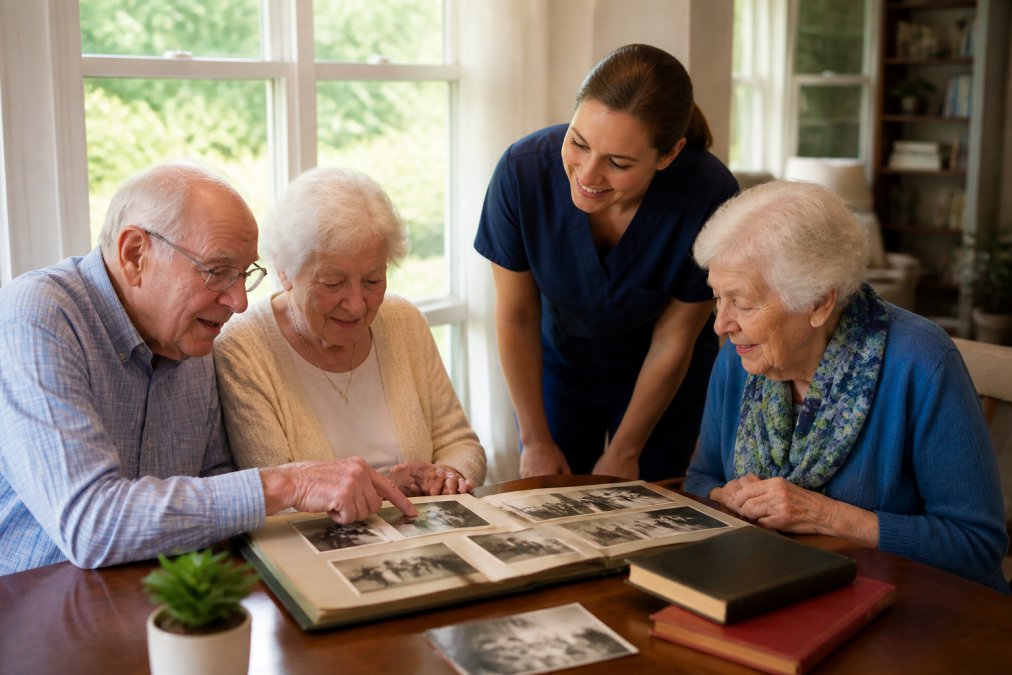
Life Story and Reminiscence Therapy
Life story work involves gathering information about a resident's life, career, family, hobbies, important events, favorite places, and using that information to create personalized activities and conversations. Photo albums and memory boxes are simple but powerful tools. Always Home Connected Activity Boxes include reminiscence-focused items designed to prompt memory and conversation. The emotional truth matters more than factual accuracy.
Social and Group Activities
Social interaction is a fundamental human need that doesn't disappear with dementia. Group activities work best when they're simple and engaging: sing-alongs, group painting, shared meals, or watching a familiar movie all create social connection. Intergenerational activities involving children often spark joy. Pet therapy provides powerful therapeutic benefits. Joy For All Companion Pets offer the benefits of pet interaction without the care demands of a live animal.
6. Daily Living Tasks as Meaningful Engagement
One of the most overlooked sources of meaningful engagement is daily living itself. Tasks like folding laundry, setting the table, preparing food, or tidying can continue to provide purpose and engagement even as cognitive abilities decline. Folding laundry is particularly effective, it's familiar, repetitive, achievable at many cognitive levels, and has a calming effect. Meal preparation, even simplified versions, engages multiple senses and creates purposeful activity. The attitude of caregivers matters significantly. If a task is framed as a genuine contribution, "I really need your help with this", residents engage more meaningfully.
7. Technology-Assisted Engagement and Companionship
Technology offers innovative solutions for dementia engagement when kept simple. Joy For All Companion Pets provide interaction, comfort, and companionship with measurable benefits: residents show reduced agitation, improved mood, and increased engagement. Relish Music Player simplifies music engagement by eliminating the complexity of modern devices. Video calling technology, when simplified and supported, allows connection with distant family members. Technology works best when it extends and supports human connection, not replaces it.
Practical Considerations for Activity Implementation
Timing matters significantly. Residents often have better cognitive function and mood in the morning. Schedule cognitively demanding activities in the morning and simpler, more sensory activities in the afternoon. Environment affects engagement. Quiet, well-lit spaces work better than chaotic, noisy environments. Observation and adaptation are continuous. Caregivers must observe closely and be willing to change activities mid-session if something isn't working. Documentation helps track what works. Noting which activities engaged a particular resident, what time of day worked best, and what triggered agitation creates a personalized activity profile invaluable for new caregivers.
Conclusion
Activities for residents with dementia serve a purpose far beyond entertainment. They provide cognitive stimulation, physical engagement, emotional connection, and a sense of purpose. They reduce behavioral symptoms and affirm dignity and worth when cognitive abilities are declining.
The most effective approach combines multiple activity types, sensory, cognitive, physical, social, and creative, adapted to each resident's stage of dementia and personal interests. It honors the person's life history and remaining abilities.
At Emory Mills, we understand that meaningful engagement is central to quality dementia care. Our I'm Still Here® philosophy guides us to honor each resident's life story and remaining abilities through personalized, purposeful engagement.
If you're caring for someone with dementia, start with what you know about their life history and interests. Observe what engages them. Try different activities and be willing to adapt. Remember that engagement doesn't require perfect execution, it requires presence, patience, and a genuine desire to connect.
The Hearthstone Institute's research on person-centered dementia care provides evidence-based guidance on activities that honor residents' abilities and life stories. The Alzheimer's Association's activity recommendations for caregivers offers practical suggestions for different stages of dementia. The National Institute on Aging's guide to dementia care and engagement provides comprehensive information on non-pharmacological interventions.
If you're seeking a community that specializes in meaningful, person-centered dementia engagement, Emory Mills offers 13 specialized memory care suites with trained staff, therapeutic activities, and support for families. Schedule a tour to see how our I'm Still Here® approach transforms daily life for residents with dementia.
Frequently Asked Questions
What are the best types of activities for residents in memory care?
The best activities for residents with dementia combine sensory engagement, cognitive stimulation, and emotional connection while honoring their remaining abilities. Person-centered activities that reflect individual interests, life stories, and current cognitive level work most effectively. Sensory activities like music, tactile fidgets, and gardening; cognitive activities like puzzles and reminiscence therapy; and social activities like group meals or group crafts all provide meaningful engagement. The key is matching the activity to the person's stage of dementia and adjusting difficulty as abilities change. Emory Mills uses the I'm Still Here® philosophy to tailor activities to each resident's unique strengths and preferences.
How do you adapt daily activities for different stages of dementia?
Early-stage dementia residents benefit from more complex activities like traditional puzzles, book clubs, and detailed crafts that challenge cognitive skills. Middle-stage residents need simpler tasks with more guidance, such as large-piece puzzles, sorting activities, and music-based engagement. Advanced-stage residents respond best to sensory experiences like tactile fidgets, familiar music, and simple repetitive tasks that don't require complex instructions. All stages benefit from activities that connect to personal history and preferences. Safety modifications become increasingly important in later stages, such as removing choking hazards and ensuring proper supervision during physical activities. Caregivers should observe responses and adjust activities based on the resident's engagement level, frustration tolerance, and energy.
Why is personalized engagement important for dementia residents?
Personalized engagement honors each resident's identity, life story, and remaining abilities, which is central to the I'm Still Here® approach. When activities reflect a person's interests, profession, hobbies, or cultural background, residents are more likely to engage meaningfully and experience reduced agitation and improved mood. Personalized activities also provide a sense of purpose and dignity, helping residents feel valued as individuals rather than defined by their diagnosis. Research shows that person-centered care and engagement reduce behavioral symptoms, improve quality of life, and support emotional well-being. Activities tailored to what matters most to each resident create stronger connections between caregivers and residents and foster a more supportive, respectful care environment.
How can sensory-based activities improve quality of life for dementia patients?
Sensory activities engage multiple senses and bypass some memory-dependent cognitive pathways, allowing residents to experience pleasure and engagement even when verbal communication or memory recall is difficult. Tactile fidgets reduce restlessness and agitation by providing calming stimulation. Music activates emotional and memory centers in the brain, often unlocking communication and positive emotional responses even in advanced dementia. Visual activities with bright colors and familiar images provide cognitive stimulation. Scent and taste engagement can trigger positive memories and increase appetite. Combined, sensory activities reduce anxiety, decrease behavioral symptoms, improve sleep, and create moments of joy and connection. They also give caregivers meaningful ways to interact and support residents' emotional well-being throughout all stages of dementia.
This article was written using GrandRanker