 how-to
What Memory Care Includes Daily: A Complete Guide
Table of Contents
- What Memory Care Includes: Core Services and Support
- Activities of Daily Living for Dementia Patients: Hands-On Assistance
- Medication Management and Health Monitoring
- Dementia Care Daily Schedule Examples: What a Typical Day Looks Like
- Safety, Supervision, and Behavioral Support
- Is Memory Care Covered by Insurance: Understanding Your Payment Options
- Making the Transition to Memory Care: What Families Should Know
- Frequently Asked Questions
Last Updated: August 31, 2026
What Memory Care Includes: Core Services and Support
Memory care is specialized residential support designed for seniors with dementia, Alzheimer's disease, and other forms of cognitive decline. Unlike standard assisted living, memory care includes daily structured environments, specialized staff training, and therapeutic programming tailored to residents with memory loss and behavioral changes.
At Emory Mills, we understand that memory care includes daily assistance with activities of daily living, medication management, behavioral support, and meaningful engagement, all delivered within a secure setting by dementia-trained staff. Quality memory care means recognizing that each resident has unique needs, preferences, and remaining strengths, with round-the-clock supervision, personalized care plans, and activities designed around the individual rather than one-size-fits-all programming.
The core components include assistance with activities of daily living, medication administration, nutritional support, structured daily routines, safety protocols, therapeutic activities, family communication, caregiver education, and transition support.
Activities of Daily Living for Dementia Patients: Hands-On Assistance
Activities of daily living, or ADLs, are the essential tasks people perform each day to maintain hygiene, health, and independence. For seniors with cognitive impairment, these tasks become increasingly difficult as dementia progresses. Memory care includes daily hands-on assistance with bathing, grooming, toileting, dressing, and eating, delivered with patience and respect.
The challenge isn't just the physical help; it's doing it in a way that preserves dignity and autonomy. A skilled caregiver recognizes that a resident may resist bathing not out of stubbornness, but because they don't understand what's happening or feel unsafe. Dementia-trained staff know how to communicate clearly, offer choices, and adapt their approach based on the individual's response.
Bathing, Grooming, and Personal Hygiene
Bathing is one of the most vulnerable activities for seniors with memory loss. A quality memory care community approaches bathing with sensitivity, offering warm water, soft lighting, and calm communication. Grooming assistance includes hair care, dental hygiene, nail care, and shaving. Without support, residents may develop infections or skin conditions. Maintaining grooming standards preserves self-image and dignity, and when a resident looks and feels clean, they often experience improved mood and confidence.
Toileting and Continence Support
Toileting assistance is critical in memory care. Residents with dementia may forget where the bathroom is, lose the ability to manage clothing, or experience incontinence as cognitive decline progresses. Quality memory care includes scheduled toileting, discreet assistance with clothing, and respectful management of incontinence. Dementia-trained staff understand how to normalize the process, use appropriate language, and maintain the resident's privacy and modesty throughout.
Dressing and Meal Assistance
For someone with cognitive impairment, selecting and putting on clothes can become overwhelming. Memory care includes daily dressing support, from laying out clothes to helping with fasteners and ensuring the resident is comfortable and appropriately dressed. Some communities use visual cues and simplified choices to help residents participate in dressing decisions.
Meal assistance addresses both the physical help with eating and broader nutritional support. Some residents with advanced dementia lose the ability to use utensils, chew, or swallow safely. Memory care includes adaptive feeding techniques, texture-modified foods when necessary, and monitoring for adequate nutrition and hydration. Chef-prepared meals that are both nutritious and appealing make a significant difference in a resident's quality of life and overall health.
Medication Management and Health Monitoring
Medication management is one of the most critical components of memory care. Seniors with dementia often take multiple medications for conditions like hypertension, diabetes, and heart disease. Without proper oversight, missed doses, double-dosing, or dangerous drug interactions can occur.
Quality memory care includes daily medication administration by trained staff, with careful tracking and documentation. A staff member physically observes the resident taking each medication, ensuring compliance and preventing errors. For residents with swallowing difficulties, staff must be trained to recognize signs of aspiration and manage medications safely.
Health monitoring includes daily observation for signs of infection, pain, changes in behavior or appetite, and other health concerns. A resident with dementia may not report a urinary tract infection or ear pain; they may simply become agitated or withdrawn. Dementia-trained staff learn to recognize these behavioral changes as potential health signals and alert family or medical providers. Emory Mills partners with healthcare providers to ensure that each resident's medical needs are coordinated and that behavioral changes are evaluated for underlying medical causes.
Dementia Care Daily Schedule Examples: What a Typical Day Looks Like
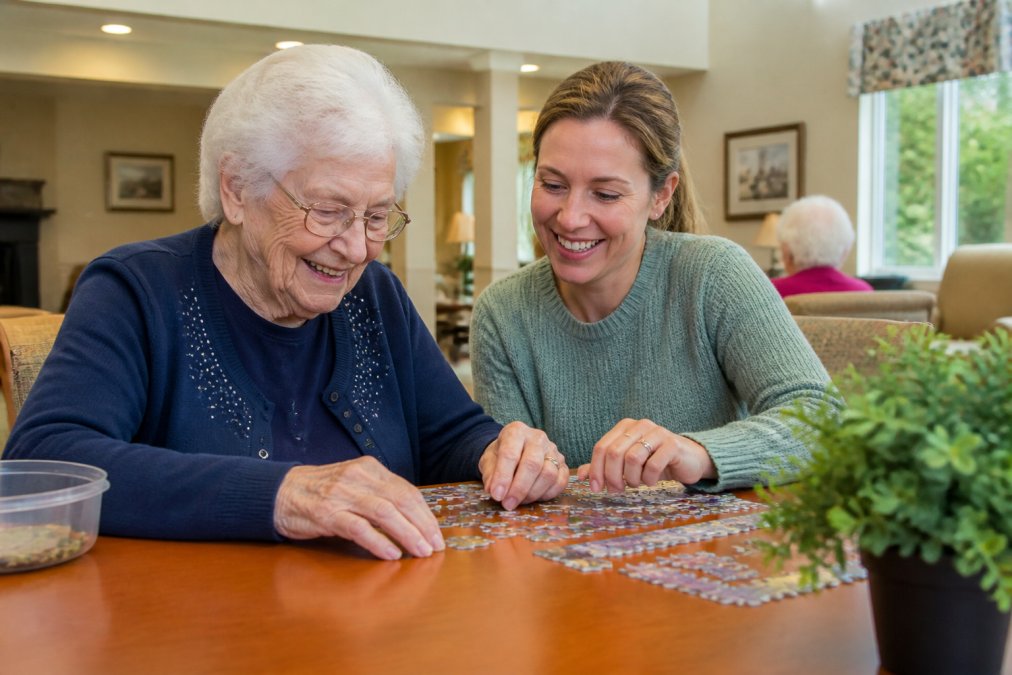
Understanding what a typical day looks like in memory care helps families envision their loved one's life and feel confident in the transition. A well-structured day balances care tasks, therapeutic activities, meals, and rest, all delivered with flexibility to accommodate individual preferences and needs.
Morning Routine and Breakfast
A typical day in memory care begins early, often around 6:30 or 7:00 AM. Staff assist residents with waking, toileting, bathing, grooming, and dressing. This morning routine is structured but unhurried; rushing a resident with dementia often triggers anxiety or resistance.
Breakfast follows, typically between 7:30 and 8:30 AM. A quality memory care community serves chef-prepared meals that appeal to residents' tastes and accommodate dietary needs. The dining environment is calm, with soft music and adequate lighting. Staff sit with residents, providing assistance as needed and encouraging social engagement.
After breakfast, residents may participate in morning activities such as gentle exercise, reminiscence therapy, or sensory stimulation activities like gardening or music. The key is meaningful engagement that taps into remaining abilities and interests.
Mid-Day Activities and Lunch
Mid-morning activities continue until lunch, typically served around 11:30 AM or noon. Lunch is another opportunity for nutritional support and social connection. Some residents may rest or nap after lunch, a normal rhythm that memory care communities should accommodate.
Afternoon activities are carefully designed to match residents' energy levels and cognitive abilities. This might include gentle crafts, reminiscence therapy, one-on-one time with staff, or group activities. The I'm Still Here® philosophy emphasizes activities that honor each resident's life story and remaining abilities rather than infantilizing programming. Therapeutic activities provide sensory stimulation, encourage social connection, and often reduce behavioral symptoms like agitation or wandering.
Afternoon Engagement and Evening Transition
As afternoon progresses toward evening, the pace of activities often slows. Many residents experience sundowning, increased confusion, agitation, or restlessness as daylight fades. Quality memory care communities anticipate this and adjust the environment accordingly: softer lighting, calming music, and one-on-one attention from staff.
Dinner is typically served between 5:00 and 6:00 PM. Evening activities might include quiet time, television, or continued one-on-one engagement with staff or family visitors. As bedtime approaches, staff assist with evening hygiene, medication administration, and settling into bed.
Throughout the day, structured routines provide security for residents with cognitive impairment. Consistency in staff assignments also matters; when the same caregiver assists a resident regularly, trust builds and the resident may be more cooperative and calm.
Safety, Supervision, and Behavioral Support
Safety is foundational in memory care. Residents with dementia may wander, forget how to use stairs safely, leave stove burners on, or fail to recognize dangerous situations. A secure memory care environment includes locked exits, emergency response protocols, and round-the-clock supervision by trained staff.

Behavioral support is equally important. Residents with dementia often experience behavioral changes, agitation, aggression, repetitive questioning, or accusations. These aren't character flaws; they're symptoms of cognitive decline. Dementia-trained staff understand that behavior is communication and learn to identify triggers. A resident who becomes agitated at 3 PM might be responding to pain, hunger, or overstimulation.
Quality memory care includes behavioral management strategies that focus on de-escalation, environmental modification, and addressing root causes rather than relying on chemical or physical restraints. Wander management is a specific safety concern; a secured unit with locked exits prevents residents from leaving unsupervised, while therapeutic activities and environmental design reduce the urge to wander.
Emory Mills emphasizes that safety and dignity aren't mutually exclusive. A secure environment should feel like a welcoming home, not a prison. Residents should have freedom to move within the community, participate in activities, and receive visitors, all within a framework that protects their wellbeing.
Is Memory Care Covered by Insurance: Understanding Your Payment Options
One of the first questions families ask is whether insurance will cover memory care. The answer depends on several factors: the type of insurance, the specific policy, the level of care needed, and the resident's financial situation.
Medicare typically does not cover residential memory care as a long-term care service (cms.gov). Medicare covers skilled nursing care in a facility only after a qualifying hospital stay, and only for a limited time (up to 100 days).
Medicaid, the joint federal-state program for low-income individuals, may cover memory care in some states, but coverage varies significantly. Some states cover assisted living or memory care through Medicaid waiver programs; others do not. Eligibility and benefits depend on income, assets, and the specific state's Medicaid program.
Long-term care insurance, if purchased before cognitive decline, may cover memory care costs. However, many people don't have this coverage, and policies vary in what they cover and for how long.
For many families, memory care is paid privately, either out of pocket or through a combination of personal savings, family contributions, and Medicaid if the resident qualifies. Families should consult with an elder law attorney or financial advisor who understands their specific situation, state regulations, and insurance policies. The Alzheimer's Association resource on paying for care provides detailed information about insurance, Medicaid, and financial planning for memory care.
Making the Transition to Memory Care: What Families Should Know
The decision to move a loved one into memory care is emotionally complex. Adult children often experience guilt, grief, and uncertainty, even when they know it's the right choice. Understanding what the transition involves can ease the process for both the resident and the family.
Timing the transition is important. Signs that memory care may be needed include safety concerns at home, caregiver burnout, behavioral changes that can't be managed safely, or the need for 24/7 supervision.
Before the move, visit the community multiple times. Observe how staff interact with residents, ask about the daily schedule and activities, and discuss your loved one's specific needs and preferences. A good memory care community will ask detailed questions about the resident's history, habits, and what brings them joy.
The first few weeks in a new environment are critical. Some residents adjust quickly; others experience confusion or resistance. Familiar items from home, photos, furniture, and favorite blankets help create continuity. Regular family visits during the adjustment period reassure the resident and help them acclimate.
Communication between family and staff is essential. A quality memory care community will provide regular updates, invite family input on care decisions, and involve families in therapeutic activities when appropriate. Many families find that the transition, while difficult, ultimately improves their loved one's quality of life. A resident who was isolated at home now has social engagement, structured activities, nutritional support, and professional supervision. The adult child can shift to a more relational role, visiting, participating in activities, and supporting their parent emotionally rather than managing all physical care tasks.
Emory Mills recognizes that the transition to memory care is a significant life event. Our team provides caregiver support, transition planning, and ongoing communication to help families navigate this change with confidence.
The decision to choose memory care is deeply personal and deserves careful consideration of what daily life will actually look like for your loved one. Quality memory care means more than safety and medication management; it means a structured environment where your family member receives personalized attention, meaningful engagement, and compassionate support from dementia-trained staff.
At Emory Mills, we've built our memory care around the I'm Still Here® philosophy, which honors each resident's life story and remaining abilities. Our team provides 24/7 supervision, chef-prepared meals, therapeutic activities, and personalized care plans designed to support independence and dignity. If you're considering memory care for your loved one, we invite you to learn more about memory care best practices from the Hearthstone Institute, which guides our approach, and to schedule a tour of Emory Mills to see how we bring compassionate, abilities-focused care to life every day.
| Component | Daily Inclusion | Frequency |
|---|---|---|
| Activities of Daily Living Assistance | Bathing, grooming, toileting, dressing, eating | Multiple times daily |
| Medication Administration | Supervised medication management | Per physician orders |
| Meals and Nutrition | Chef-prepared meals, hydration monitoring | 3 meals + snacks daily |
| Therapeutic Activities | Reminiscence therapy, sensory engagement, structured programming | Multiple activities daily |
| Supervision and Safety | Round-the-clock staff presence, wander management, behavioral support | Continuous |
| Health Monitoring | Observation for changes, communication with healthcare providers | Daily |
| Family Communication | Updates, care coordination, involvement in activities | Regular |
Frequently Asked Questions
What activities of daily living do memory care facilities help with?
Memory care facilities provide hands-on assistance with bathing, grooming, toileting, dressing, and eating. Staff help with medication management, maintain structured routines, and offer round-the-clock supervision. Many facilities include nutritional support, hydration assistance, and help with mobility. The goal is to support independence while ensuring safety and dignity as cognitive decline progresses.
Is memory care covered by insurance?
Memory care coverage depends on your insurance type. Medicare typically does not cover residential memory care, but Medicare Advantage plans may offer limited benefits. Medicaid covers memory care in many states for eligible individuals, though coverage varies by state and facility. Long-term care insurance may cover costs if purchased before diagnosis. Private pay is common. Contact your insurance provider and the facility directly to understand what's covered and what costs you'll manage out-of-pocket.
How many staff members work in memory care units at night?
Staffing levels vary by facility and state regulations. Most quality memory care communities maintain trained staff on-site 24/7, including overnight hours, to respond to emergencies and behavioral episodes. Ask prospective facilities about their specific staffing ratios, staff training in dementia care, and how they respond to nighttime incidents like falls or behavioral changes. This is a critical question when evaluating any memory care community.
What's the difference between assisted living and memory care?
Assisted living provides support with activities of daily living for seniors who need help but don't require specialized dementia care. Memory care is specialized assisted living designed specifically for residents with Alzheimer's disease or other dementias. Memory care units feature dementia-trained staff, secured environments to prevent wandering, behavioral management strategies, reminiscence therapy, and therapeutic activities tailored to cognitive decline. Memory care offers more intensive supervision and specialized programming.
This article was written using GrandRanker