 listicle
Signs It's Time for Memory Care: A Family Guide
Table of Contents
- When Memory Loss Disrupts Daily Life
- Safety Concerns and Household Hazards
- Behavioral and Mood Changes
- Wandering and Getting Lost
- How to Talk to Parents About Memory Care
- Memory Care vs Assisted Living: Understanding the Difference
- Dementia Care Assessment Tools and Professional Evaluation
- Next Steps After Recognition
Last Updated: August 16, 2026
When Memory Loss Disrupts Daily Life
Memory loss that goes beyond occasional forgetfulness signals a shift warranting professional attention. The distinction between normal aging and cognitive decline matters because it determines what kind of support will actually help.
At Emory Mills, we've worked with families navigating this exact moment. What we see consistently is that memory loss becomes problematic when it interferes with activities of daily living (ADLs), the routine tasks that keep someone independent and safe. Forgetting a lunch date is one thing. Forgetting to eat or leaving the stove on repeatedly is another.
A few specific patterns suggest it's time to consider memory care:
- Repeating the same question or story multiple times within hours, regularly within the same conversation or day.
- Getting lost in familiar places, becoming disoriented in neighborhoods they've known for decades.
- Difficulty managing finances or medications, missing doses or paying bills twice.
- Forgetting names of close family members or longtime friends, recognizing them but drawing a blank on their names.
- Unable to recall recent events, but remembering things from decades ago, showing distinctly short-term memory loss.
The key difference between normal aging and dementia-level cognitive decline is consistency and progression. Everyone forgets where they put their keys. People with memory care needs forget they own keys or what keys are for. The memory loss is pervasive, not situational, and worsens noticeably over months.
When memory loss affects someone's ability to prepare meals safely, manage hygiene, or remember medications, professional support becomes essential. This is when many families recognize that in-home care alone may not provide adequate safety and structure.
Safety Concerns and Household Hazards
Safety issues emerge quickly once cognitive decline progresses and often force families to make difficult decisions about memory care. A person with advancing dementia may not recognize danger the way they once did. They might leave the stove on and forget about it entirely, or wander outside in winter without a coat.
Common household hazards become acute risks:
- Kitchen dangers: Leaving burners on, placing non-food items in the microwave, or forgetting they're cooking.
- Medication errors: Taking the same dose twice, mixing up prescriptions, or refusing medications they don't remember needing.
- Falls and mobility hazards: Tripping over rugs or losing balance because they've forgotten about mobility limitations.
- Wandering into unsafe areas: Going outside in dangerous weather or getting lost in their own neighborhood.
- Unsecured toxic substances: Cleaning supplies or medications left accessible because the person forgets they're dangerous.
The Home Safety Inventory from the Hartford Institute for Geriatric Nursing provides a structured checklist caregivers can use to identify specific hazards in a home environment.
No amount of vigilance from a family member can prevent every accident. A person with advanced dementia can move quickly and unpredictably. Professional memory care settings are designed with these specific risks in mind, secured exits, monitored kitchens, and staff trained to recognize and prevent these scenarios. Safety isn't about effort; it's about infrastructure.
Behavioral and Mood Changes
Behavioral shifts often accompany cognitive decline and can be more disruptive to family life than memory loss itself. A person who was once patient might become irritable over minor inconveniences. Someone independent might become clingy or accusatory. These changes aren't character flaws; they're neurological responses to confusion, fear, and loss of control.
Common behavioral changes include:
- Increased irritability or anger, snapping at caregivers over small things.
- Accusations and suspicion, believing family members are stealing or that caregivers have hidden belongings.
- Emotional withdrawal, losing interest in hobbies and activities they once enjoyed.
- Anxiety and restlessness, pacing or expressing vague but intense worry.
- Sundowning, increased confusion or agitation in late afternoon or evening.
- Inappropriate behavior, undressing in public or other actions departing from their baseline personality.
These behaviors feel personal to family caregivers, like rejection or character change. In reality, the person is frightened and confused, losing the cognitive tools they've relied on their entire lives. Professional caregivers in memory care settings are trained to recognize these behaviors as symptoms, not provocations, and respond with patience and redirection rather than reasoning or arguing.
Wandering and Getting Lost
Wandering is one of the most frightening symptoms families face because it carries immediate physical danger. A person with dementia who wanders might leave home in unsuitable clothing, forget where they live, and become unable to find their way back.
Wandering often happens for specific reasons:
- Searching for someone or something, looking for a deceased spouse or trying to "go to work" at a job they retired from decades ago.
- Restlessness or anxiety, pacing and moving without a clear destination.
- Disorientation to place and time, genuinely not recognizing their own home.
- Escape from overstimulation, leaving a situation that feels overwhelming.
A person who wanders is at risk of traffic accidents, falls, exposure to weather, and predatory situations. AngelSense GPS Tracker for Dementia and similar tracking devices provide one layer of safety, offering real-time location data and geofencing alerts, but these tools are supplements to supervision, not replacements.
Memory care communities address wandering through secured environments, regular supervision, and structured activities that reduce restlessness. Staff members are trained to recognize early signs of wandering behavior and redirect before it becomes a safety crisis. For families managing wandering at home, this is often the clearest sign that professional memory care has become necessary.
How to Talk to Parents About Memory Care
This conversation is rarely easy and often delayed because families dread it. But postponing makes the eventual transition harder. A person with early-stage cognitive decline can participate in decision-making, visit communities, and have agency in the choice. Wait until mid-stage or late-stage dementia, and that option disappears.

Frame the conversation around safety and support, not loss of independence. Most people resist leaving home because they associate it with giving up control. Memory care is about getting the right support so they can do the things they still want to do.
Start with observation, not accusation.
Describe specific situations: "I noticed you forgot to take your medication twice this week. That worries me because it's important for your health. I'm wondering if we should talk about getting some help with that."
Listen more than you talk.
Ask open-ended questions: "How are you feeling about managing everything at home?" Many people already know something is wrong. They're scared. Giving them space to admit it is often a relief.
Involve their doctor.
A physician's recommendation carries weight that a family member's concern sometimes doesn't. Ask the doctor to raise the topic during a regular appointment.
Visit communities together.
Don't research alone and then present a decision. Invite them to tour memory care communities with you. Familiarity reduces fear. Many people who initially resist become more open after seeing what modern memory care actually looks like.
Acknowledge their fear.
Say it directly: "I know this feels scary. It would scare me too. But I think you'll actually be happier and safer with more support." Validating the emotion is more persuasive than dismissing it.
Avoid the guilt trap.
Many adult children feel guilty about considering memory care, as if they're abandoning a parent. But keeping someone at home when they need professional supervision often means they're less safe, less engaged, and more isolated. Memory care, done well, offers more meaningful engagement and social connection.
Memory Care vs Assisted Living: Understanding the Difference
These terms are often used interchangeably, but they describe different levels of care designed for different needs.
Assisted living is appropriate for people who need help with activities of daily living, bathing, dressing, medication management, meal preparation, but who are still cognitively intact. Residents can participate in decisions about their day, remember their room number, and generally understand what's happening around them.
Memory care is specialized assisted living designed specifically for people with dementia, Alzheimer's disease, or other cognitive conditions. The environment is secured. Staff are trained in dementia-specific communication and behavioral management. Activities are designed to engage remaining abilities rather than highlight what's been lost. The I'm Still Here® philosophy honors each person's life story and remaining capabilities.
| Aspect | Assisted Living | Memory Care |
|---|---|---|
| Cognitive Status | Cognitively intact, needs physical support | Cognitive decline, memory loss, confusion |
| Environment | Standard secure building | Secured, dementia-specific design |
| Staff Training | General caregiving skills | Dementia-specific communication and behavior management |
| Activities | Resident-chosen, diverse options | Structured, abilities-focused, engaging remaining skills |
| Safety Features | Standard locks, emergency systems | Secured exits, wandering prevention, monitoring |
| Communication | Residents make decisions, understand plans | Staff adapt communication to cognitive level |
Someone in early-stage dementia might start in assisted living if cognitive decline is mild. As the condition progresses, memory care becomes necessary. A person who can no longer recognize their own room, who wanders, or who becomes distressed in unstructured environments needs the specialized environment that memory care provides.
Emory Mills offers both assisted living and specialized memory care suites, so families don't have to transition to a different community if care needs change.
Dementia Care Assessment Tools and Professional Evaluation
Before making any decisions about memory care, a professional evaluation is essential. These assessments help determine the stage of cognitive decline, identify specific care needs, and rule out treatable conditions that might mimic dementia symptoms.
Several validated assessment tools can help:
Montreal Cognitive Assessment (MoCA) is widely used in clinical settings. It takes 10-15 minutes and evaluates memory, attention, language, and executive function. The MoCA is validated in hundreds of peer-reviewed studies and globally recognized.
Self-Administered Gerocognitive Exam (SAGE) is a pen-and-paper test developed by Ohio State University that people can complete at home in 10-15 minutes. While not diagnostic, it can identify whether further evaluation is needed and establish a cognitive baseline for tracking changes over time.
MemTrax Memory Test is an online continuous-recognition memory test based on decades of Alzheimer's research. Results aren't diagnostic but can signal whether professional evaluation is warranted.
A geriatric care manager or neuropsychologist can conduct a comprehensive evaluation that assesses functional abilities, behavioral patterns, and safety concerns. The goal is to understand the person's current capabilities, identify specific safety concerns, and determine what level of support will allow them to maintain the most independence and dignity possible.
Next Steps After Recognition
Once you recognize that memory care might be needed, the next steps should be deliberate but not rushed.
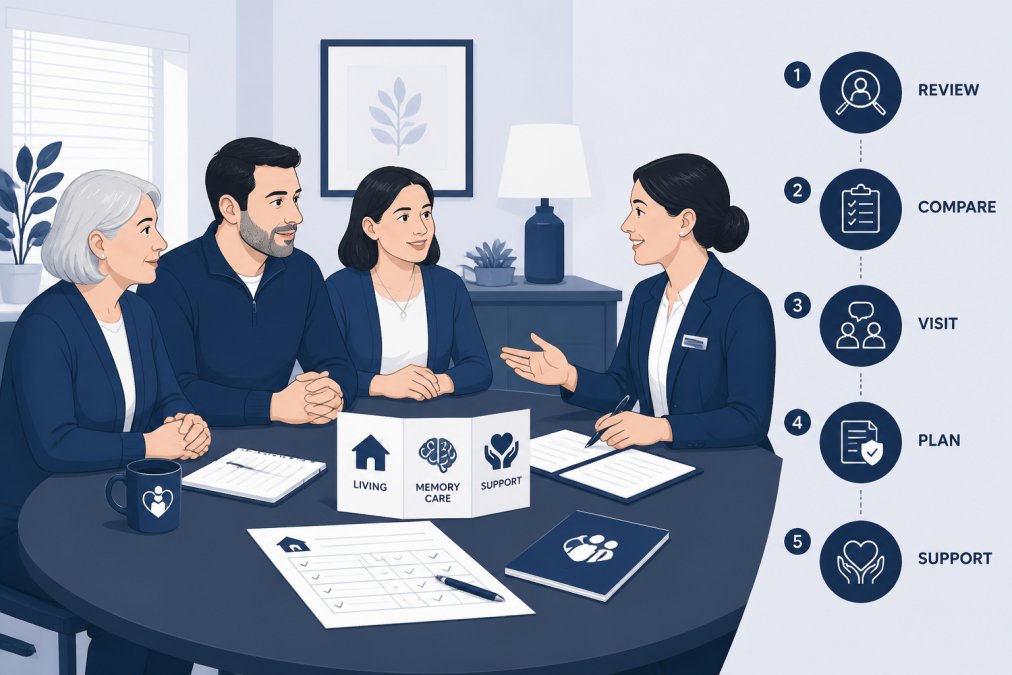
Step 1: Schedule a professional evaluation.
Start with the person's primary care physician. Describe the specific changes you've noticed. Request a referral to a neurologist, geriatrician, or neuropsychologist for a comprehensive cognitive assessment.
Step 2: Have the difficult conversation.
Talk to your loved one (if cognitively able) and other family members. Be honest about what the evaluation revealed. Listen to concerns and acknowledge fears.
Step 3: Assess current living situation for safety.
Use tools like the Home Safety Inventory to identify specific hazards. Determine whether modifications might improve safety or whether the home environment is becoming incompatible with their care needs.
Step 4: Explore memory care options.
Visit communities. Talk to staff about their approach to dementia care and whether they use evidence-based philosophies like I'm Still Here®. Ask about staff-to-resident ratio, how they handle behavioral challenges, and what's included in programming. Trust your instincts about whether it feels like a place where your loved one would be respected and engaged.
Step 5: Plan the transition.
Involve your loved one in the transition process if possible. Visit the community together multiple times. Bring familiar items, photos, and meaningful objects to help them feel some ownership of the move.
Step 6: Prepare for the adjustment period.
The first weeks in a new environment are often difficult. Regular visits, maintaining familiar routines, and patience during adjustment all help.
This process isn't linear. Families often revisit these steps as situations change. The goal is to make the best decision for right now, with flexibility to adjust as circumstances change.
Recognizing when memory care is needed is one of the hardest decisions families face. It requires seeing past guilt and fear to focus on safety, dignity, and quality of life. If you're noticing signs that your loved one needs more support, start with a professional evaluation. Talk to their doctor. Visit communities designed specifically for memory care. At Emory Mills, our I'm Still Here® philosophy honors each resident's life story and remaining abilities while providing the specialized 24/7 support and chef-prepared meals that allow people to maintain independence and dignity. Schedule a tour to see how memory care can actually look, it's often more hopeful than families expect.
Frequently Asked Questions
At what stage of dementia is memory care necessary?
Memory care becomes necessary when cognitive decline interferes with activities of daily living (ADLs) and safety. This typically occurs in mid-stage dementia, when your loved one needs help with bathing, dressing, medication management, and meal preparation. Early-stage dementia may be managed at home with support; late-stage dementia requires 24/7 professional care. A geriatric care manager or physician can assess your loved one's specific needs to determine the right timing for memory care transition.
How do you know when a loved one is no longer safe at home?
Your loved one may no longer be safe at home if they forget to take medications, leave the stove on, wander outside and get lost, fall frequently, or have difficulty with personal hygiene. Other warning signs include leaving doors unlocked, neglecting home maintenance, or becoming unable to respond to emergencies. If you're unable to provide 24/7 supervision or if they've had repeated falls or near-accidents, professional memory care with round-the-clock support becomes essential for their safety and your peace of mind.
What is the difference between memory care and assisted living?
Assisted living provides help with activities of daily living for seniors with mild cognitive decline or physical limitations but who can still make decisions about their care. Memory care is specialized assisted living designed specifically for individuals with dementia or Alzheimer's disease. Memory care communities feature secured environments, staff trained in dementia care, structured activities that honor remaining abilities, and 24/7 supervision. The choice depends on your loved one's cognitive function and safety needs, consult with a healthcare provider to determine which setting is appropriate.
What assessment tools can help determine if memory care is needed?
Several tools can help: the Montreal Cognitive Assessment (MoCA) and Self-Administered Gerocognitive Exam (SAGE) are free or low-cost screening tools that detect cognitive impairment. MemTrax offers free online memory testing. The Home Safety Inventory helps identify environmental hazards. However, these tools are not diagnostic, a physician must interpret results and conduct a full neurological evaluation. Family Caregiver Alliance also provides resources to help families assess care needs and plan transitions. Always consult a qualified healthcare professional for formal assessment.
This article was written using GrandRanker