 how-to
Preventing Falls in Dementia Patients at Home
Table of Contents
- Why Falls Are a Critical Risk for Dementia Patients
- Home Safety Modifications for Dementia
- Exercises for Balance in Seniors with Memory Loss
- Nighttime Wandering and Fall Prevention
- Using Dementia Fall Risk Assessment Tools
- Medication Review and Fall Risk Management
- Caregiver Self-Care and Training for Fall Prevention
- Technology and Monitoring Solutions
Last Updated: August 23, 2026
Why Falls Are a Critical Risk for Dementia Patients
Falls represent one of the most serious safety concerns for individuals with dementia living at home. Cognitive decline, physical changes, and environmental hazards combine to create significant injury risk. Dementia affects spatial awareness, judgment, and danger recognition, while medication side effects may cause dizziness, multiplying fall risk. Preventing falls requires a multifaceted approach addressing both environment and person.
At Emory Mills, we understand that fall prevention isn't about restricting independence, it's about creating a safe space where residents can move freely while reducing unnecessary risks.
Home Safety Modifications for Dementia
Creating a dementia-friendly home environment is the foundation of fall prevention. This removes invisible dangers that someone with cognitive impairment might not recognize or remember.
Removing tripping hazards and clutter
Clear pathways from the bedroom to the bathroom and to frequently used spaces. Remove scatter rugs entirely or secure them firmly with non-slip tape. Electrical cords should be taped to baseboards or run behind furniture. Declutter furniture too, extra chairs, side tables, and decorative items create visual confusion and physical obstacles.
Installing grab bars and non-slip surfaces
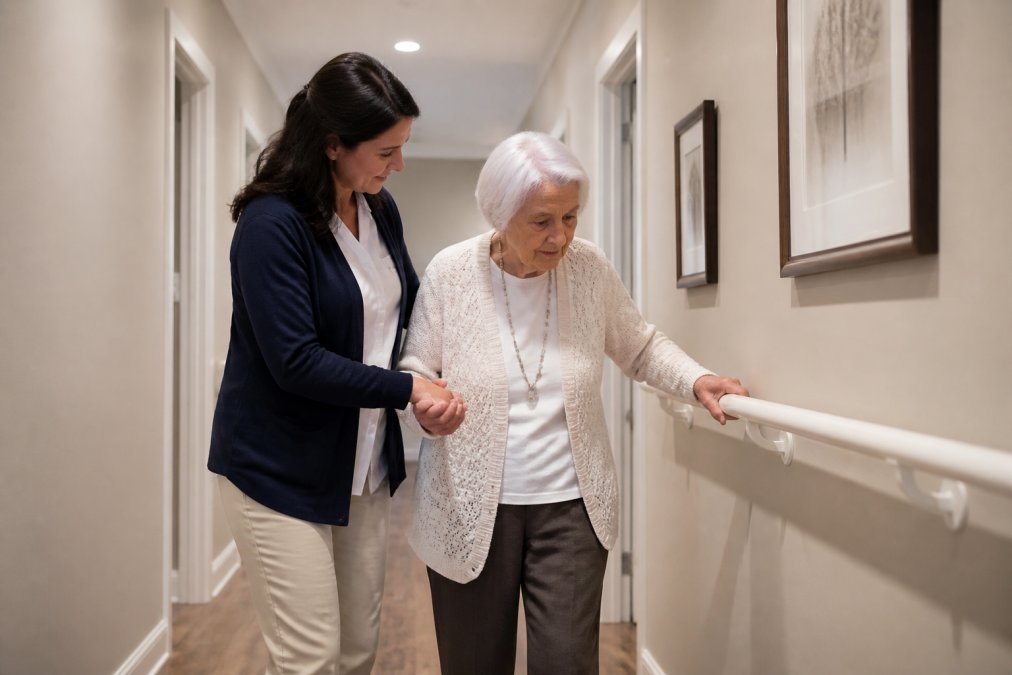
Install grab bars along hallways, near beds, and in any area where balance support helps. Bars should be sturdy, properly anchored to wall studs, and positioned at a comfortable height, typically 33-36 inches from the floor. Use non-slip surfaces everywhere, bathroom floors, kitchen tiles, hallways, and stairs. Add a low-profile bed or one with a firm mattress to make standing easier, and consider a bed rail if the person tends to roll during sleep.
Improving lighting and visibility
Poor lighting is a hidden culprit in falls. Install bright, even lighting throughout the home. Place night lights in hallways, bathrooms, and bedrooms so someone who wanders during sundowning can see where they're going. Motion-activated lights work well in hallways. Use warm LED lighting, which is steadier than fluorescent lights and easier on the eyes. Make light switches easily accessible with large, illuminated switch plates.
Exercises for Balance in Seniors with Memory Loss
Physical activity that builds strength and balance is critical for fall prevention, tailored to the person's current abilities and cognitive level.
Simple daily balance routines
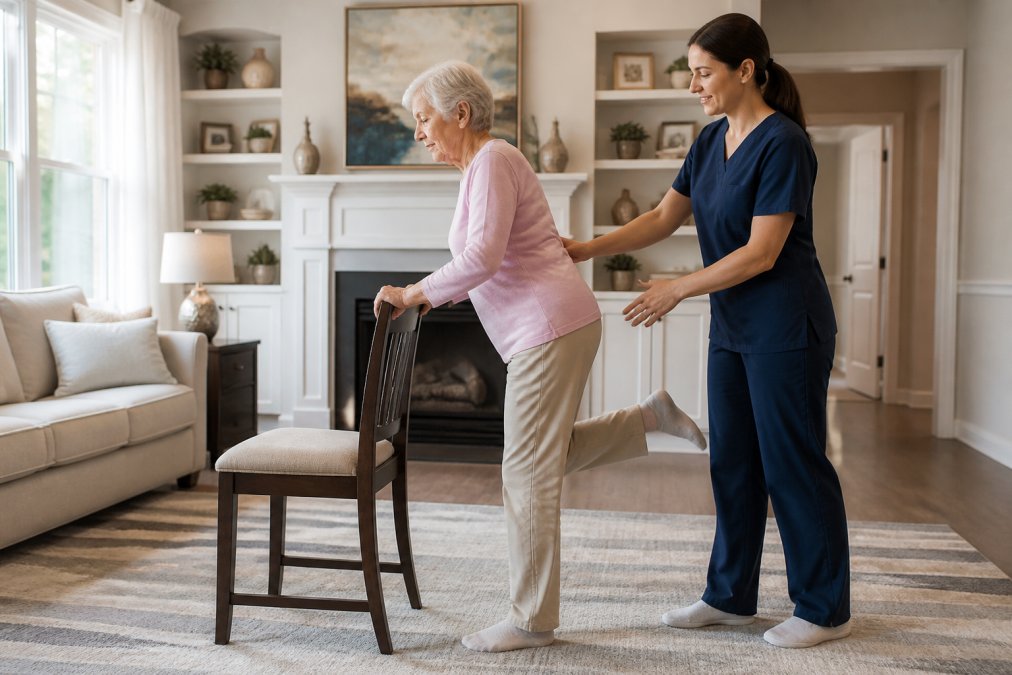
Standing balance work is foundational. Have the person stand with feet shoulder-width apart, holding onto a sturdy chair or counter, shifting weight slowly from one foot to the other or lifting one foot slightly off the ground for a few seconds. Repeat 5-10 times, twice daily.
Heel-to-toe walking challenges balance and coordination. Have them walk in a straight line, placing the heel of one foot directly in front of the toes of the other. Standing on one foot, with hand support, strengthens muscles that prevent falls. Start with 10-15 seconds on each leg, building up to 30 seconds if possible.
Strength-building activities
Sit-to-stand exercises, standing up from a chair and sitting back down repeatedly, build the quadriceps and hip muscles needed for balance and mobility. Start with 5-10 repetitions, twice daily. Wall push-ups are gentle but effective for building upper body strength. Stair climbing, if available, builds leg strength; for those unable to use stairs, step-ups on a low step work similarly.
Consistency matters more than intensity. A 10-minute routine done daily is far more effective than occasional longer sessions.
Nighttime Wandering and Fall Prevention
Sundowning, increased confusion and agitation in the evening, often leads to nighttime wandering and falls. Establish a calming evening routine: dim the lights gradually, play soft music, offer a light snack, and guide the person toward bed.
Managing sundowning and behavioral triggers
Identify triggers that worsen sundowning. Hunger, thirst, pain, or the need to use the bathroom often drive nighttime wandering. Address these before bedtime. A bathroom trip right before sleep reduces the need to get up during the night.
Medication review is important. Some medications can cause dizziness or orthostatic hypotension, a sudden drop in blood pressure when standing. Discuss medication timing with their doctor. Keep the bedroom door open so you can hear if they get up. Use bed alarms or motion sensors to alert you if they're moving around.
Night lights and environmental adjustments
Night lights should be bright enough to see clearly but not so bright they disrupt sleep. LED night lights with warm color temperature work well. Place them in the bedroom, hallway, and bathroom. Motion-activated lights in hallways eliminate the need to find a light switch in the dark.
Minimize obstacles between the bed and the door. Keep a phone or call bell on the nightstand so they can ask for help instead of getting up alone. Door locks and safety gates can prevent someone from wandering outside or into dangerous areas during nighttime confusion.
Using Dementia Fall Risk Assessment Tools
A formal fall risk assessment helps identify specific vulnerabilities and guide prevention efforts. These tools evaluate physical factors, cognitive status, medication effects, and environmental hazards.
The Timed Up and Go test is one simple assessment. It measures how long it takes someone to stand up from a chair, walk 10 feet, turn around, and sit back down. If it takes more than 12 seconds, fall risk is elevated (peer-reviewed research). This test can be done at home and gives a baseline to track over time.
The American Geriatrics Society's fall prevention guidelines recommend comprehensive assessment as the first step in any fall prevention program. Keep a log of any falls or near-falls, noting what happened, time of day, and circumstances. This pattern helps identify specific risk factors and triggers.
Medication Review and Fall Risk Management
Many medications increase fall risk. Blood pressure medications can cause dizziness or orthostatic hypotension. Sedatives, sleep aids, pain medications, antidepressants, and anti-anxiety drugs all carry fall risk as a side effect. A medication review with the doctor is essential. Ask specifically about fall risk. Sometimes adjusting the dose, changing timing, or switching to an alternative reduces side effects without sacrificing therapeutic benefit.
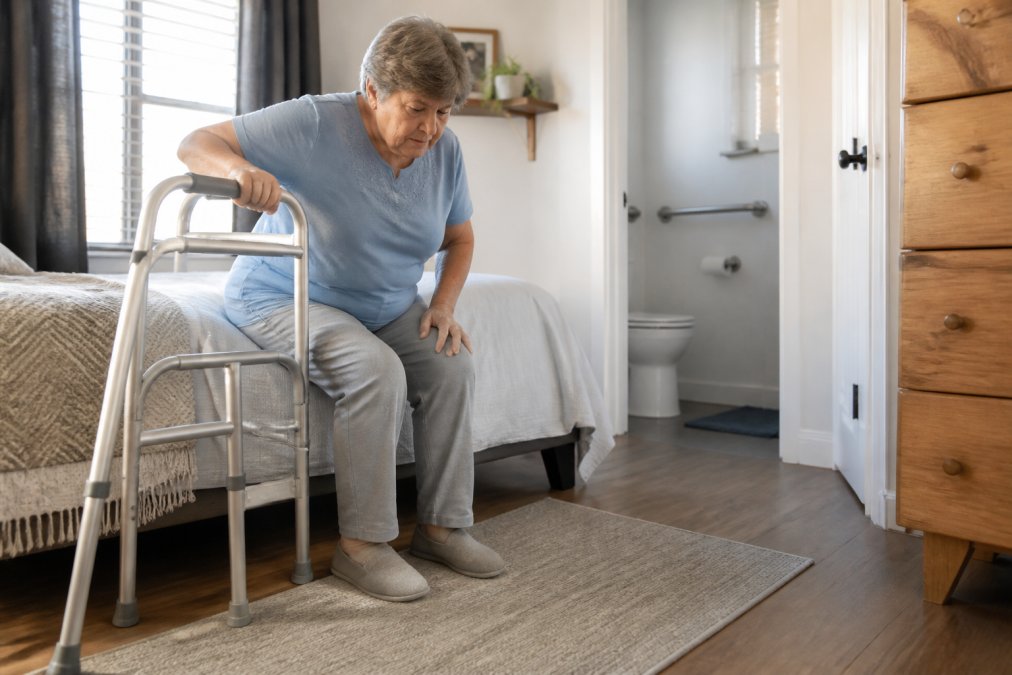
Orthostatic hypotension, dizziness when standing up, is particularly dangerous. Strategies include rising slowly, sitting on the edge of the bed for a moment before standing, and staying hydrated. A pharmacist can review all medications, prescription, over-the-counter, and supplements, to identify interactions and cumulative fall risk.
Caregiver Self-Care and Training for Fall Prevention
Caregiver burnout makes it harder to stay vigilant about fall prevention. A burned-out caregiver is more likely to miss hazards or become impatient, increasing fall risk. Taking care of yourself is part of taking care of your loved one.
Learn proper body mechanics for assisting someone who's unsteady. Position yourself on their weaker side, use a gait belt if appropriate, and keep your feet grounded. Learn how to respond if a fall does happen: check for obvious injuries, call for help if needed, and don't move the person unnecessarily if there's a possibility of spinal injury.
Build breaks into your caregiving routine. Respite care, hiring someone to watch your loved one for a few hours while you rest, is necessary. Connect with other caregivers through support groups, whether in-person or online, to reduce isolation and gain practical tips.
Technology and Monitoring Solutions
Modern technology offers tools that provide an extra layer of safety. Wearable devices can detect falls and alert caregivers automatically. Some devices send GPS location if someone wanders. Others monitor activity patterns and alert you if there's a sudden change that might indicate a fall or health issue.
Fall detection wearables use accelerometers to recognize the motion pattern of a fall. If a fall is detected, the device alerts the wearer and, if they don't respond, contacts emergency services or a designated caregiver. Activity monitoring systems track movement patterns throughout the day and can indicate problems when patterns change dramatically.
Home safety cameras in common areas provide peace of mind. Smart home technology can reduce fall risk by enabling voice-activated lighting, preventing wandering through smart locks, and maintaining appropriate temperature control. These tools complement, but don't replace, the fundamentals: environmental modifications, exercise, medication management, and caregiver presence.
Preventing falls in dementia patients at home is an ongoing process requiring attention to the environment, physical health, behavior, and caregiver support. Falls aren't inevitable, they're preventable with the right combination of strategies. At Emory Mills, our team understands the complexity of dementia care and the importance of maintaining safety while preserving independence and dignity. Our evidence-based I'm Still Here® philosophy focuses on each resident's remaining abilities and life story, creating a personalized approach to care that includes comprehensive fall prevention. Schedule a tour at Emory Mills today to see how our family-owned community can help.
Frequently Asked Questions
Q: What are the main reasons dementia patients fall more often than other seniors?
A: Dementia affects balance, spatial awareness, and gait stability through cognitive and physical changes. Patients may forget about environmental hazards, experience medication side effects that cause dizziness, or have orthostatic hypotension (sudden blood pressure drops when standing). Additionally, dementia can impair judgment about safe movement and increase wandering behavior, especially during sundowning. A fall risk assessment by a healthcare provider can identify which factors apply to your loved one.
Q: How can home safety modifications for dementia actually reduce fall risk?
A: Environmental modifications address the specific challenges dementia patients face. Removing scatter mats and clutter eliminates tripping hazards. Installing grab bars and non-slip surfaces in bathrooms and hallways provides stability. Better lighting reduces confusion and helps with visual perception in dim areas. Securing electrical cords and removing obstacles from pathways prevents entanglement and stumbling. These changes work together to create a dementia-friendly environment where your loved one can move safely, even as cognitive abilities decline.
Q: What kind of exercises help improve balance in seniors with memory loss?
A: Simple, repetitive exercises work best because they don't rely on memory. Seated marching, standing hip flexions, and wall push-ups build strength without high fall risk. Balance exercises like standing on one foot (while holding a sturdy chair) or heel-to-toe walking improve proprioception. Physical therapy can create a personalized routine based on your loved one's abilities. Consistency matters more than intensity, daily 10-15 minute sessions are better than occasional longer sessions.
Q: Why do dementia patients wander at night, and how can caregivers prevent falls during these episodes?
A: Nighttime wandering often occurs during sundowning, when confusion and agitation increase as daylight fades. Behavioral triggers include discomfort, medication effects, or simply disorientation to time. To prevent falls: use night lights along hallways and in the bedroom, ensure pathways are completely clear, lock doors to unsafe areas, and consider assistive technology like bed alarms or motion sensors. Establishing a calming evening routine, addressing pain or medical issues, and maintaining adequate daytime activity can reduce wandering. If your loved one does wander, motion-activated lights and clear sightlines make navigation safer.
This article was written using GrandRanker