 ultimate-guide
Middle Stage Dementia: What to Expect and How to Support
Table of Contents
- Understanding Middle Stage Dementia
- How Long Does Middle Stage Dementia Last
- Memory Loss and Cognitive Changes in the Middle Stage
- Behavioral and Emotional Changes You May Observe
- Daily Living Activities That Become Challenging
- Activities for Seniors With Memory Loss
- Dementia Caregiving Tips for Managing the Middle Stage
- Frequently Asked Questions
Last Updated: September 24, 2026
Understanding Middle Stage Dementia
Middle stage dementia is the longest phase of the disease, typically lasting several years. During this period, cognitive decline becomes more noticeable, and individuals require increasing levels of support with daily activities. At Emory Mills, we recognize that understanding what happens in the middle stage of dementia helps families prepare emotionally and practically for the changes ahead.
The middle stage is characterized by progressive memory impairment, behavioral changes, and difficulty with executive function, the mental processes that help us plan, organize, and make decisions. This is when most families recognize they need professional support. The good news: with proper planning and the right care environment, individuals can maintain dignity and quality of life throughout this phase.
How Long Does Middle Stage Dementia Last
The duration of middle stage dementia varies significantly from person to person, typically ranging from two to ten years. Several factors influence how long this stage lasts, including the individual's age at diagnosis, overall health, the specific type of dementia, and how aggressively the disease progresses.
Most people spend the longest portion of their dementia journey in this middle stage. The progression isn't always linear, some individuals experience rapid changes while others decline more gradually. This unpredictability is why many families benefit from working with memory care specialists who can adjust support as needs evolve. Regular medical evaluations help track changes and inform care decisions.
Memory Loss and Cognitive Changes in the Middle Stage
In the middle stage, memory loss becomes unmistakable. Long-term memory gradually deteriorates, and individuals may struggle to recall significant life events, though they often retain memories of their distant past longer than recent events. Short-term memory loss is typically more pronounced, they may forget conversations from hours earlier or repeat the same questions multiple times.
Beyond memory, cognitive decline affects executive function significantly. Planning a meal, managing medications, handling finances, or organizing daily routines becomes increasingly difficult. Many people experience disorientation, losing track of time, date, or location. Some may struggle to recognize familiar faces or become confused about where they are, even in their own homes. These cognitive changes directly impact independence and safety.
Behavioral and Emotional Changes You May Observe
Behavioral symptoms emerge prominently during the middle stage. Individuals may become irritable, anxious, or frustrated when they can't remember something or understand what's happening around them. Agitation is common, especially when routines change unexpectedly. Some experience emotional regulation difficulties, mood swings that shift from calm to upset without obvious triggers.
Sundowning, a phenomenon where confusion and agitation increase in late afternoon or evening, affects many people in this stage (alz.org). Social withdrawal often occurs as individuals become aware of their declining abilities and feel embarrassed or frustrated. Depression and anxiety are frequent emotional responses to losing independence and cognitive function. Understanding these changes helps caregivers respond with patience rather than frustration.
Daily Living Activities That Become Challenging
Activities of daily living (ADLs), the self-care tasks we perform automatically, require increasing assistance. Personal hygiene becomes difficult. Bathing, dressing, and grooming may feel overwhelming or confusing. Some individuals resist help, not understanding why assistance is needed. Toileting accidents increase as continence becomes harder to manage.
Medication management becomes unsafe without supervision. Individuals may forget whether they've taken their medications or take them multiple times. Meal preparation poses safety risks, they may forget food on the stove or struggle to use appliances correctly. Eating itself sometimes becomes challenging as swallowing coordination declines. These functional impairments are why 24/7 supervision becomes essential during the middle stage.
Activities for Seniors With Memory Loss
Meaningful engagement remains possible and important throughout the middle stage. The key is matching activities to remaining abilities rather than focusing on lost skills. Meaningful engagement remains possible and important throughout the middle stage. The key is matching activities to remaining abilities rather than focusing on lost skills.
Types of Activities That Work
Simple, concrete activities work best because they require minimal executive function:
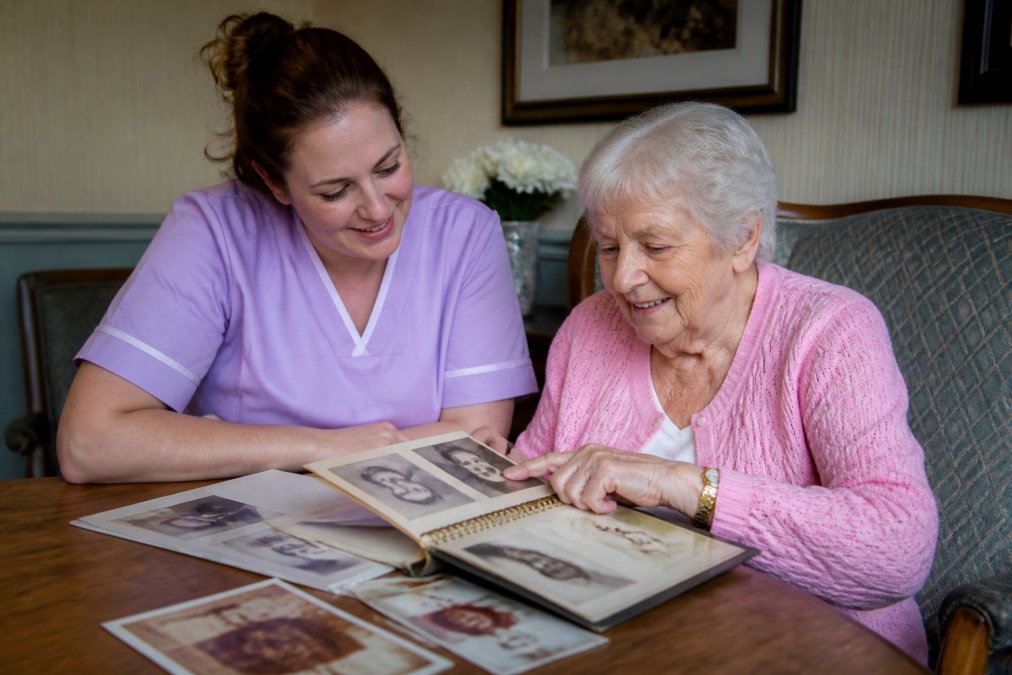
- Sensory and reminiscence activities: Looking at old photographs with narration, listening to music from their era (which often triggers long-term memories even when recent memory is gone), handling familiar objects with texture (soft blankets, smooth stones), smelling familiar scents (lavender, baking bread). These activities engage emotion and memory without requiring problem-solving.
- Hands-on tasks: Folding towels, sorting buttons by color, arranging flowers, simple gardening or yard work, wiping tables, or organizing drawers. These provide purpose, structure, and a sense of contribution.
- Creative activities: Coloring (not just children's books, adult coloring pages with larger designs reduce frustration), simple crafts, painting, or music-making. These don't require memory or judgment, only participation.
- Movement and social activities: Short walks (15-20 minutes, as longer walks can increase confusion), dancing to familiar music, gentle exercise classes designed for older adults, or sitting together in group settings. Movement improves sleep, reduces agitation, and maintains physical function.
Structuring Activities for Success
Structured activities work better than open-ended ones because they reduce decision-making and confusion:
- Provide clear beginning and end: "We're going to look at photos for 20 minutes, then we'll have a snack." Avoid open-ended invitations like "Would you like to do something?" which can feel overwhelming.
- Use one-step directions: Instead of "Let's organize this drawer," say "Please put these socks in this pile." Then, when that's complete, offer the next step.
- Offer choices within limits: Rather than "What would you like to do?" ask "Would you like to listen to music or look at photos?" Two options are manageable; unlimited choices cause decision paralysis.
- Repeat activities: Familiar activities feel safer and require less explanation. Doing the same activity three times per week is more effective than varied activities.
- Watch for signs of fatigue or frustration: If the person becomes agitated, confused, or withdrawn, stop the activity. Pushing through frustration worsens behavior and creates negative associations.
Adapting Activities as Cognition Declines
As the middle stage progresses, cognitive abilities change. Early middle stage individuals may enjoy more complex activities (card games, cooking, puzzles); late middle stage requires simpler engagement (sorting, sensory activities, one-on-one interaction). Reassess monthly and adjust accordingly.
The I'm Still Here® philosophy emphasizes honoring each person's life story and remaining abilities. This approach transforms care from task-focused to person-centered: instead of "We need to keep them occupied," the mindset becomes "How can we honor who they are and what they can still do?"
Dementia Caregiving Tips for Managing the Middle Stage
Caregiving in the middle stage requires strategies that balance safety with dignity. Establish consistent routines that reduce confusion and provide structure. Use simple, clear communication: short sentences, calm tone, and patience when someone struggles to understand or respond. Break tasks into smaller steps and allow extra time for responses.
Modify the home environment for safety. Remove tripping hazards, install grab bars in bathrooms, secure doors to prevent wandering, and use labels on drawers and cabinets. Consider assistive devices like medication dispensers with alarms, GPS tracking devices for individuals prone to wandering, and motion-sensor nightlights to reduce falls during nighttime bathroom trips. Smart home technology such as door sensors and video monitoring can alert caregivers to unsafe behaviors without constant in-person supervision.
Supervise medication carefully. Use pill organizers or work with a pharmacy that manages dosing. Many pharmacies offer compliance packaging, which pre-sorts medications by date and time, eliminating guesswork. Ask your pharmacy about synchronizing refill dates so all medications renew on the same day, reducing administrative burden.
Caregiver Burnout: Recognition and Action
Caregiver burnout is not a personal failing, it is a predictable medical and psychological consequence of 24/7 caregiving without adequate support (Mental Health and Challenges of Family Caregivers: A Public Health Perspective in India). Caregiver burnout is not a personal failing, it is a predictable medical and psychological consequence of 24/7 caregiving without adequate support. Early warning signs include:
- Emotional exhaustion: feeling drained even after rest, difficulty finding joy in activities you once enjoyed
- Physical symptoms: persistent fatigue, frequent headaches, changes in sleep or appetite, increased illness
- Cognitive changes: difficulty concentrating, forgetfulness, irritability with the care recipient or others
- Social withdrawal: isolating from friends and family, canceling plans, feeling no one understands
- Resentment: feeling trapped, angry at the care recipient for their condition, or guilty for feeling angry
If you recognize three or more of these signs, reach out to your primary care doctor or a mental health professional. If you recognize three or more of these signs, reach out to your primary care doctor or a mental health professional.
Respite care, temporary professional support, is not a luxury; it is essential maintenance for your own health.
Frequently Asked Questions
How long does middle stage dementia typically last?
Middle stage dementia generally lasts between 2 to 10 years, though the timeline varies significantly based on the individual's overall health, age at diagnosis, and the type of dementia. Some people progress more quickly, while others experience a longer middle stage. Working with a healthcare provider to monitor progression helps families plan care transitions and prepare for future needs.
What are the most common behavioral changes in middle stage dementia?
Common behavioral changes include agitation, irritability, anxiety, wandering, repetitive questions or behaviors, and emotional outbursts. Sundowning (increased confusion and agitation in late afternoon or evening) is particularly common. These changes reflect the progressive neurological changes occurring in the brain and often respond better to environmental adjustments and compassionate responses than to confrontation or correction.
What activities for seniors with memory loss actually help during the middle stage?
Effective activities focus on remaining abilities rather than lost skills. Music, art, gentle exercise, gardening, cooking simple recipes, and looking through photo albums work well. The I'm Still Here® philosophy emphasizes honoring each person's life story through personalized engagement. Activities should be flexible, allow for success, and provide purpose, avoiding complex rules or competition that may cause frustration.
How can I manage safety concerns like wandering and falling during middle stage dementia?
Home modifications include removing tripping hazards, installing grab bars, improving lighting, and securing doors. Wearable alert systems can help locate someone who wanders. Supervision becomes increasingly important; many families find that 24/7 care in a supportive environment reduces falls and wandering-related risks. Regular medication review and addressing underlying causes of agitation also help prevent unsafe behaviors.