 how-to
I'm Still Here Philosophy: A Practical Guide
Table of Contents
- What Is the I'm Still Here Philosophy?
- Core Principles of the I'm Still Here Approach
- Activities for Seniors With Memory Loss
- Dementia Care Communication Strategies
- How to Implement I'm Still Here at Home
- Measuring Success and Recognizing Outcomes
- Common Challenges and How to Overcome Them
- Conclusion
Last Updated: August 18, 2026
What Is the I'm Still Here Philosophy?
The I'm Still Here philosophy is an evidence-based approach to dementia care that recognizes and honors the enduring personhood of individuals living with cognitive decline. Rather than focusing on what memory loss has taken away, this philosophy emphasizes the abilities, strengths, and life stories that remain intact. The approach shifts the entire framework of care from deficit-focused (what's wrong) to ability-focused (what's possible).
Emory Mills, a family-owned senior living community, has partnered with the Hearthstone Institute to implement the I'm Still Here philosophy as the foundation of its specialized memory care program. The approach recognizes that even as cognitive abilities change, individuals retain emotional connections, sensory preferences, and the capacity to engage meaningfully with their environment and the people around them.
Core Principles of the I'm Still Here Approach
Personhood and dignity form the foundation. Cognitive decline does not diminish a person's inherent worth or right to be treated with respect. Every individual deserves to maintain agency in decisions affecting their life and to have their life story acknowledged and valued.
Engagement based on remaining abilities redirects care toward activities tailored to what each person can actually do. Someone who can no longer read may still enjoy looking at photographs. A person who struggles with complex conversation might light up during a familiar song. The goal is to meet people where they are, not where they used to be.
Life story integration means weaving a person's history, accomplishments, relationships, and preferences into daily life. Caregivers learn about residents' careers, hobbies, and significant life events, then use this knowledge to create meaningful engagement. Someone who was a teacher might enjoy sorting tasks. A former musician might respond powerfully to listening to music from their era.
Community and social connection recognize that humans are relational beings at every stage of life. The I'm Still Here philosophy emphasizes maintaining connections with family, friends, and peers, even as communication becomes more challenging.
Activities for Seniors With Memory Loss
Therapeutic activities based on personal history
Activities grounded in personal history create natural bridges between a person's past identity and present reality. Someone who spent forty years as a carpenter might sort tools by size, feel different types of wood grain, or look through photographs of completed projects.
Music offers one of the most powerful therapeutic channels. Research consistently shows that individuals with advanced dementia often retain the ability to recognize and respond emotionally to music from their youth. Care communities might host listening hours featuring music from significant life periods or create personalized playlists based on family input.
Cooking and baking activities use both memory and sensory engagement. Someone who enjoyed baking might participate in mixing ingredients, smelling spices, or decorating cookies, activating familiar neural pathways without requiring intact memory.
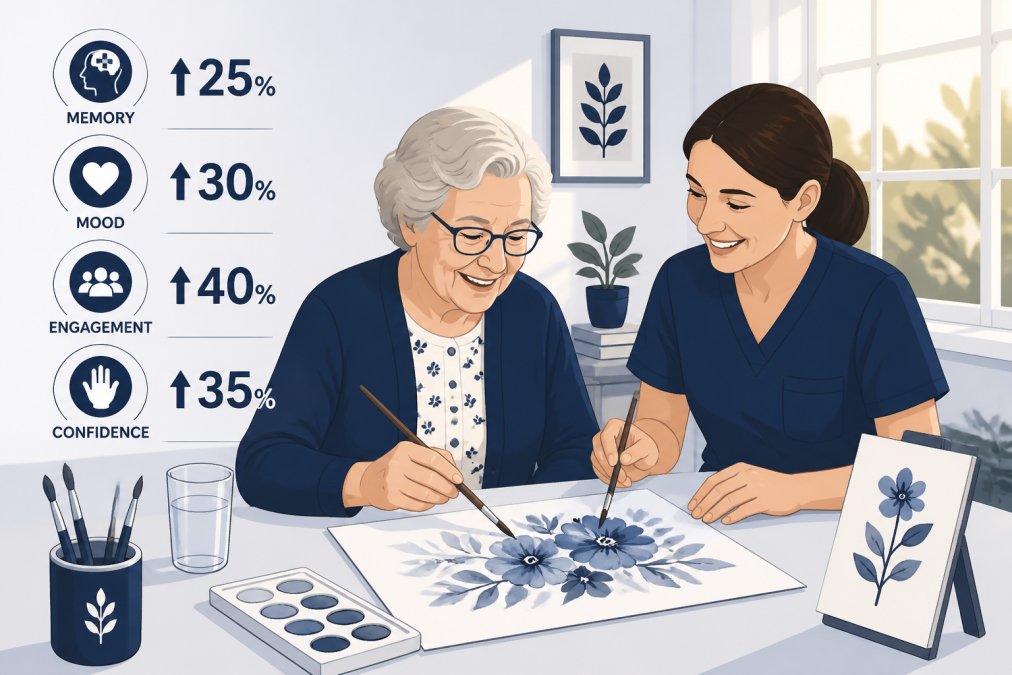
Reminiscence activities, looking through photograph albums or discussing significant life events, create structured opportunities for storytelling. These work best in small group settings or one-on-one with a caregiver who can listen actively. The goal is to honor the person's narrative and emotional connection to their past.
Engagement that builds on remaining abilities
Someone who can no longer read complex sentences might still enjoy looking at magazines or picture books. A person with limited verbal skills might engage enthusiastically with sorting tasks, buttons by color or objects by texture.
Sensory activities, handling different fabrics, smelling essential oils, listening to nature sounds, engage the brain through channels that often remain accessible even with significant cognitive decline. These activities require no memory, no verbal ability, and no complex reasoning, yet they provide genuine engagement and often visible pleasure.
Gentle movement activities adapted to individual mobility levels support both physical health and emotional regulation. Pet interaction, whether with a community animal or visiting pets, often elicits strong positive responses based on immediate sensory and emotional connection.
Dementia Care Communication Strategies
The 90-second rule for redirecting behavior
Behavioral challenges often stem from unmet needs, confusion, or emotional distress rather than intentional defiance. The 90-second rule is straightforward: when someone exhibits challenging behavior, pause and spend 90 seconds observing before reacting. Is the person hungry, thirsty, in pain, or needing to use the bathroom? Are they confused about time or place?
This brief observation window often reveals the actual need. Someone asking repeatedly "Where's my mother?" might be experiencing confusion about time or longing for emotional connection. Rather than correcting them, a caregiver might ask gently, "Tell me about your mother, what was she like?" This validates the emotional need without forcing a confrontation with a reality the person may not be able to process.
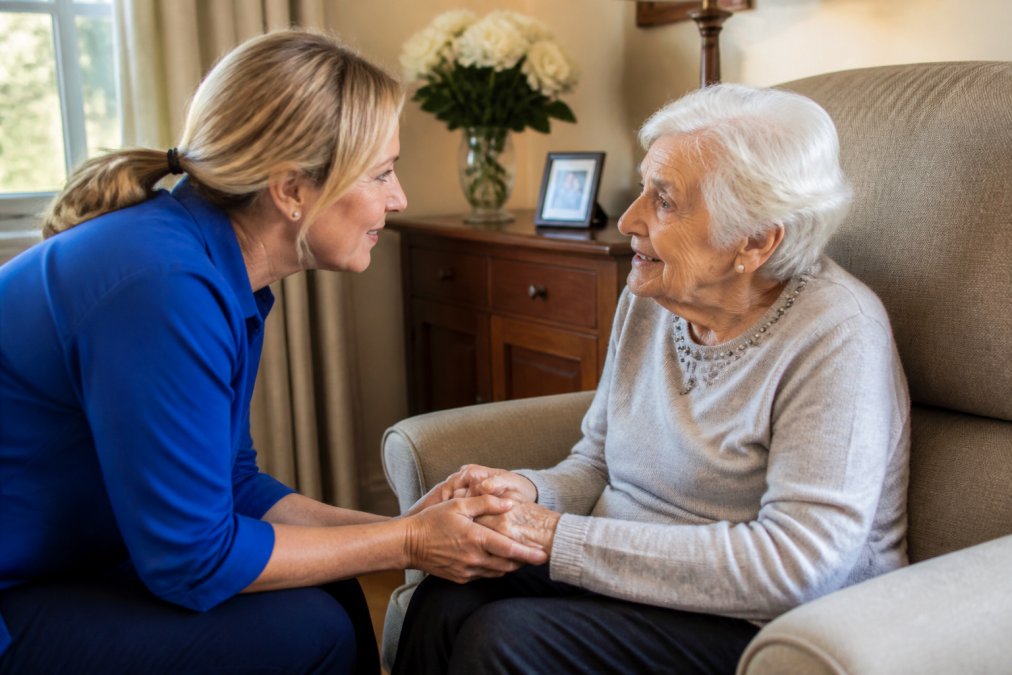
Redirection, gently shifting focus to a different activity or topic, works best when it honors the person's emotional state. If someone is distressed about a past event, acknowledging the feeling before introducing a gentle distraction is more effective than immediate contradiction.
Validation and listening techniques
Validation means accepting a person's emotional reality even when their cognitive interpretation of events is inaccurate. If someone insists they need to go to work, a validating response acknowledges the feeling rather than correcting the fact.
Active listening, full attention, eye contact, and unhurried response communicate respect and care in ways that transcend the content of words. Many individuals with dementia lose the ability to follow complex sentences but remain acutely sensitive to tone, body language, and emotional presence.
Asking open-ended questions when possible invites storytelling and engagement. Speaking clearly, using simple sentences, and allowing processing time are practical communication adjustments. Pausing for 5-10 seconds after asking a question gives the person time to understand and formulate a response.
How to Implement I'm Still Here at Home
Implementing the I'm Still Here philosophy at home begins with gathering information about the person's life, preferences, and abilities. Create a simple document capturing key information: favorite foods, meaningful relationships, significant life events, hobbies, music preferences, and sensory preferences.
Assess the home environment for safety and accessibility. Small adjustments, moving frequently-used items to accessible locations, reducing clutter, and creating a calm bedroom space make daily life easier.
Establish a flexible routine that provides structure without rigidity. A loose framework, breakfast time, morning activity, lunch, afternoon activity, dinner, evening wind-down, provides orientation without creating distress when timing shifts.
Involve family members meaningfully. Rather than visiting for a set time each week, family might contribute by sharing favorite photographs, recording audio messages, or participating in reminiscence sessions.
Plan activities intentionally but allow flexibility. Knowing someone enjoys music doesn't mean forcing a formal concert; it might mean playing favorite songs during meal preparation. The goal is creating opportunities for engagement that fit naturally into daily life.
Communicate with healthcare providers about behavioral changes or shifts in ability. What looks like declining engagement might be pain, medication side effects, or a urinary tract infection.
Measuring Success and Recognizing Outcomes
Success with the I'm Still Here philosophy looks different than traditional metrics. Rather than measuring cognitive function, caregivers observe changes in emotional well-being, behavioral stability, and quality of engagement.
Reduced behavioral challenges is often the first noticeable outcome. When activities align with abilities and communication respects the person's emotional reality, agitation and resistance to care frequently decrease.
Increased engagement and participation becomes visible in daily interactions. Someone who seemed withdrawn might smile more frequently or show interest in activities. Participation might be nonverbal, a nod or gesture, but it signals that the person is present and responsive.
Improved emotional connection shows up in interactions with family and caregivers. A person might not remember a visitor's name but might light up with recognition and warmth when the person arrives.
Better sleep and appetite often improve when anxiety decreases and daily engagement increases. A person who is meaningfully occupied during the day frequently experiences better nighttime sleep and more consistent eating patterns.
Caregiver wellbeing also improves measurably. When family members understand that challenging behaviors are communication attempts and have tools to redirect and soothe, caregiver stress and burnout decrease significantly.
Track these outcomes informally through observation and journaling. Note what activities generate the most positive response and which communication approaches work best.
Common Challenges and How to Overcome Them
Challenge: Resistance to care activities
When someone refuses participation in planned activities, the I'm Still Here approach pauses and asks why. Is the person tired, uncomfortable, or anxious? Is the activity genuinely uninteresting, or is the timing wrong?
Solution: Observe without judgment. Try the activity at a different time, with a different caregiver, or in a modified form. Sometimes a simple change transforms resistance into engagement.
Challenge: Difficulty identifying meaningful activities
Not every family has detailed information about a person's life history and preferences.
Solution: Start with what you can observe. What captures the person's attention? Work with other caregivers or community members who knew the person previously. Even fragments of information provide enough direction to create relevant activities.
Challenge: Balancing safety with independence
The I'm Still Here philosophy emphasizes dignity and agency, but safety is also essential.
Solution: Create environments where safe independence is possible, removing hazards and simplifying choices. For tasks that require assistance, frame it as collaboration rather than control.
Challenge: Family expectations and grief
Family members sometimes struggle with the philosophy's acceptance of cognitive decline. Watching someone they love live with diminished capacity can trigger grief and resistance.
Solution: Education and time help. Families benefit from understanding that the I'm Still Here approach creates the best possible quality of life within the reality of decline. Connecting with other families navigating similar experiences also reduces isolation.
Challenge: Consistency across multiple caregivers
If a person receives care from multiple family members or professional caregivers, ensuring consistent approach can be difficult.
Solution: Create a simple written guide documenting what works for this specific person. Share observations about effective communication strategies, preferred activities, and behavioral triggers. Regular communication among caregivers helps maintain consistency.
The I'm Still Here philosophy transforms dementia care from managing decline to honoring personhood. At Emory Mills, this approach guides everything from activity planning to communication strategies, ensuring that residents with memory care needs experience dignity, meaningful engagement, and genuine belonging. If you're caring for someone with dementia, whether at home or exploring residential options, understanding and implementing these principles creates measurable improvements in quality of life. The Hearthstone Institute's research on person-centered dementia care provides additional resources for families and caregivers seeking evidence-based approaches. Consider scheduling a tour of a community that prioritizes this philosophy to see how it translates into daily practice. Emory Mills specializes in creating environments where residents with memory loss remain engaged, valued, and supported through every stage of their journey.
Frequently Asked Questions
What does the I'm Still Here philosophy actually mean in practice?
The I'm Still Here philosophy shifts focus from what a person with dementia has lost to what abilities and strengths remain. In practice, this means staff and family members honor each person's life story, preferences, and personality, not just manage symptoms. Instead of filling time with generic activities, caregivers engage residents in meaningful tasks based on their history, skills, and interests. A person who was a teacher might help sort materials; someone who loved gardening might tend to plants. This approach recognizes that the person is still present, still capable, and still deserving of dignity and purpose.
How is the I'm Still Here approach different from traditional dementia care?
Traditional dementia care often focuses on managing behavior and cognitive decline through medication or activity schedules designed for the group. The I'm Still Here philosophy is person-centered: it prioritizes individual strengths, personal history, and emotional connection over standardized routines. Rather than asking 'What's wrong with this person?' it asks 'Who is this person, and what can they still do?' This distinction matters because it reduces behavioral challenges, increases engagement, and improves quality of life. Residents feel valued as individuals rather than treated as a diagnosis.
What role does personal history play in the I'm Still Here approach?
Personal history is the foundation of I'm Still Here care. Understanding a person's occupation, hobbies, family relationships, and life achievements helps caregivers create activities and conversations that feel meaningful and familiar. A resident who was a musician might respond to music therapy; someone who raised children might enjoy helping with simple kitchen tasks. This personalization reduces confusion and anxiety because it connects present moments to a lifetime of identity and competence. Families are asked to share stories and details so caregivers can tailor daily interactions to honor who the person has always been.
Can the I'm Still Here philosophy help with behavioral challenges like aggression or wandering?
Yes. Many behavioral episodes stem from confusion, frustration, or feeling powerless. When caregivers use I'm Still Here principles, validating emotions, offering choice, engaging abilities, and communicating clearly, residents often feel safer and more in control. Meaningful activities reduce boredom-driven behaviors; understanding a person's history helps caregivers recognize what triggers distress. While this approach does not eliminate all behavioral challenges, particularly in advanced dementia, it significantly reduces frequency and severity. The focus shifts from restraint or medication to understanding the person's needs and responding with dignity.
This article was written using GrandRanker