 listicle
Best Ways to Support Dementia Caregivers in 2026
Table of Contents
- Why Dementia Caregivers Need More Than a "How Are You?"
- Recognizing Dementia Caregiver Burnout Symptoms Early
- Respite Care Options for Dementia: Giving Caregivers a Real Break
- Practical Ways to Support Dementia Caregivers Every Day
- Practical Gifts for Dementia Caregivers That Actually Help
- Support Groups and Professional Help: Building a Care Team
- The Best Support: Helping Them Plan for the Future
- Frequently Asked Questions
Last Updated: September 8, 2026
Why Dementia Caregivers Need More Than a "How Are You?"
Most people want to help a dementia caregiver but freeze because they do not know what to do. A text message that says "let me know if you need anything" places the burden back on an exhausted person who cannot articulate their needs. The best ways to support dementia caregivers start with understanding that this role is a full-time job, often performed in isolation, and that meaningful help requires proactive, specific action.
This guide from Emory Mills covers how to spot burnout early, arrange real respite, communicate effectively with someone living with dementia, and help caregivers plan for the future.
Recognizing Dementia Caregiver Burnout Symptoms Early
Dementia caregiver burnout symptoms often masquerade as normal tiredness, which makes them dangerous. Unlike typical fatigue, burnout does not resolve after a good night's sleep; it builds over months of constant vigilance.
Common signs to watch for include:
- Withdrawing from friends and activities they once enjoyed
- Irritability or snapping at the person they are caring for
- Changes in sleep patterns, often waking frequently to check on their loved one
- Neglecting their own health appointments or skipping meals
- Feeling hopeless or trapped, frequently talking about "not being able to do this anymore"
If you notice these signs, do not wait for the caregiver to ask for help. They may not recognize the severity of their own stress. Family Caregiver Alliance resources on caregiver health notes that caregivers who report high strain are more likely to experience declines in their own physical health. Early intervention is the single most effective way to prevent a crisis.
Respite Care Options for Dementia: Giving Caregivers a Real Break
Respite care options for dementia are not a luxury; they are a medical necessity for sustaining long-term care at home. Respite is temporary care ranging from a few hours for an errand to several weeks for a vacation or recovery from illness.
The main types include in-home care, adult day centers, and short-term stays at residential communities. For families exploring the latter, a short-term stay at a memory care community can provide a safe environment with 24/7 support while the caregiver rests.
For caregivers who resist the idea, frame respite as a way to be a better caregiver, not as a failure. A caregiver who gets uninterrupted sleep and time to recharge provides higher quality care. The National Council on Aging benefits screening tool can help families identify financial assistance programs that offset the cost of respite care, making regular breaks more feasible.
Practical Ways to Support Dementia Caregivers Every Day
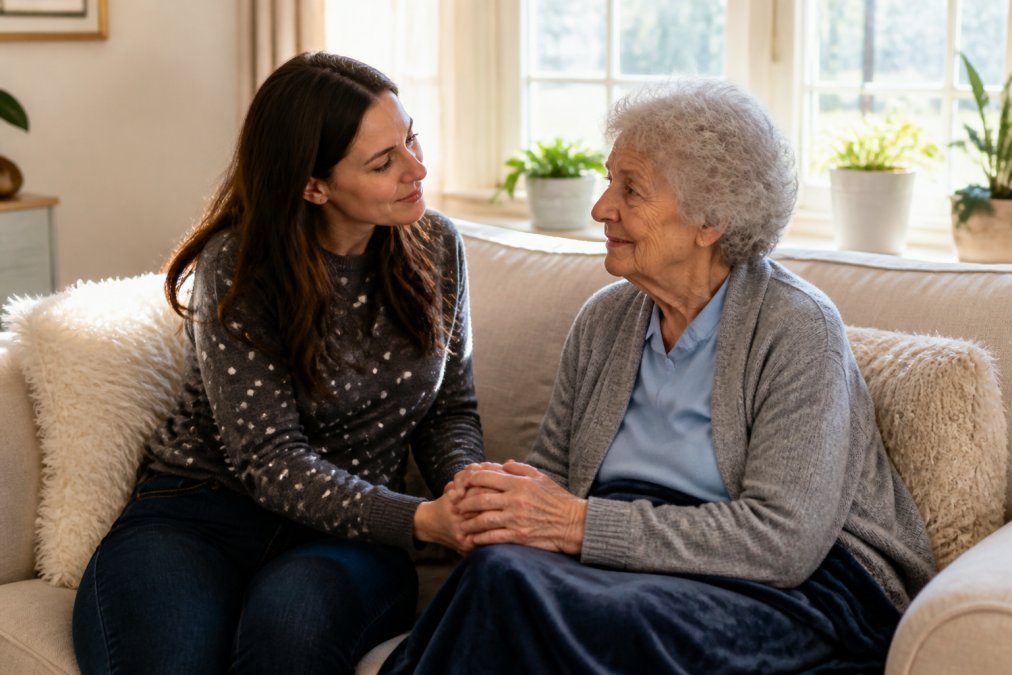
Daily support does not require grand gestures; it requires showing up with specific, useful actions. Instead of asking "what do you need," observe and act.
Offer Specific Help Instead of General Offers
General offers like "call me if you need anything" rarely result in action because the caregiver is too overwhelmed to delegate. Specific offers remove the cognitive load of figuring out what to ask for.
Learn How to Communicate With Someone Living With Dementia
The federal portal Alzheimers.gov guidance on communication recommends speaking calmly, using short simple sentences, and asking one question at a time. Avoid arguing with the person, even if what they say is not accurate. Instead of correcting, use redirection. For example, if the person insists they need to "go home," do not remind them they are already home; instead, say "we are safe here together, let us have a cup of tea." Physical expressions of comfort, like a gentle hand on the arm, often communicate reassurance more effectively than words.
Practical Gifts for Dementia Caregivers That Actually Help
Practical gifts for dementia caregivers focus on saving time, reducing worry, and automating the tasks that cause the most daily friction. The best gifts are not objects to manage, they are systems that run in the background and alert the caregiver only when something needs attention.
Smart Home Devices That Reduce Vigilance Fatigue
A caregiver's most depleted resource is attention. Smart home technology can absorb some of that constant vigilance.
- Video doorbells and indoor cameras, A Ring or Nest doorbell lets the caregiver see who is at the door without getting up, which matters when the person with dementia is prone to opening the door to strangers. Indoor cameras in common areas provide a quick visual check, though privacy trade-offs should be discussed with the family.
- Smart speakers with routines, An Amazon Echo or Google Nest Hub can be programmed to announce medication times, play calming music at a set hour, or call a family member with a voice command. For a person who asks the same question repeatedly, a smart speaker can answer "what day is it" or "when is lunch" without the caregiver having to respond for the hundredth time.
Wearable and Location Technology for Wandering
Wandering is one of the most dangerous dementia behaviors, and the fear of it keeps caregivers in a state of hyper-vigilance. GPS tracking tools can restore a measure of freedom for both parties.
- Apple AirTag or Tile, These are cheaper alternatives that can be sewn into a coat lining or placed in a handbag. They are not medical-grade and have shorter range, but they work well for tracking a person who tends to wander within a neighborhood or a large facility.
- AngelSense GPS tracker, Originally designed for children with special needs, this device attaches to clothing and offers real-time location, an SOS button, and a speaker that lets the caregiver speak to the person remotely. It is more robust than consumer trackers but requires a monthly subscription.
Medication Management Systems
Missed or double-dosed medication is a leading cause of emergency room visits for people with dementia. Automated dispensers remove the cognitive burden from the caregiver.
- MedMinder, A simpler, lower-cost option that uses a locked, tamper-proof tray with visual and audible reminders. The caregiver receives an alert if a compartment is not opened at the scheduled time.
- Rite Aid or CVS automatic refill programs, These are free and ensure prescriptions arrive on schedule, but they do not solve the "did they take it" problem. Pair them with a manual pill organizer and a daily check-in call.
Care Coordination Platforms for the Whole Family
Caregiving is rarely a one-person job, but without a shared system, communication fragments across text threads and sticky notes. A care coordination platform centralizes everything.
- Lotsa Helping Hands, A free platform specifically designed for caregiving circles. It includes a community calendar where friends and neighbors can sign up to bring meals, drive to appointments, or sit with the person while the primary caregiver runs errands.
- Google Calendar with shared access, The simplest option. Create a calendar called "Mom's Care" and share it with all involved family members. Color-code appointments, medication refills, and respite shifts.
What to Avoid Gifting
Not every well-intentioned gift helps. Avoid items that add clutter, require the person with dementia to learn a new skill, or create more work for the caregiver. When in doubt, ask the caregiver directly: "What is the one task you dread most each week?"
Support Groups and Professional Help: Building a Care Team
No one should support a person with dementia alone. Support groups provide emotional support, practical tips, and a sense of community that friends and family often cannot offer. The Alzheimer's Association support group network offers both local in-person groups and virtual meetings, along with a 24/7 helpline for immediate crisis assistance and confidential support.
Peer-led groups allow caregivers to vent without judgment and learn from others who have navigated similar challenges, from managing difficult dementia behaviors to navigating the healthcare system. For families facing complex decisions, the Family Caregiver Alliance Care Navigator provides a state-by-state directory of services and fact sheets on legal and financial planning.
Professional help is equally critical, including consulting a geriatric care manager, speaking with the person's doctor about medications and behavioral changes, and considering mental health support for the caregiver.
The Best Support: Helping Them Plan for the Future
The most profound way to support a dementia caregiver is to help them build a legal and financial roadmap before a crisis forces rushed decisions. The families who fare best are those who lock down legal authority and funding streams early.
Step 1: Secure Legal Authority While the Person Can Still Participate
The single most urgent document is a durable power of attorney (POA) for healthcare and finances. Without it, a caregiver cannot make medical decisions, access bank accounts, or pay bills once the person with dementia loses decisional capacity. The POA must be signed while the person is still legally competent, that window closes faster than families expect.
A companion document, the advance directive, records the person's wishes for end-of-life care. Most states also recognize a HIPAA authorization, which lets the caregiver speak directly with doctors about test results and treatment plans.
Do not attempt this without an attorney. The National Academy of Elder Law Attorneys (NAELA) referral directory can help families find a credentialed elder law attorney in their state. Costs vary, but a standard POA and advance directive package typically runs between $300 and $1,000 depending on the state and complexity. This is one of the highest-leverage expenses in dementia care.
Step 2: Map the Funding Landscape Before You Need It
Dementia care is expensive, and the funding sources are fragmented. A caregiver who understands the options can stretch resources far further than one who discovers them during a crisis.
- Medicare covers short-term skilled nursing and some home health visits, but it does not cover long-term custodial care (help with bathing, dressing, or eating).
- Medicaid is the primary payer for long-term care, but eligibility rules vary by state and often require spending down assets below a threshold. A Medicaid planning consultation with an elder law attorney can help families structure assets legally to qualify without impoverishing the healthy spouse.
- Veterans benefits, specifically the Aid and Attendance pension through the Department of Veterans Affairs, can provide monthly cash payments to qualifying veterans or surviving spouses to offset the cost of home care or assisted living. Many families miss this because they do not know it exists.
- Long-term care insurance policies vary wildly. A caregiver should pull the original policy and check whether it covers memory care, what the elimination period is, and whether the daily benefit adjusts for inflation.
The CareScout Cost of Care Survey provides state-by-state median costs for home care, assisted living, and nursing homes. Use it to build a realistic monthly budget, then compare that against income, savings, and any benefits the person qualifies for.
Step 3: Build a Transition Plan, Not Just a Wish
Once legal and financial structures are in place, the caregiver can make decisions from a position of strength. Tour residential communities, including memory care neighborhoods, and ask pointed questions about Medicaid acceptance, the ratio of staff to residents during overnight hours, and how the community handles a resident who wanders or becomes agitated.
Our 33 assisted living and 13 specialized memory care suites are designed for residents who need 24/7 support but still want independence and dignity. We use an evidence-based I'm Still Here® philosophy that builds activities around each resident's life story and remaining abilities.
Frequently Asked Questions
What do dementia caregivers need most?
Dementia caregivers most need reliable respite care options, emotional support, and practical help with daily tasks. They often feel isolated and overwhelmed by the constant demands of caregiving. Offering specific assistance, such as preparing a meal or sitting with their loved one for a few hours, provides more meaningful support than a general offer to help. Connecting them with resources like the Alzheimer's Association 24/7 Helpline can also offer immediate, expert guidance.
What are the signs of caregiver burnout in dementia care?
Common dementia caregiver burnout symptoms include chronic exhaustion, irritability, withdrawal from friends and family, changes in sleep or appetite, and feelings of helplessness. You might notice the caregiver neglecting their own health or losing interest in activities they once enjoyed. If you see these signs, encourage them to take a break and explore respite care options. Professional help from a doctor or counselor is also a crucial step in managing the stress of caregiving.
How can I help a friend who is a dementia caregiver?
The best way to help is to be specific. Instead of saying "let me know what you need," offer concrete actions like "I'm bringing dinner on Thursday" or "I can stay with your mom on Saturday afternoon so you can run errands." Actively listen without judging and acknowledge the difficulty of their role. Remember that supporting dementia caregivers also means remembering them on special occasions; practical gifts like a meal delivery gift card or a cleaning service can provide real relief.
What are practical ways to provide respite for dementia caregivers?
Respite care options for dementia range from informal help to professional services. You can start by creating a schedule where family and friends take turns visiting, allowing the primary caregiver time for uninterrupted sleep or errands. Adult day centers offer structured activities for the person with dementia. For longer breaks, consider in-home care services or short-term stays at a memory care community. These options give caregivers a chance to rest and recharge.