 listicle
Best Memory Care Facilities in Knoxville: 2026 Guide
Table of Contents
- What to Look for in Memory Care Facilities
- Top Memory Care Facilities in Knoxville
- Emory Mills: Person-Centered Care with the I'm Still Here Philosophy
- Concord Place Memory Care: Pathways of Purpose
- Trinity Hills of Knoxville: Neighborhood-Style Living
- Arbor Terrace of Knoxville: Innovative Cognitive Engagement
- Knoxville Landing: Serene West Knoxville Setting
- StoryPoint Knoxville West: Activities-Focused Community
- Elmcroft of Halls: Goal-Oriented Programming
- Memory Care vs. Assisted Living: Understanding the Difference
- Average Cost of Memory Care in Knoxville
- Questions to Ask During a Memory Care Facility Tour
- Signs It's Time for Memory Care
- How to Choose the Right Memory Care Community
- Conclusion
Last Updated: August 15, 2026
What to Look for in Memory Care Facilities
Finding the right memory care facility is one of the most important decisions you'll make for a loved one with Alzheimer's disease or dementia. The best facilities share core principles: person-centered care, staff training, safety protocols, and meaningful engagement.
Cognitive impairment doesn't erase who someone is. A resident with advanced dementia still has a life story, preferences, and the capacity to experience joy. Excellent facilities focus on remaining abilities rather than deficits, create secure environments that allow wandering without constant restraint, and staff their communities with people genuinely committed to the work.
When evaluating options, look for evidence-based programming. Ask how they handle behavioral episodes in practice, not theory. A facility that can describe a specific protocol for de-escalation, medication management, and staff response to crisis situations has thought through the hard moments.
Safety matters, but it shouldn't mean institutional. The best communities balance security with autonomy through design, wide hallways, natural lighting, secure outdoor spaces, rather than just locks and medication. Staff ratios matter significantly; adequate night coverage means someone's actually there at 2 AM when a fall happens.
Pay attention to how the facility talks about family involvement. Memory care is a partnership, not a transfer of responsibility. Communities worth your time welcome family input, encourage participation in care planning, and recognize that caregivers themselves need support.
Top Memory Care Facilities in Knoxville
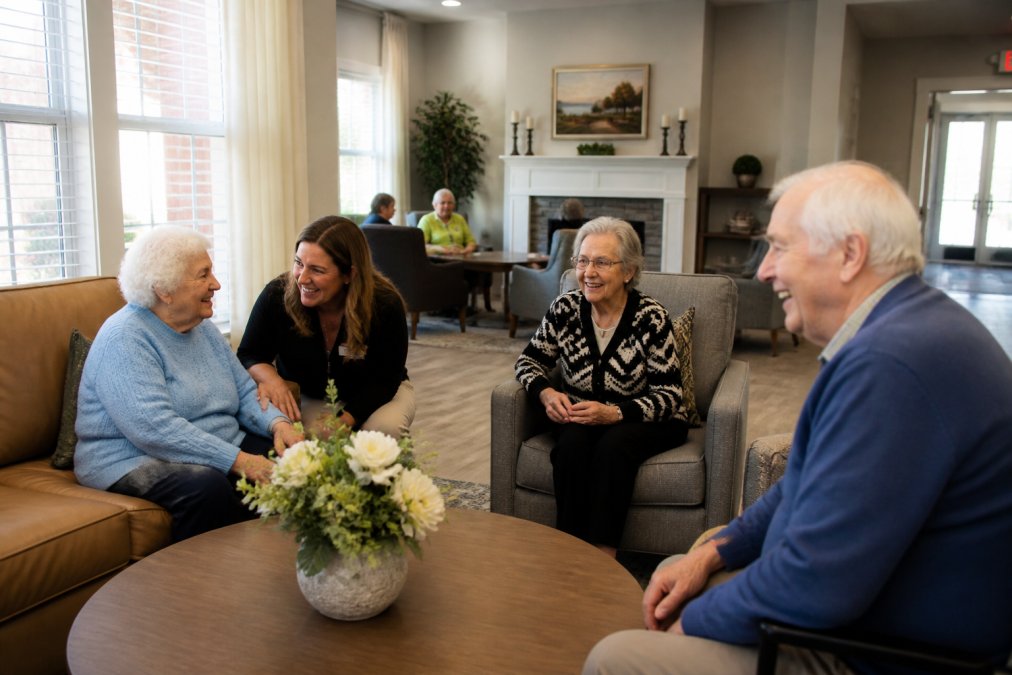
Emory Mills: Person-Centered Care with the I'm Still Here Philosophy
Emory Mills is built on a philosophy, not just a business model. The I'm Still Here® approach, developed in partnership with the Hearthstone Institute, treats memory loss as a change in ability, not a loss of identity. Staff are trained to see the person first, the diagnosis second.
In practice, residents participate in meaningful activities tied to their life histories. A former teacher might lead a discussion group. Someone who loved gardening works in the therapeutic garden. Engagement rooted in personal identity is far more effective than generic activities.
Emory Mills operates 33 new assisted living suites and 13 specialized memory care suites with 24/7 care, chef-prepared meals, and diverse programming. The family-owned structure means decisions are made by people who live in the community, not distant corporate offices. Many behavioral issues stem from boredom, confusion, or feeling invisible. When a resident feels seen and engaged, episodes often decrease naturally.
Concord Place Memory Care: Pathways of Purpose
Concord Place was designed specifically for memory care with wide hallways, naturally lit rooms, and secure outdoor spaces. The Pathways of Purpose program structures daily activities around meaningful engagement rather than mere occupation.
The facility offers personalized care plans tailored to individual needs and family support through educational programs and support group meetings. Starting at $5,780 per month, Concord Place is a premium option. Note: they don't allow pets, which matters for some families.
Trinity Hills of Knoxville: Neighborhood-Style Living
Trinity Hills approaches memory care through a residential lens, emphasizing that residents are living, not just receiving care. Secure common areas and private accommodations create a sense of home rather than institution.
The facility provides 24-hour personalized care including assistance with daily living activities and medication management. Caregivers receive specialized training, and the community offers individualized activity programming with on-site therapies and transportation to medical appointments. Starting at $3,290 per month, Trinity Hills is pet-friendly and competitively priced, though costs vary based on specific care needs.
Arbor Terrace of Knoxville: Innovative Cognitive Engagement
Arbor Terrace's Evergreen neighborhood integrates technology into memory care through Tovertafel, an interactive gaming system specifically designed for cognitive function in dementia patients. The system projects games onto a table surface, allowing residents to engage in play that stimulates cognition without frustration.
The award-winning dining program uses food as both therapeutic and social, with themed menus encouraging reminiscence and participation. Wellness-focused exercise programs and calming sensory groups round out the programming. Starting at $3,710 per month, Arbor Terrace reflects its commitment to innovation and amenities.
Knoxville Landing: Serene West Knoxville Setting
Knoxville Landing operates as an Inspirit Senior Living community with a focus on serene surroundings and compassionate care. The facility offers 24/7 assistance from dedicated staff, medication management, physical therapy services, and specialized memory care programming. The community structure supports aging in place as needs evolve.
Starting at $2,695 per month, Knoxville Landing is an affordable option among these communities. Families praise the friendly atmosphere and excellent communication, though food receives mixed reviews.
StoryPoint Knoxville West: Activities-Focused Community
StoryPoint Knoxville West prioritizes vibrant engagement and individualized memory care within a welcoming community. The activities director is consistently praised, a strong signal that programming is taken seriously.
The facility provides individualized health care services with 12-16 hours of nursing care daily, plus a 24-hour call system for immediate assistance. The engaging activities are tailored to residents' needs and abilities within a secure environment designed for individuals with memory challenges. Pricing requires direct contact.
Elmcroft of Halls: Goal-Oriented Programming
Elmcroft of Halls distinguishes itself through Second Wind Dreams, which helps residents achieve long-desired goals, travel experiences, and reconnection with family, and Vitality Club, which creates personalized health plans to maintain and improve physical and cognitive function.
Restaurant-style dining with themed menus reflects the philosophy that meals are social and therapeutic events. On-site physical, occupational, and speech therapy means residents don't have to leave the community for specialized care. Pricing is available by contacting the facility directly.
Memory Care vs. Assisted Living: Understanding the Difference
Assisted living provides help with daily living activities, bathing, dressing, medication management, and meals. Staff are available, but residents are generally able to make decisions, remember their room location, and communicate their needs.
Memory care is specialized assisted living for individuals with Alzheimer's disease, dementia, or significant cognitive impairment. The environment is secure, programming is specifically designed for cognitive engagement, and staff are trained in dementia-specific communication and de-escalation.
In assisted living, a resident with early cognitive decline might manage. In memory care, the environment and staff are structured for someone who may not remember their room, may become disoriented, may experience behavioral changes, and requires constant supervision for safety. Some facilities offer both levels, allowing transition without relocation as cognitive decline progresses.
Average Cost of Memory Care in Knoxville
Memory care pricing varies significantly based on room type, level of care, and facility amenities. Among the communities listed above, starting rates range from $2,695 to $5,780 per month.
Several factors influence actual cost: private rooms cost more than semi-private, advanced dementia requiring higher supervision costs more than early-stage cognitive decline, and specialized programming, therapies, and amenities add to the base rate. When comparing costs, ask specifically what's included in the quoted rate and what costs extra. Request a detailed breakdown before making a decision.
Many families explore Medicaid coverage for memory care. Medicaid eligibility and coverage rules vary by state. Some facilities accept Medicaid; others don't. If cost is a significant concern, ask about Medicaid acceptance early in your evaluation process.
Questions to Ask During a Memory Care Facility Tour
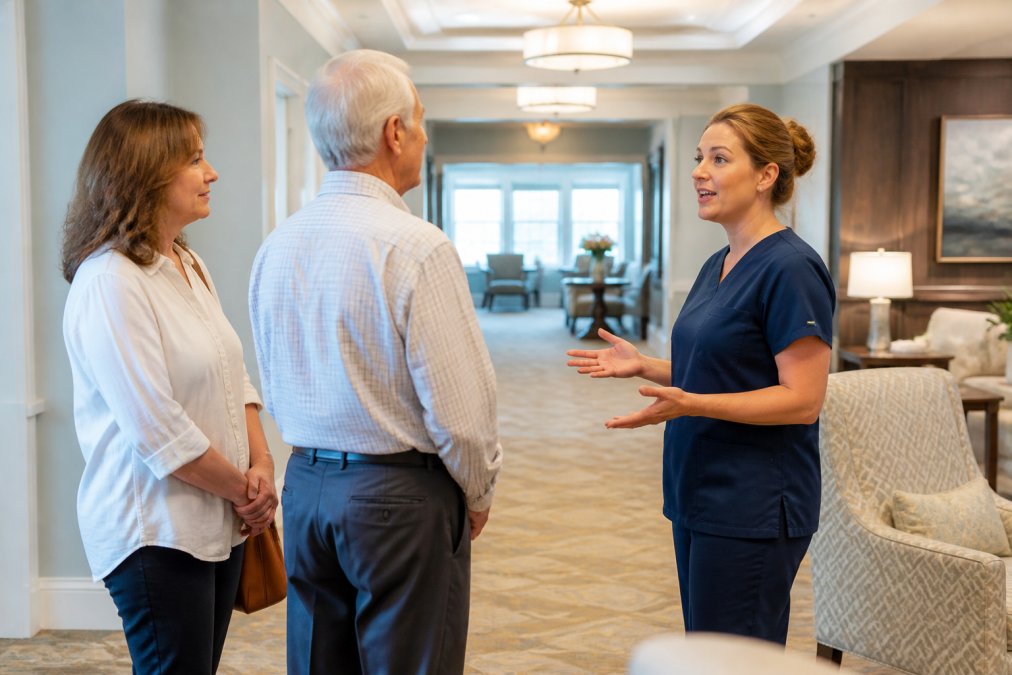
A facility tour reveals far more than a brochure. Ask about staffing and training: How many staff members are on duty during day and night shifts? What dementia-specific training do caregivers receive? What's your staff turnover rate? High turnover destabilizes residents who depend on consistent caregivers.
On behavioral episodes: Walk me through what happens if a resident becomes agitated or aggressive. Who responds? What's the de-escalation protocol? Do you have a psychiatrist or behavioral specialist on staff or on-call?
On medication management: Who manages medications? How do you prevent over-medication? How are specific medication concerns or allergies tracked and communicated to all staff?
On daily life: What does a typical day look like? Can I see the activity schedule? Can my family member participate in activities outside the facility?
On engagement: How do you learn about residents' life histories and interests? Can you give an example of how you've helped a resident stay engaged with something they cared about?
On safety: How is the secure environment maintained? Can residents access outdoor space? How do you prevent falls?
On family involvement: Can I visit anytime? How often will you update me on my loved one's status? Can I participate in care planning?
On transitions: If my loved one's needs change, what happens? Can they stay in your facility or must they transfer? How do you handle end-of-life care?
Pay attention to how staff respond. Are they defensive or open? A facility that welcomes hard questions and answers them directly is confident in its care.
Signs It's Time for Memory Care
Deciding to move a loved one into memory care is one of the hardest decisions adult children make. Recognizing the signs protects both your loved one and yourself.
Safety becomes unmanageable. Your family member forgets to turn off the stove, wanders at night, takes medications multiple times, or leaves the house without telling anyone. You can't watch them 24/7, and one mistake could be catastrophic.
Behavioral episodes escalate. Agitation, aggression, or paranoia increases. Sundowning becomes severe. These behaviors are symptoms of dementia, not character flaws, but they're exhausting to manage alone.
Personal care becomes a battle. Bathing, dressing, and toileting devolve into conflicts. The intimate nature of these tasks strains the relationship between caregiver and care receiver.
You're experiencing caregiver burnout. You're exhausted, anxious, depressed, or resentful. Your own health is suffering. You've missed work or neglected other family relationships. This signals that the level of care needed exceeds what one person can provide at home.
Medical needs exceed home care capacity. Your loved one needs medication management, wound care, or monitoring that requires trained nursing staff. They've had multiple falls or hospitalizations.
Cognitive decline accelerates. They no longer recognize family members. They can't communicate their needs. They're unable to participate in any activities independently.
Memory care isn't failure. It's recognizing that your loved one needs more than you can provide alone and choosing a setting where they can receive appropriate care from trained professionals. Many families find that their relationship with their loved one actually improves once the transition happens.
How to Choose the Right Memory Care Community
Start by clarifying your non-negotiable criteria. Is location important? Is cost the primary driver? Does your loved one have specific medical needs requiring particular expertise? Does your family value certain programming or philosophies?
Visit multiple communities. A tour takes two to three hours and should include common areas, dining room, activity spaces, and ideally a memory care unit during activity time. Bring a list of questions and take notes. Pay attention to cleanliness, staff interactions with residents, and the overall atmosphere.
Talk to current residents and families if possible. Ask the facility if you can speak with someone whose loved one has been there for at least a year. Their honest feedback matters more than marketing materials.
Check credentials and licensing. Verify that the facility is licensed by the state and has no major violations. Ask about staff certifications and training. If the community claims to follow a specific philosophy, verify the training and partnership.
Consider the continuum of care. If your loved one's needs will likely progress, does the facility offer different levels of care? Can they stay as their condition advances?
Trust your gut. You'll feel the difference between a facility that genuinely cares and one primarily focused on occupancy and revenue. The best memory care communities feel like homes where people happen to work.
Choosing memory care for a loved one with Alzheimer's disease or dementia is one of the most significant decisions you'll make as a caregiver. The communities listed above represent options in Knoxville, each with distinct strengths. Emory Mills, with its I'm Still Here® philosophy and person-centered approach, offers a model of care that honors your family member's remaining abilities and life story, fostering dignity and meaningful engagement. Schedule a tour at Emory Mills to experience firsthand how the community's evidence-based approach, chef-prepared meals, and 24/7 specialized care create an environment where residents thrive.
Frequently Asked Questions
What is the average cost of memory care in Knoxville?
Memory care facility pricing in Knoxville varies based on the level of care, amenities, and location. Publicly available rates range from approximately $2,695 to $5,780 per month. However, costs depend on individual care needs, room type, and services included. Contact facilities directly for current pricing and to understand what is included in monthly fees versus additional charges.
What is the difference between memory care and assisted living?
Memory care is specialized care designed specifically for individuals with Alzheimer's disease, dementia, and other cognitive impairments. It includes secured environments, staff trained in dementia care, and therapeutic programming. Assisted living provides support with daily living activities and medication management but is not specialized for cognitive decline. Memory care offers 24-hour supervision, behavioral health support, and person-centered approaches tailored to memory loss, making it appropriate for residents with moderate to advanced dementia.
What should I ask about during a memory care facility tour?
Ask about staff training and certifications in dementia care, the resident-to-staff ratio during day and night hours, how the facility handles behavioral episodes and safety incidents, medication management protocols, daily activities and therapeutic programming, nutritional support, visiting policies, and how the facility communicates with families. Request to see secure areas, observe a typical day, and speak with current residents' families about their experience.
How do I know when it's time for memory care?
Signs that memory care may be needed include significant cognitive decline affecting daily functioning, repeated falls or safety concerns at home, difficulty with medication management, behavioral changes like wandering or aggression, inability to recognize family members, and caregiver burnout. If your loved one requires 24-hour supervision for safety or has advanced Alzheimer's or dementia, specialized memory care can provide the structured environment and trained staff they need.
Does Medicare cover memory care facilities?
Medicare does not cover the cost of assisted living or memory care facilities. However, Medicare Part A may cover skilled nursing care for a limited time following a hospital stay. Medicaid may cover memory care costs for eligible individuals, though coverage varies by state and facility. Long-term care insurance, Veterans benefits, and personal funds are common ways families pay for memory care. Discuss financial options and eligibility with each facility's admissions team.
This article was written using GrandRanker