 ultimate-guide
Benefits of Evidence-Based Memory Care
Table of Contents
- What Is Evidence-Based Memory Care?
- How Evidence-Based Memory Care Improves Quality of Life
- Reducing Behavioral Symptoms Through Non-Pharmacological Interventions for Dementia
- The Role of Person-Centered Care and Specialized Staff Training
- Dementia Care Practice Recommendations for Safety and Communication
- Memory Care Cost and Insurance Coverage: What Families Need to Know
- Supporting Family Caregivers and the Transition to Professional Care
- Conclusion
Last Updated: August 21, 2026
What Is Evidence-Based Memory Care?
Evidence-based memory care represents a departure from traditional approaches that often rely on generic activities and medication-heavy interventions. This care model is grounded in research demonstrating that personalized, therapeutic engagement combined with environmental design and specialized staff training produces measurably better outcomes for residents with dementia.
At Emory Mills, evidence-based memory care means moving beyond the assumption that people with cognitive decline need only supervision and basic assistance. Instead, it acknowledges that individuals retain abilities, preferences, and a life story worth honoring, even as their condition progresses. The I'm Still Here® philosophy, which Emory Mills uses to guide its approach, reflects this core principle: the person is still there, and their remaining abilities matter.
Evidence-based memory care draws on decades of gerontological research, neuroscience, and clinical practice. It combines non-pharmacological interventions, person-centered care principles, and environmental modifications designed to reduce confusion, support independence, and minimize behavioral symptoms. Rather than relying solely on medication to manage dementia-related behaviors, this approach addresses the root causes of distress: unmet needs, environmental stressors, and the loss of meaningful purpose.
The foundation rests on a simple but powerful insight: people with dementia don't need to be "fixed." They need an environment, a care team, and daily activities that respect who they are and what they can still do. That shift in perspective changes everything about how care is delivered.
How Evidence-Based Memory Care Improves Quality of Life
The primary measure of any care model's success is whether residents actually feel better, whether they experience fewer episodes of distress, maintain meaningful connections, and retain a sense of dignity and purpose. Evidence-based memory care delivers measurably on all three fronts.
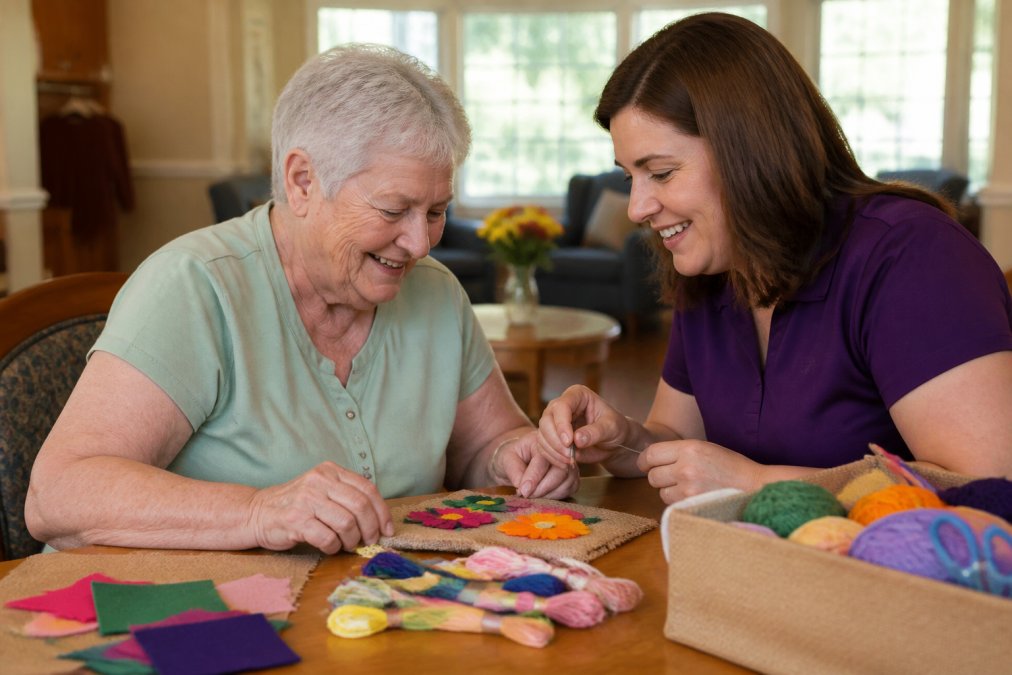
When care is personalized around a resident's life history, preferences, and remaining abilities, quality of life improves in concrete ways. A resident who spent 40 years gardening may find renewed purpose through a therapeutic gardening activity adapted to their current abilities, not because they're "cured," but because the activity connects them to their identity. A person who was a teacher might contribute by helping with simple literacy activities. These aren't distractions; they're expressions of who the person still is.
Research in gerontology consistently shows that meaningful engagement correlates with better emotional regulation, fewer behavioral incidents, and improved sleep and appetite (peer-reviewed research). When residents feel seen and valued, the cascade of benefits extends to physical health outcomes. Staff trained in evidence-based practices recognize that a resident's agitation often signals an unmet need, hunger, pain, overstimulation, or the need for connection, rather than a symptom requiring chemical management.
The social engagement component of evidence-based memory care also matters profoundly. Residents who participate in group activities, maintain family connections, and interact with staff in purposeful ways experience less depression and anxiety than those in environments where interaction is limited to task-based care. The dyadic relationship between caregiver and resident becomes a therapeutic tool rather than simply a functional exchange.
Quality of life also means safety without isolation. Evidence-based environments are designed so residents can move about with appropriate supervision, reducing the physical and psychological toll of confinement. Environmental modifications, clear signage, consistent routines, reduced noise, proper lighting, help residents navigate their surroundings with greater confidence and fewer incidents of confusion or distress.
Reducing Behavioral Symptoms Through Non-Pharmacological Interventions for Dementia
One of the most significant advantages of evidence-based memory care is its emphasis on non-pharmacological approaches to managing the behavioral symptoms that often accompany dementia. Traditional care models sometimes default to medication as the first line of response to agitation, wandering, or resistance to care. Evidence-based practice reverses that hierarchy.
Non-pharmacological interventions for dementia include therapeutic activities, environmental modifications, communication strategies, and behavioral approaches that address the underlying cause of distress rather than masking it. A resident who becomes agitated at a particular time of day might benefit from a structured activity at that time, or from a quiet space to decompress. Someone who resists bathing might respond better to a different caregiver, a different time of day, or a modified approach that preserves their dignity and sense of control.
Music, art, reminiscence activities, and sensory engagement have strong evidence behind them. A person with advanced dementia may not remember their own name but will respond emotionally to a song from their youth. These interventions work because they bypass cognitive decline and connect directly to emotional memory and identity.
The evidence is clear: when staff are trained to recognize triggers, communicate effectively, and offer meaningful alternatives to distressing situations, the need for behavioral medications decreases significantly (peer-reviewed research). This matters not only for quality of life but also for safety, medications carry risks, particularly in older adults, and reducing unnecessary medication is a core principle of evidence-based care.
Specialized staff training is essential to making this work. Caregivers need to understand dementia progression, recognize non-verbal communication, know how to de-escalate conflict, and have the time and support to implement individualized approaches. Communities like Emory Mills that invest in this training see measurably fewer behavioral crises and less reliance on chemical or physical restraint.
The Role of Person-Centered Care and Specialized Staff Training
Person-centered care is the philosophical and practical foundation of evidence-based memory care. It means starting with the person, their history, preferences, values, and remaining abilities, rather than starting with the disease or the institution's convenience. A person-centered approach asks: "Who is this person? What matters to them? What can they still do?" These questions reshape everything from daily schedules to meal planning to activity programming.
Specialized staff training transforms this philosophy into action. Caregivers trained in person-centered principles learn to see residents as individuals with agency, not as patients to be managed. They understand dementia progression and how it affects behavior, communication, and safety. They know how to adapt their approach based on the person's current abilities and emotional state rather than applying a one-size-fits-all protocol.
Training typically covers dementia-specific communication (speaking clearly, allowing processing time, validating emotions rather than correcting), recognizing pain and discomfort in people who can't verbally express it, understanding the difference between challenging behavior and an unmet need, and techniques for maintaining dignity during personal care. Staff also learn to recognize their own stress and burnout, which directly affects the quality of care they provide.
The staff-to-resident ratio matters significantly in evidence-based settings. When caregivers are stretched too thin, person-centered approaches become impossible, care devolves into task completion rather than meaningful engagement. Communities committed to evidence-based practice maintain ratios that allow staff to know residents deeply and respond to individual needs.
Ongoing training and support are not optional add-ons; they're central to the model. Staff who feel supported, trained, and valued provide better care and experience less burnout. This creates a virtuous cycle: better care leads to fewer behavioral crises, which reduces staff stress, which improves care quality further.
Dementia Care Practice Recommendations for Safety and Communication
Safety in memory care settings requires a different approach than traditional nursing home protocols. The goal isn't to prevent all risk through restriction; it's to enable as much independence and freedom as possible while maintaining safety through environmental design, supervision, and responsive staff.
Dementia care practice recommendations emphasize environmental modifications that reduce confusion and hazards: clear pathways, good lighting, secure outdoor areas, accessible bathrooms, and consistent signage. Locked doors are a last resort, not a standard feature. Instead, communities use technology (door sensors, GPS monitoring), staff presence, and purposeful activity to keep residents safe while preserving dignity.
Communication in memory care requires patience and skill. Standard approaches often fail with people who have significant cognitive decline. Evidence-based communication means:
- Speaking slowly and clearly, using simple words
- Allowing extra processing time before expecting a response
- Using non-verbal communication (touch, facial expression, tone) to convey warmth and intention
- Validating emotions rather than correcting facts ("You seem upset" rather than "That didn't happen")
- Asking yes/no questions rather than open-ended ones
- Listening to what the person is trying to communicate, even if the words don't make literal sense
These practices reduce confusion, lower anxiety, and improve cooperation during care activities. A resident who resists bathing isn't being difficult; they may be frightened, uncomfortable, or simply not understanding what's being asked. A caregiver trained in evidence-based communication recognizes this and adjusts their approach accordingly.
Safety protocols also include medication management, fall prevention, and infection control, standard clinical practices adapted for a population with cognitive impairment. Regular health monitoring, preventive care, and coordination with physicians ensure that medical issues are identified and treated promptly.
Memory Care Cost and Insurance Coverage: What Families Need to Know
The financial reality of memory care is often a shock to families. Specialized residential memory care is among the most expensive long-term care options, reflecting the intensive staffing, training, and environmental design required to deliver evidence-based care.
Costs vary significantly based on location, facility size, and the level of care required. Families should understand what's included in the base rate and what incurs additional charges. Some communities bundle services (meals, activities, basic care); others charge separately for specialized services or higher levels of assistance.
Insurance coverage for memory care is limited. Medicare covers skilled nursing care in a facility only after a qualifying hospital stay and only for a limited time. Most residential memory care, the kind Emory Mills provides, is not covered by Medicare. Medicaid coverage varies by state and depends on income and asset limits. Many families pay out-of-pocket, often for years, which is why advance planning matters.
Long-term care insurance, if purchased before cognitive decline begins, may cover memory care costs. Some families use life insurance or annuities to fund care. Others rely on savings, family contributions, or a combination of sources. According to the Administration for Community Living's guidance on long-term care planning, discussing these options with a financial advisor or elder law attorney early on can prevent crisis decisions later.
Medicaid planning is complex and state-specific. Some states offer Medicaid waivers that allow coverage of residential care in community settings rather than only in nursing homes. Families should speak with a Medicaid specialist to understand their state's options. The cost of memory care is real and significant, but it's also an investment in the person's quality of life and the family's peace of mind.
Supporting Family Caregivers and the Transition to Professional Care
For many families, the decision to move a loved one into residential memory care is emotionally fraught. The primary caregiver, often an adult child or spouse, has likely been providing 24/7 support, managing medications, handling behavioral episodes, and sacrificing their own health and wellbeing in the process. Guilt, fear, and uncertainty accompany the transition, even when it's clearly necessary.
The caregiver burden is real and measurable. Family caregivers of people with dementia experience depression, anxiety, physical health decline, and social isolation at rates far exceeding the general population. Many reduce work hours or leave employment entirely. The emotional toll of watching a loved one's cognitive decline, combined with the physical demands of caregiving, creates a crisis that professional care can address.
Transitioning to professional memory care isn't abandonment; it's a shift in how care is delivered, not a withdrawal of love or involvement. Family members remain central to the resident's life. They visit, participate in care planning, bring photos and familiar objects, and maintain the emotional connection that matters profoundly to the resident's wellbeing.
The best memory care communities actively support this transition. They help families understand that professional care allows them to return to being a family member rather than a full-time medical provider. They involve families in the admission process, help personalize the resident's space, and maintain regular communication about the resident's adjustment and wellbeing.
For families considering this transition, several steps ease the process: visiting the community multiple times, meeting staff, asking detailed questions about daily routines and care approaches, and being honest about the resident's needs and behaviors. Communities like Emory Mills, which use evidence-based practices and person-centered approaches, understand that the family's confidence in the care model directly affects the resident's adjustment.
Support groups for family members of people with dementia provide practical advice and emotional validation. Many communities offer these, and national organizations like the Alzheimer's Association provide resources and connection. The transition is difficult, but it doesn't have to be made alone.
The benefits of evidence-based memory care extend far beyond the individual resident. When care is personalized, staff are trained in dementia-specific approaches, and the environment is designed with the person's abilities and dignity in mind, the entire community benefits. Fewer behavioral crises mean less staff stress and better retention. Families experience less guilt and more confidence in the care their loved one is receiving. Most importantly, residents maintain a sense of self, purpose, and connection that transforms their experience of living with dementia from one of decline and loss to one that honors who they still are. At Emory Mills, this philosophy isn't a program overlay, it's the foundation of everything we do. Schedule a tour to see how evidence-based memory care and the I'm Still Here® approach make a tangible difference in daily life.
Frequently Asked Questions
What are the primary benefits of evidence-based memory care?
Evidence-based memory care delivers measurable improvements in resident quality of life, reduced behavioral symptoms, and better functional independence. This approach prioritizes person-centered care that honors each resident's life story and remaining abilities rather than focusing only on deficits. Residents experience more meaningful engagement, improved social interaction, and a stronger sense of dignity and purpose. Families also benefit from reduced caregiver burden and the reassurance that their loved one receives care grounded in clinical best practices.
How do non-pharmacological interventions for dementia help reduce behavioral symptoms?
Non-pharmacological interventions address the root causes of behavioral symptoms, such as unmet needs, confusion, or loss of control, without relying primarily on medication. Techniques include structured routines, therapeutic activities tailored to the resident's interests and abilities, validation of emotions, and environmental modifications that reduce triggers. Staff trained in these approaches can calm distress through meaningful conversation, reminiscence therapy, or engagement in purposeful activities. This reduces incidents of agitation, wandering, and other challenging behaviors while preserving the resident's dignity and cognitive function.
How does the I'm Still Here® philosophy differ from standard memory care?
The I'm Still Here® philosophy recognizes that people with dementia retain their identity, preferences, and abilities throughout cognitive decline. Standard care often focuses on managing symptoms and activities; evidence-based I'm Still Here® care emphasizes remaining strengths, personal history, and meaningful engagement. Staff learn the resident's life story and use that knowledge to create personalized activities, communication approaches, and daily routines. This shifts the focus from what residents have lost to what they can still do and enjoy, resulting in better behavioral health, improved quality of life, and stronger relationships between residents and caregivers.
What should families consider when evaluating memory care cost and insurance coverage?
Memory care costs vary widely depending on location, facility type, and level of care needed. Medicare typically covers skilled nursing care in certain settings but does not cover assisted living or residential memory care. Medicaid may cover some residential care costs if the resident qualifies based on income and assets; eligibility rules vary by state. Long-term care insurance, if purchased before cognitive decline, may offset costs. Families should request a detailed breakdown of what services are included in the monthly rate versus what costs extra, ask about payment options and financial assistance programs, and consult with an elder law attorney or financial advisor to understand their specific situation.
This article was written using GrandRanker