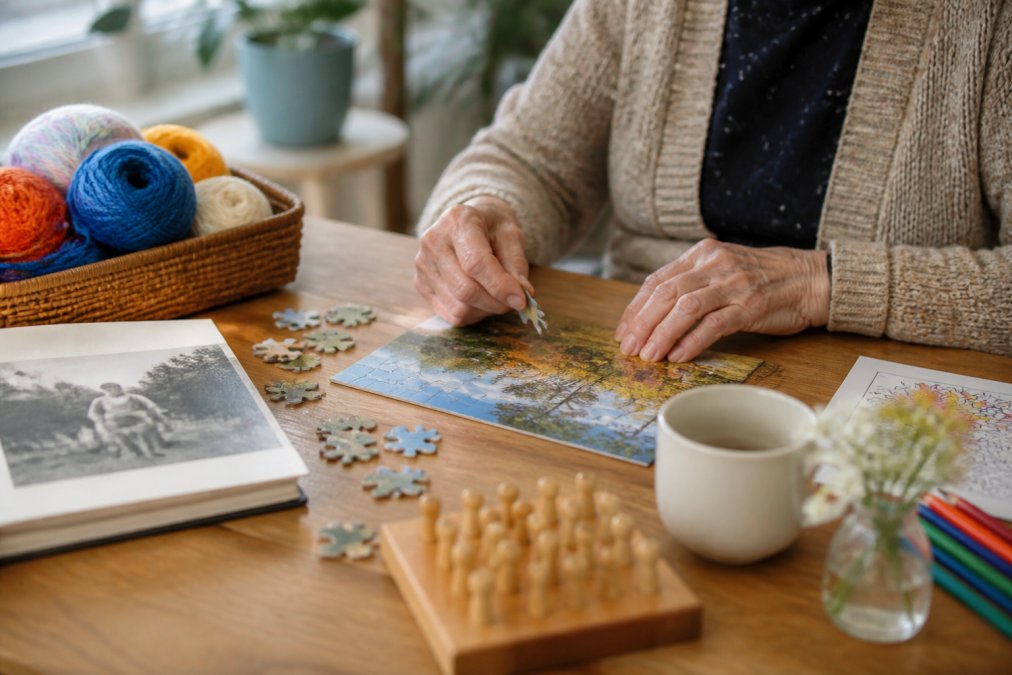
 listicle
Activities for Seniors with Memory Loss: 2026 Guide
Table of Contents
- Why the Right Memory Loss Activities Matter at Every Stage
- Music, Movement, and Reminiscence Therapy
- Sensory Activities for Dementia Patients: Tools and Techniques
- Creative Arts, Brain Games, and Cognitive Stimulation
- Physical Exercise, Outdoor Recreation, and Daily Living Tasks
- How to Engage Seniors with Memory Loss: Safety and Practical Tips
- Caregiver Burnout Prevention: Sustaining Meaningful Engagement Long-Term
- Conclusion
Last Updated: August 13, 2026
Why the Right Memory Loss Activities Matter at Every Stage
Activities for seniors with memory loss are not one-size-fits-all. The right activity for someone in early-stage Alzheimer's can feel frustrating to someone in middle or late stages. At Emory Mills, we see families arrive with well-intentioned activity kits that simply don't match where their loved one is right now.
Therapeutic activities work because they meet the person where they are. They reduce agitation, support emotional well-being, preserve remaining abilities, and give caregivers a structured way to connect. The evidence behind non-pharmacological interventions for dementia is clear: engagement matters, and the form that engagement takes matters just as much.
Matching Activities to Early, Middle, and Late-Stage Dementia
Stage-specific activity matching is the single most important framework for anyone caring for a person with memory loss.
Early stage: Cognitive function is partially intact. Seniors benefit from brain games, word puzzles, reminiscence conversations, and structured creative projects. They can follow multi-step instructions and engage in group interaction. The goal is mental stimulation and preserving independence.
Middle stage: Attention spans shorten. Simple, repetitive tasks work best: folding towels, sorting objects by color, watering plants, or listening to familiar music. Instructions should be one step at a time. Sensory engagement becomes more central than cognitive challenge.
Late stage: Verbal communication may be limited. Activities shift toward pure sensory stimulation: gentle touch, music, hand massage, and visual engagement with familiar faces or nature. Person-centered care means comfort and dignity above all.
| Stage | Best Activity Types | Key Goal |
|---|---|---|
| Early | Brain games, reminiscence, creative arts | Cognitive stimulation, independence |
| Middle | Repetitive tasks, music, simple crafts | Engagement, routine, calm |
| Late | Sensory input, music, gentle movement | Comfort, emotional connection |
Music, Movement, and Reminiscence Therapy
Few interventions reach people with dementia as reliably as music. A person who cannot recall a family member's name will often sing every word of a song from their twenties. Musical memory is stored differently in the brain, in regions often less affected by Alzheimer's disease in its early and middle stages.
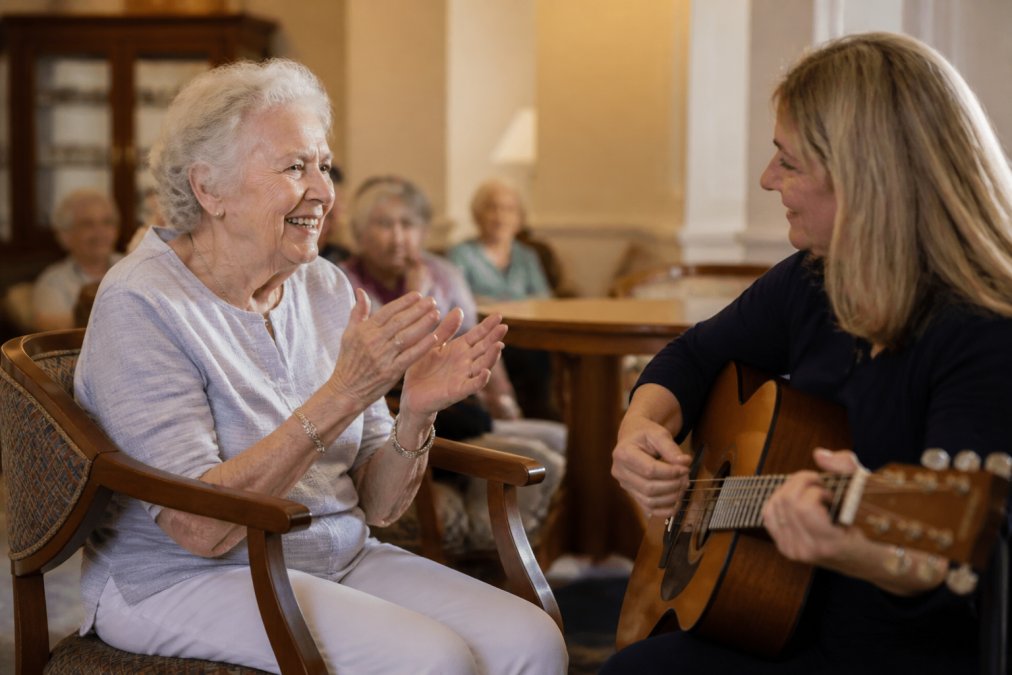
Music Therapy: Familiar Songs as a Non-Pharmacological Intervention
Music therapy is a structured, evidence-based approach that uses familiar songs, rhythm, and movement to reduce agitation, improve mood, and support social interaction. According to the Alzheimer's Association's guidance on music therapy, music can calm behavioral disturbances and reduce the need for medication in some cases.
Practical implementation:
- Build a personalized playlist using music from the person's teens and twenties
- Use headphones for individuals who become overstimulated in group settings
- Pair music with gentle movement: hand clapping, swaying, or chair dancing
- Play calming, familiar music during sundowning hours, typically late afternoon
Movement activities layered onto music support physical mobility and provide a safe outlet for restlessness.
Storytelling and Reminiscence Kits to Spark Conversation
Reminiscence therapy is the structured practice of recalling past experiences to promote emotional well-being, validate identity, and reduce isolation. Long-term memory tends to outlast short-term recall in dementia.
Reminiscence kits, such as those available through American Library Association initiatives for seniors, often include themed items, vintage photos, tactile objects, and familiar songs organized around topics like classic cars, gardening, or cooking. Many public libraries offer these kits at no cost.
Effective prompts for reminiscence conversations:
- "What was your favorite meal growing up?"
- "Tell me about where you lived as a child."
- "What music did you love when you were young?"
Patience and validation are essential. The goal is connection, not accuracy. Correcting a misremembered detail breaks the moment and serves no therapeutic purpose.
Sensory Activities for Dementia Patients: Tools and Techniques
Sensory engagement is often the most underused and most effective category for middle and late-stage individuals. When language and cognition become unreliable, the senses remain a direct pathway to emotional connection and calm.
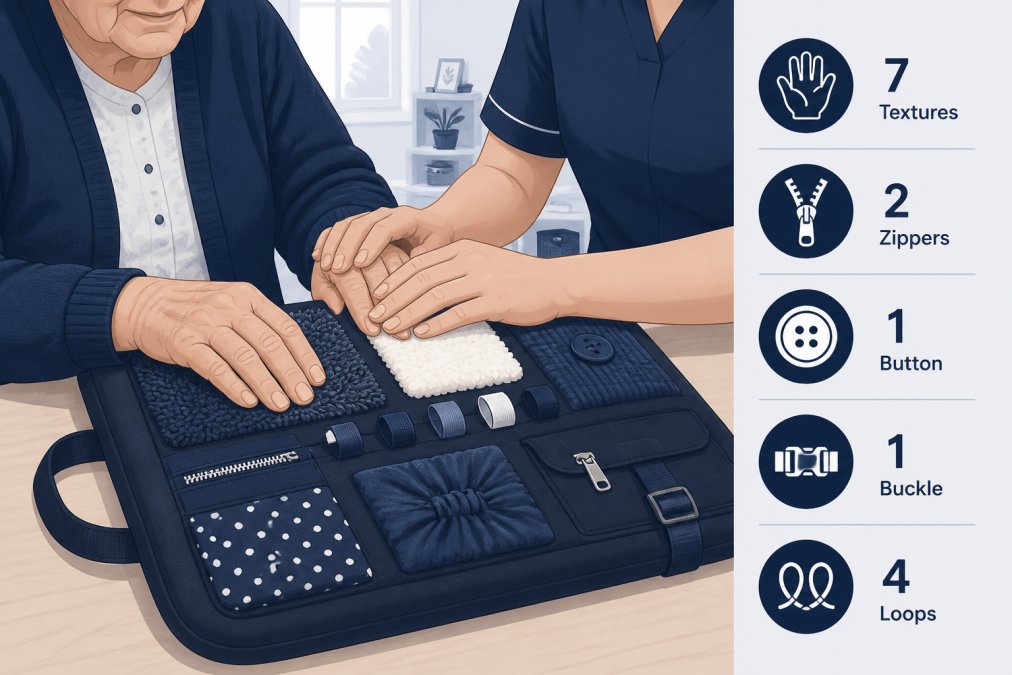
Tactile Engagement: Weighted Lap Pads and Textured Objects
The Busy Bee Weighted Lap Pad from Best Alzheimer's Products combines deep pressure stimulation with tactile variety: different fabric textures, zippers, and buckles that keep hands occupied and reduce restlessness. Many caregivers find it particularly effective during car rides or medical appointments when agitation tends to spike.
Other tactile activities include:
- Sorting objects by texture, size, or color
- Handling smooth river stones, soft fabrics, or wooden beads
- Kneading bread dough or working with modeling clay
- Folding warm laundry (a familiar, repetitive task with sensory comfort)
Sensory activities should be familiar, safe, and free from time pressure. There is no "completing" the task; the process is the point.
Visual and Auditory Stimulation for Reducing Agitation and Sundowning
Sundowning, the increase in confusion and agitation that often occurs in late afternoon and early evening, responds well to structured sensory interventions. Bright light therapy in the morning helps regulate circadian rhythm. Calming visual input, like watching birds at a feeder or looking through a photo album, can reduce agitation without medication.
Auditory stimulation options:
- Familiar radio programs or nature sounds
- Audio recordings of family members' voices
- Soft instrumental music from the person's era
Avoid overstimulating environments, crowded rooms, loud televisions, or competing noise during vulnerable hours. Quiet, predictable sensory input is almost always more effective than variety during sundowning.
Creative Arts, Brain Games, and Cognitive Stimulation
Creative activities produce something visible, which generates a sense of accomplishment. That emotional payoff matters enormously for dignity and quality of life.
Mess-Free Art Options for All Ability Levels
Relish Aquapaint Kits are among the most practical mess-free art tools for memory care settings. Watercolor-style images appear when water is applied to the page, then fade back to white as they dry, allowing for repeated use. No paints, no cleanup, no frustration. Themes like "Farm Memories" and "Ocean Life" connect to familiar experiences.
For seniors with more fine motor skill and cognitive capacity, Always Home Connected craft kits offer pre-cut materials and visual instructions across collage, yarn crafts, and simple woodworking. The pre-cut format removes the most demanding preparation steps while preserving hands-on engagement.
Brain Games Designed Specifically for Memory Care
Standard puzzles and crosswords often become sources of frustration rather than stimulation as dementia progresses. Purpose-designed alternatives work significantly better.
The PicLink Game from Best Alzheimer's Products uses large, clear images for visual association and matching, engaging memory recall without language demands. It can be played independently or with a caregiver.
Relish Word Search Books use large print and carefully selected themes to keep the activity frustration-free. For early-stage individuals who still enjoy language-based challenges, these are a reliable daily option.
Physical Exercise, Outdoor Recreation, and Daily Living Tasks
Physical mobility matters far beyond fitness. Regular movement reduces fall risk, supports sleep quality, and has a measurable positive effect on mood and cognitive function. According to the National Institute on Aging's guidance on exercise and dementia, physical activity is one of the most consistently supported non-pharmacological interventions for slowing cognitive decline.
For seniors with memory loss, the most effective exercise is familiar, low-stakes, and socially supported:
- Chair yoga and seated stretching: Accessible for nearly all mobility levels, reduces stiffness, and can be done to music
- Walking: Even short, supervised walks outdoors provide fresh air, light exposure, and sensory variety
- Gardening: Digging, planting, and watering connect to long-term procedural memory and provide both sensory and physical engagement
- Dancing: Even in a wheelchair, rhythmic movement to familiar music counts and is often the most joyful activity
Daily living tasks deserve recognition as therapeutic activities. Folding laundry, setting the table, sweeping, or helping prepare simple foods preserves a sense of contribution and routine. Person-centered care means finding ways to include the person in household life, not removing them from it.
How to Engage Seniors with Memory Loss: Safety and Practical Tips
Knowing how to engage seniors with memory loss requires more than a list of activities. Implementation, the moment-to-moment skill of introducing an activity, managing frustration, and reading cues, is where most caregivers struggle.
Core engagement principles:
- Offer one simple instruction at a time
- Demonstrate before asking; show, don't just tell
- Give the person time to respond; don't rush or finish sentences
- Match your energy to theirs; calm, unhurried presence reduces agitation
- Follow their lead; if interest fades, transition without conflict
- Celebrate effort, not outcome
Safety Considerations and Risk Mitigation During Activities
Safety in memory care activities is non-negotiable. A few principles that experienced caregivers learn quickly:
- Remove small objects that could be swallowed during tactile activities
- Supervise water-based activities closely; temperature and depth both matter
- Use non-toxic, washable art supplies regardless of stage
- Ensure seating is stable and supportive for any physical activity
- Keep scissors, sharp tools, and toxic materials out of reach
- Watch for signs of fatigue, disengagement, or irritability; these are cues to stop
Outdoor activities require additional planning: sun protection, hydration, appropriate footwear, and a clear exit plan if the person becomes disoriented. Wandering is a genuine safety risk for many individuals with dementia, and any outdoor engagement should include appropriate supervision.
Technology-Assisted Engagement: Clocks, Apps, and Orientation Aids
Technology-assisted engagement has advanced meaningfully in recent years. The Relish Reminder Clock and Radio displays the time, day, and date in a format designed for individuals with memory loss. Programmable reminders support daily routine, and the integrated radio provides familiar auditory stimulation. Tools like this reduce anxiety around time disorientation.
Other technology options:
- Simplified tablet apps designed for cognitive engagement (matching games, photo slideshows, music players)
- Video calling for social interaction with distant family members
- Digital photo frames that cycle through familiar faces and places
- GPS tracking devices for individuals who are still mobile and at wandering risk
The goal of technology in memory care is orientation and connection, not complexity. Any tool that requires more than one or two steps to operate will likely create frustration rather than engagement.
Caregiver Burnout Prevention: Sustaining Meaningful Engagement Long-Term
The hardest truth in dementia care: the caregiver's well-being is inseparable from the quality of care the person with memory loss receives. A burned-out caregiver cannot sustain meaningful engagement.
Caregiver burnout is not a personal failure. It is a predictable outcome of providing intensive, emotionally demanding care without adequate support. Recognizing the signs early matters:
- Persistent exhaustion that sleep doesn't resolve
- Withdrawal from friends, hobbies, and personal interests
- Feeling resentful toward the person you're caring for
- Difficulty concentrating or making decisions
- Neglecting your own health appointments
Practical strategies for sustaining long-term engagement:
- Build a rotation of activities rather than relying on a single go-to. Variety prevents caregiver monotony.
- Accept imperfect engagement. A five-minute connection over a photo album is therapeutic.
- Use respite intentionally. Adult day programs, in-home respite care, and residential memory care communities exist specifically to give caregivers time to recover.
- Connect with peer support. The Alzheimer's Association caregiver support resources include local support groups, online communities, and a 24/7 helpline.
- Reframe the goal. The aim is not a perfect activity; it's a meaningful moment. Some days, sitting quietly together while familiar music plays is enough.
| Strategy | Best For | Frequency |
|---|---|---|
| Music and movement | All stages | Daily |
| Reminiscence kits | Early to middle stage | Several times per week |
| Tactile sensory activities | Middle to late stage | Daily |
| Mess-free creative arts | Early to middle stage | Several times per week |
| Brain games | Early stage | Daily |
| Outdoor walks or gardening | All stages (with supervision) | Several times per week |
| Technology orientation aids | Early to middle stage | Daily |
Caring for a loved one with memory loss is one of the most demanding things a family can take on, and one of the most meaningful. The challenge is knowing when the level of care needed exceeds what any one person can provide alone. Emory Mills is a family-owned memory care community guided by the evidence-based I'm Still Here® philosophy, with 13 specialized memory care suites and 24/7 support designed around each resident's remaining abilities and life story. Our partnership with the Hearthstone Institute means our approach to engagement is grounded in research, not routine. If you're ready to see what person-centered memory care looks like in practice, schedule a tour with Emory Mills and experience the difference a purposeful environment makes.
Frequently Asked Questions
What are the best activities for seniors with dementia at home?
Simple, familiar activities tend to work best: folding laundry, sorting objects by color, listening to music from their youth, or looking through family photo albums. The goal is engagement without frustration. Match the activity to the person's current abilities rather than past ones. Short sessions of 10 to 20 minutes are more effective than long, complex tasks. Sensory activities for dementia patients, like textured lap pads or aquapaint kits, are also excellent options that require minimal setup and deliver real calm.
How do you keep a senior with memory loss entertained without causing agitation?
Routine matters more than novelty. Seniors with Alzheimer's or dementia often feel calmer when activities happen at the same time each day. Avoid over-stimulating environments, especially in the late afternoon when sundowning is most common. Choose activities with simple, one-step instructions and a clear, satisfying outcome. Music therapy, gentle movement, and tactile sensory engagement are among the most reliable non-pharmacological interventions for reducing agitation and supporting emotional well-being throughout the day.
Are sensory activities really effective for dementia patients?
Yes. Sensory engagement activates multiple pathways in the brain that remain accessible even as cognitive function declines. Weighted lap pads can reduce restlessness and anxiety through deep pressure stimulation. Familiar scents, textures, and sounds trigger long-term memory responses that short-term recall cannot. Person-centered care programs, including the evidence-based I'm Still Here® philosophy, build structured sensory and reminiscence activities into daily routines precisely because they produce measurable improvements in mood, engagement, and quality of life.
How can I engage a parent with memory loss when I'm already burned out?
Start with low-effort, high-impact activities that don't require constant facilitation: a familiar playlist playing in the background, a reminiscence kit from a local library, or a mess-free aquapaint set left within reach. Caregiver burnout is real and common. Building a consistent activity routine reduces the daily decision-making burden significantly. If caregiving at home is no longer sustainable, specialized memory care communities offer structured daily engagement, 24/7 support, and therapeutic activities, giving both you and your parent a better quality of life.
At what stage of Alzheimer's do activities need to change?
Activity needs shift across all three stages. In early-stage Alzheimer's, brain games, word searches, and group social activities support cognitive stimulation and independence. Mid-stage dementia calls for simpler, sensory-focused tasks with repetitive, familiar elements and more caregiver support. In late-stage memory loss, passive sensory engagement, gentle music, hand massage, familiar scents, and quiet companionship, becomes the most meaningful form of connection. Matching activities to the current stage, rather than past abilities, is the foundation of effective, person-centered care.
This article was written using GrandRanker